A deadly Russian missile strike has hit critical port infrastructure near Odesa, killing seven people and injuring at least 15 others, just hours after President Vladimir Putin promised retaliation for a Ukrainian attack on a Russian tanker in the Mediterranean Sea.
Ballistic Missile Strike on Odesa Region
Ukrainian Deputy Prime Minister Oleksiy Kuleba confirmed the attack in a statement on Telegram late on Thursday evening. "In the late evening, Russia attacked port infrastructure in Odesa region with ballistic missiles," Kuleba wrote. He added that, according to preliminary information, seven people had been killed and about 15 injured, with the latter receiving medical assistance.
The assault represents a significant escalation, targeting a vital economic and logistical hub for Ukraine. The attack came as a direct response from the Kremlin, fulfilling Putin's earlier threat of revenge.

Ukraine's Unprecedented Strike on the 'Shadow Fleet'
The catalyst for tonight's violence was a bold and unprecedented Ukrainian operation earlier in the day. A source within Ukraine's Security Service (SBU) stated that a Ukrainian drone had struck a Russian 'shadow fleet' tanker named the Qendil in the neutral waters of the Mediterranean Sea.
The source claimed the vessel sustained "critical damage and cannot be used for its intended purpose." The tanker, which was reportedly empty and posed no environmental threat, was hit approximately 1,243 miles from Ukraine's borders in what was described as a "new, unprecedented special operation."
This marks the first time Ukraine has extended its maritime drone campaign to the Mediterranean. The SBU stated the tanker was part of Russia's extensive shadow fleet—an estimated 1,000-ship network used to circumvent Western oil sanctions and fund its war effort—and was therefore "an absolutely legitimate target."
Putin's Vow and Diplomatic Fallout
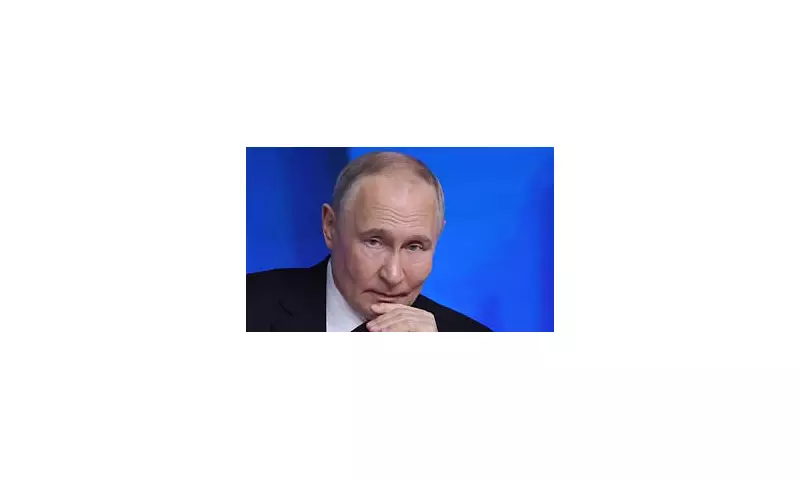
The Ukrainian announcement coincided with Putin's marathon year-end news conference in Moscow, presenting a stark embarrassment for the Russian leader. During the event, Putin grimly vowed to respond to the attack on the civilian vessel.
"It’s done with one purpose only, to raise insurance payments," Putin said of the tanker strike. "Attacks on Russian civilian ships will not lead to the expected result. And a response from Russia will inevitably follow."
The tit-for-tat strikes underscore how the nearly four-year conflict continues to spiral, with new fronts opening far from the traditional battlefield. The incident also followed a separate border provocation, where three Russian FSB guards allegedly crossed into Estonian territory on the Narva River before returning.
As the war grinds on, Putin used his press conference to deflect responsibility for the massive loss of life, stating, "We did not start this war... We do not consider ourselves responsible for the loss of life." He warned of "severe" consequences if frozen Russian assets in Europe are used to fund Ukraine.
The exchange of blows—from the Mediterranean to the Black Sea coast—signals a dangerous new phase of long-range strikes and hybrid warfare, with civilian infrastructure and global shipping lanes increasingly in the crosshairs.