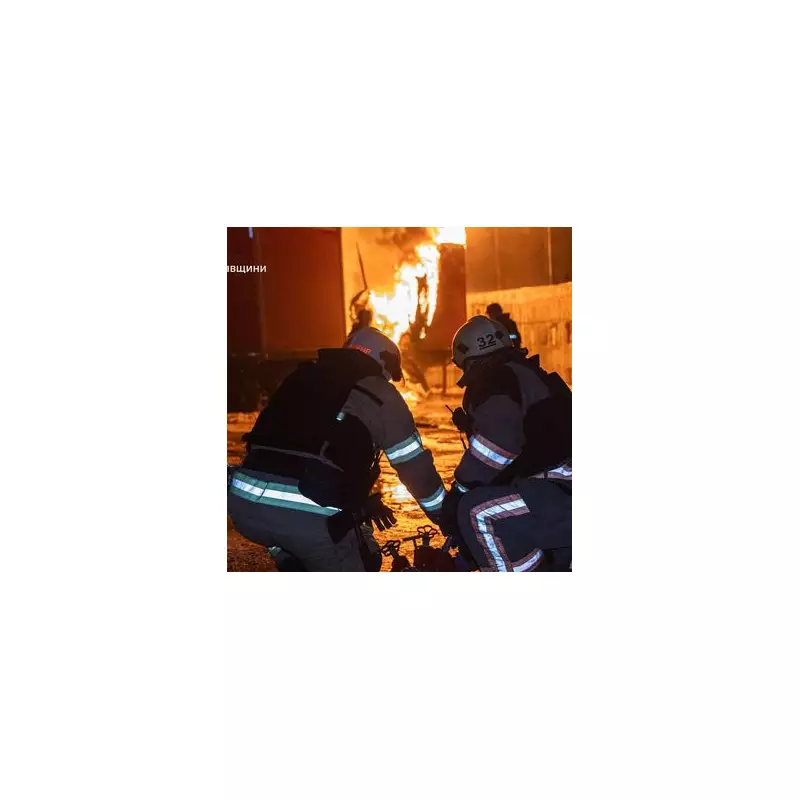
Russia has launched a second devastating, nationwide drone and missile bombardment against Ukraine in just four days, in a brutal attempt to weaponise the depths of winter against the civilian population.
A Coordinated Assault on Heat and Power
The overnight onslaught involved a massive barrage of over 300 drones, 18 missiles, and seven cruise missiles, striking eight separate regions across the country. The timing appears calculated, coinciding with bitter temperatures that plunged to minus 16 degrees Celsius in parts of the capital, Kyiv. Ukrainian officials reported that the majority of the weapons were deliberately aimed at critical infrastructure, including heating systems, energy hubs, and electricity substations.
This represents a major strategic blow to efforts seeking an end to the conflict as it nears its four-year anniversary in February. Ukrainian President Volodymyr Zelensky condemned the attacks, stating, "Where Russia tries to destroy, Ukrainians support each other. Internal resilience is now crucial." He emphasised that "each strike against life reminds the world that support for Ukraine cannot stop" and urgently called for enhanced air defence systems to be delivered daily, especially during the winter months.

Civilian Casualties and Widespread Blackouts
The human cost of the bombardment was immediate. In the Kharkiv region, a strike on a mail depot killed at least four people and wounded ten others, according to local authorities. Further south, in Odesa, six more people were injured. The assault on energy infrastructure had a crippling effect on daily life, with several hundred thousand households in Kyiv left without power. The city, already grappling with severe shortages, faced its biggest electrical outage of the war so far.
Citizens like 30-year-old Olena Davydova were forced to seek refuge at government-built "Points of Invincibility"—temporary shelters offering warmth, electricity, and basic supplies. Having been without power for nearly 50 hours, Davydova displayed remarkable fortitude, telling reporters, "I still have enough patience. I'm not reacting to this in a very emotional way."
Escalation Amidst Faltering Peace Efforts
This latest attack follows a similar large-scale assault just four days prior, which involved hundreds of drones and dozens of missiles, including a powerful new hypersonic weapon. The strategy of targeting civilian energy infrastructure is a long-standing Russian tactic, aimed at denying heat and running water to break public resistance to Moscow's full-scale invasion.
The United States has accused Russia of a "dangerous and inexplicable escalation" of the fighting. This condemnation comes at a sensitive time, as the Trump administration is reportedly attempting to advance peace negotiations—proposals that Russia has recently rejected. The UN has highlighted the devastating trend, noting that last year was the deadliest for Ukrainian civilians since 2022, with Russian aerial barrages behind the front line killing 2,514 and injuring 12,142.
As the war grinds on, President Zelensky has reiterated that Ukraine is counting on the quicker delivery of promised air defence systems from Western allies, alongside new pledges of aid, to counter Russia's relentless onslaught. Meanwhile, Russia's Defence Ministry claimed its air defences shot down 11 Ukrainian drones overnight, primarily over the Rostov region.