Russian Naval Vessel Spotted Near British Coast in Potential Tanker Protection Operation
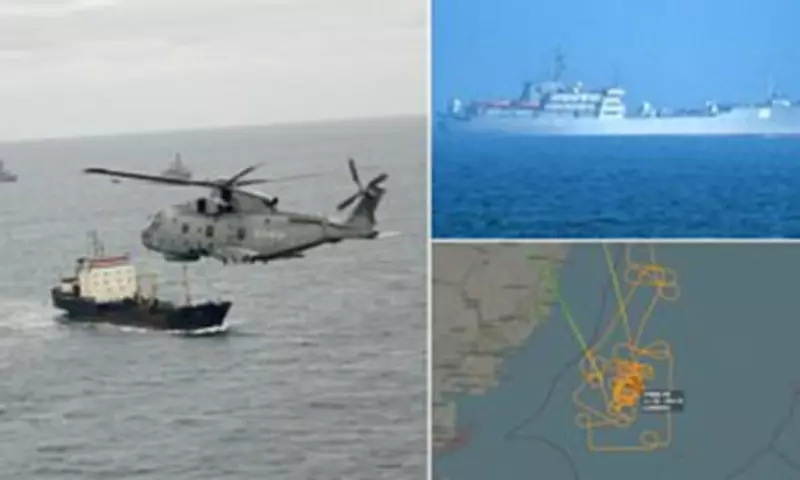
A Russian navy supply and repair ship detected near the Sussex coast this week may have been deployed to prevent the seizure of Moscow-linked oil tankers by British special forces, according to security analysis. The vessel, identified as PM82, remained stationary for approximately 18 hours on Monday in proximity to the Galloper windfarm, raising significant concerns about Russia's maritime activities in UK waters.
Vessel Characteristics and Suspicious Behavior
The 121.7-meter long PM82, capable of carrying 280 tonnes of equipment and repairing other ships, had previously been stationed in Tartus, Syria. Its appearance in the North Sea marks the first such identification, with experts suggesting it could serve as a makeshift bodyguard for Russian shadow tankers operating near Britain. The ship's positioning near the windfarm may have been deliberately chosen to obscure its true purpose while drawing attention from authorities.
James Droxford, a former navy and intelligence officer turned consultant, explained the strategic rationale. "The Russian navy does not have enough warships to provide continuous convoy escorts for its sanctioned merchant vessels while maintaining standard military operations," he told The Times. "Using a forward-deployed static base to move armed security teams to those merchantmen needing protection represents a pragmatic operational solution to deter boarding by state entities."

Escalating Maritime Tensions and Previous Incidents
This incident occurs against a backdrop of increasing apprehension regarding Russia's influence and threats in British waters. Earlier this month, the Russian warship Admiral Grigorovich was observed accompanying two shadow fleet vessels along Britain's south coast. The UK government announced last month its readiness to intercept members of Putin's shadow fleet transiting the English Channel, though no boardings have yet occurred.
Other nations, including the United States, France, and Germany, have previously seized Russia-linked tankers. As PM82 remained in British waters on Monday, an RAF Poseidon surveillance aircraft circled overhead, with flight tracking data confirming its presence, while a navy helicopter also reportedly monitored the situation.
Broader Context of Undersea Cable Operations
The latest security concern follows revelations that Russian submarines conducted a secret operation targeting underwater energy and data cables in British waters for over a month. Defence Secretary John Healey confirmed that a nuclear-powered attack submarine and two spy submarines were detected in the North Atlantic, prompting deployment of a warship and aircraft in response.
Sonar buoys were deployed to track underwater movements and deter Russian attempts to damage the cables, which transmit vast quantities of valuable data. With assistance from allies like Norway, Britain mobilized 500 personnel aboard a warship and Royal Air Force P8 aircraft, which flew more than 450 hours before the Russian submarines withdrew.
Addressing Russian President Vladimir Putin directly, Healey stated: "We see your activity over our cables and our pipelines, and you should know that any attempt to damage them will not be tolerated and will have serious consequences." The submarines operated within the UK's exclusive economic zone but not within territorial waters, and no cable damage was sustained.
Recent Aerial and Electronic Provocations
In a separate incident yesterday, two British Typhoon fighter jets were scrambled from RAF Lossiemouth in Scotland, accompanied by a Voyager refuelling aircraft from RAF Brize Norton, over concerns that a Russian warplane might approach British airspace. Although the aircraft remained outside UK airspace, the jets were tracked circling near Shetland.
Additionally, in November, the Russian spy ship Yantar was identified attempting to jam a Royal Navy frigate's GPS while lurking north of Scotland. The vessel also directed military-grade lasers at RAF P-8 Poseidon pilots sent to monitor it, marking what Healey described as a "deeply dangerous" provocation and the first such laser use against UK forces.

The Ministry of Defence has been contacted for comment regarding these escalating maritime and aerial incidents, highlighting growing tensions between the UK and Russia in strategic waterways.