Keir Starmer's Covert Submarine Mission: Prime Minister Issues Stark Warning on Russia
In an exclusive visit, Prime Minister Keir Starmer has declared Britain's nuclear deterrent as the absolute front line of national defence, while cautioning that the United Kingdom must maintain vigilant focus on Russia despite escalating tensions in Iran.
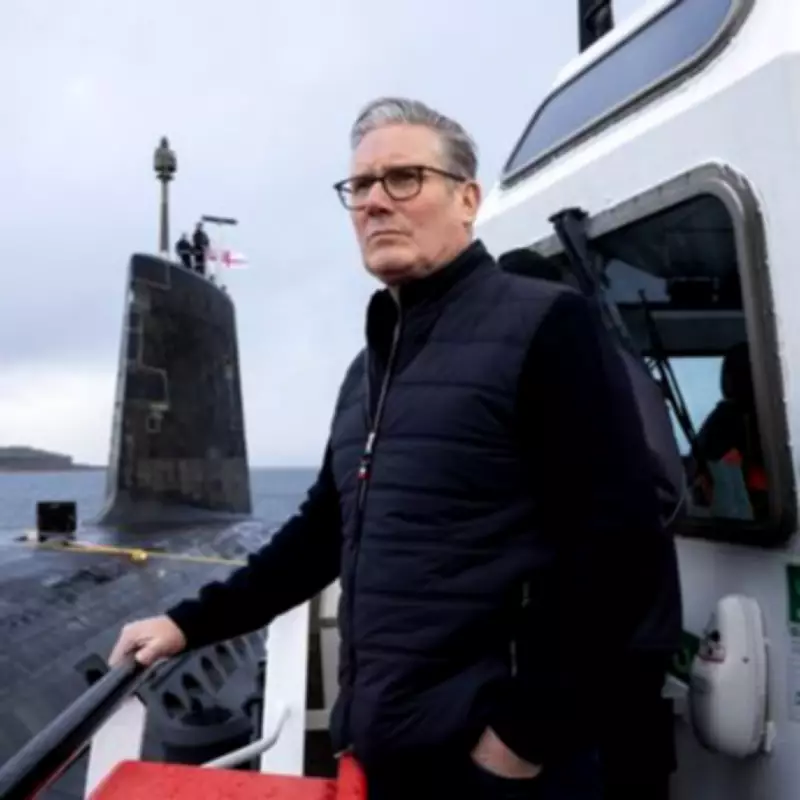
The Mirror was granted rare access to accompany the Prime Minister as he boarded a nuclear-armed Vanguard-Class submarine off the west coast of Scotland. The vessel had just completed a record-breaking 206-day deployment, marking a significant moment in Britain's continuous at-sea deterrent strategy.
Top-Secret 'Day Zero' Visit to Royal Navy Crew
Starmer's clandestine visit occurred on what submariners call "Day Zero" - the precise moment the vessel returns to UK waters after its lengthy patrol. This timing coincides with a period of exceptionally high global tensions, with the Prime Minister's decision to showcase Britain's nuclear arsenal serving as a direct warning to Vladimir Putin.

Speaking exclusively to The Mirror from Faslane naval base, Starmer emphasized: "It's the most important capability we have as a country, and it has kept us safe for many years. It is committed to Nato, and therefore it's not just kept the UK safe, it's helped to keep Nato safe."
The Prime Minister continued: "So it is really important to come on Day Zero and meet the crew coming off who've worked really hard for a considerable period of time and say thank you to them for what they've done for our country. I find it quite humbling to do that."
Nuclear Deterrent: Britain's Ultimate Defence Pillar
This marks only the second time a sitting Prime Minister has visited the Vanguard submarines that form the backbone of Britain's nuclear deterrent. David Cameron was the last to do so in 2013. One of the four Vanguard vessels remains on patrol at all times, armed with Trident missiles, ensuring continuous protection.
Starmer revealed the sobering responsibility that comes with his position, describing the tradition where each new Prime Minister must hand-write four identical "letters of last resort" to submarine commanders. These sealed documents contain instructions for what to do if a nuclear strike destroys the British government.
"There's a huge responsibility in the whole way the nuclear capability is set up, the writing of the letters," Starmer acknowledged. "But I think it's important for every Prime Minister to go and visit one of the subs to get a proper sense of the place where men and women, the ones we've seen today, are responsible for carrying into effect the instruction of a Prime Minister."
Dual Front Conflict: Russia's Persistent Threat
The Prime Minister issued a stark warning about Russia's ongoing aggression, stating: "We've got a war on two fronts. We've obviously had a lot of focus on the war in Iran in the last two months but the war in Ukraine is ongoing, and the threat from Russia is real, not just in Ukraine, but to us as well."
Starmer emphasized the interconnected nature of global conflicts: "It's very important that we understand that and don't lose sight of that. The two are linked. Russia, Putin, will feel that the pressure is less on him now to come to a deal in relation to Ukraine, and we absolutely have to be alive to that threat."
Recent intelligence reveals British forces have foiled suspected attempts by Russian submarines to spy on undersea cables and pipelines in the north Atlantic. In a significant escalation last November, a Russian spy ship directed lasers at RAF pilots tracking its movements near UK waters.
The Prime Minister has recently authorized British military personnel to storm Russian shadow ships entering British waters, preventing aging oil tankers from evading sanctions to fuel the Kremlin's war machine.
Defence Spending Commitments and Criticism
Amid mounting pressure over defence spending, Starmer has pledged to increase military expenditure to 2.5% of GDP by next year, rising to 3% in the next Parliament. He has also joined NATO allies in committing to reach 3.5% on core defence by 2035.

However, military leaders have warned of a £28 billion shortfall in existing plans, citing what they describe as the hollowing out of armed forces under successive Conservative governments. Former NATO chief Lord Robertson has accused the government of "corrosive complacency" regarding defence readiness.
Starmer defended his government's approach: "This Parliament we'll spend £280bn on defence. This year we'll spend £5 billion more on defence, and that is in marked contrast to what happened under the last government. They literally hollowed out our armed forces. We are picking that up, and we're repairing it. We're putting that right."
The Prime Minister added: "Now, given the level of threat there is in the world, we do need to go further and faster, as I said in my Munich Conference [speech]. That will mean increased spending, but it also means coordinating and collaborating more closely with others, particularly in Europe, and that is why I've argued strongly that there needs to be a stronger European element of Nato, and the UK needs to play a leading part in that."
Iran Crisis: Britain's Cautious Stance
Regarding the ongoing Iran conflict, Starmer reaffirmed Britain's commitment to staying out of direct military involvement while protecting vital shipping routes. He declined to echo Chancellor Rachel Reeves's criticism of US actions, instead emphasizing his focus on British national interests.
"The approach I've taken is to say that - and I look at this very much from the position of the British Prime Minister - my responsibility, my duty, is to act in the British national interest, and I will act in the British national interest whatever the pressure that's put on me and by whoever it's put on me, and I'm not going to yield," Starmer stated.
The Prime Minister confirmed Britain would participate in defensive actions to ensure safe passage through critical waterways but clarified: "But we're not going to get dragged into the war, and we're not going to join the blockade [of the Strait of Hormuz]."
Starmer's secret submarine visit and subsequent warnings highlight the delicate balance Britain must maintain between multiple global threats while reinforcing the nation's nuclear deterrent as its ultimate protective shield.