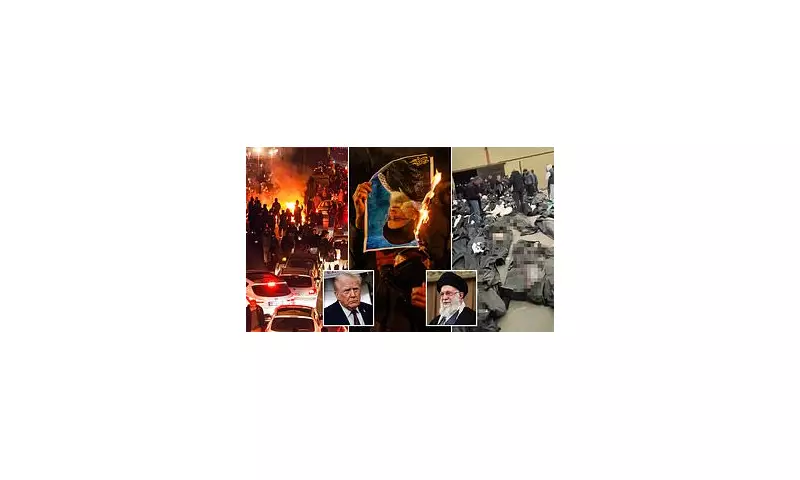
For decades, Western policymakers and analysts have been preoccupied with a single question: how might the Islamic Republic of Iran collapse? Yet a far more critical inquiry has been consistently overlooked: should the regime fall? For the millions of Iranians who have fled their homeland since the 1979 revolution, the answer is both obvious and profoundly personal.
The Moral and Strategic Failure of a Theocracy
Prior to the mullahs' seizure of power, Iran was a modernising, secular state. Women enjoyed significantly greater political and social freedoms, Western culture was welcomed, and the nation's oil wealth fuelled domestic economic growth rather than foreign extremism. What replaced it, by any honest measure, has been an unmitigated failure.
The moral case against the regime is stark. Iran's Shia theocracy enforces a medieval interpretation of Islamic law, systematically brutalises women, executes political dissidents, and rules through fear and repression. It actively seeks to export this extremist ideology beyond its borders, making it a direct threat to free societies worldwide.

However, the most compelling argument is strategic, and it aligns with core national security interests. The Islamic Republic is the world's most aggressive state sponsor of terrorism, serving as the central node of a proxy empire stretching from Yemen and Lebanon to Gaza and Venezuela. Over four decades, the regime and its militant proxies have been responsible for killing and maiming thousands of Americans, from the Beirut barracks bombing to the wars in Iraq and Syria.
An Unrelenting Threat to Global Stability
Today, the threat is not diminishing but evolving. Tehran is actively reconstituting its nuclear weapons programme, building a massive missile arsenal—including intercontinental ballistic missiles—and threatening renewed attacks on U.S. forces. Simultaneously, it supplies Russia with drones to fuel Vladimir Putin's war in Ukraine. These are not isolated acts but components of a coherent strategy to bleed American power, destabilise allies, and reshape the Middle East in Iran's favour.
Diplomatic efforts have consistently failed to alter this trajectory. Sanctions relief did not moderate the regime's behaviour, and engagement did not empower internal reformers. Instead, every outreach has strengthened the Islamic Revolutionary Guard Corps and expanded Iran's capacity for external aggression. The lesson after 45 years is clear: the problem is not Iran's policies, but the regime itself.
Critics often warn that advocating for the regime's end risks chaos or a nationalist backlash. This fear is outdated. Since the 2009 Green Movement, Iranians have repeatedly flooded the streets in historic numbers, chanting "Death to the dictator" and explicitly rejecting clerical rule. The regime maintains power solely through violence, censorship, and fear, not popular consent.
The Path Forward and a Post-Regime Iran
Supporting the Iranian people is not about imposing a Western system or engineering a revolution from abroad. It is about aligning foreign policy with the clear aspirations of a population that overwhelmingly rejects theocracy. Importantly, Iran's democratic opposition groups have spent years developing detailed, credible plans for governance, economic recovery, and international relations post-regime, countering claims that collapse would inevitably mean chaos.
A post-Islamic Republic Iran would not need to become a perfect democracy to represent a dramatic strategic improvement. A government more accountable to its people would have powerful incentives to rebuild a shattered economy and redirect resources from funding foreign militias to domestic needs. Regional de-escalation would become possible for the first time in decades.
The United States does not need to invade Iran to end this menace. It must, however, abandon the illusion that the regime can be reformed or indefinitely managed. A strategy combining targeted military and cyber pressure, maximum financial sanctions, diplomatic isolation, and clear political alignment with the Iranian people's demands for change is not reckless—it is long overdue.

Ending the Islamic Republic is ultimately about removing the single greatest driver of instability, terrorism, and nuclear proliferation in the Middle East. As long as the mullahs rule in Tehran, the region will remain a factory for terror. History will judge the West not by how carefully it managed this regime, but by whether it finally had the resolve to help end it. The moment for decisive action is approaching; the only question is whether the world will act before the next catastrophe forces its hand.