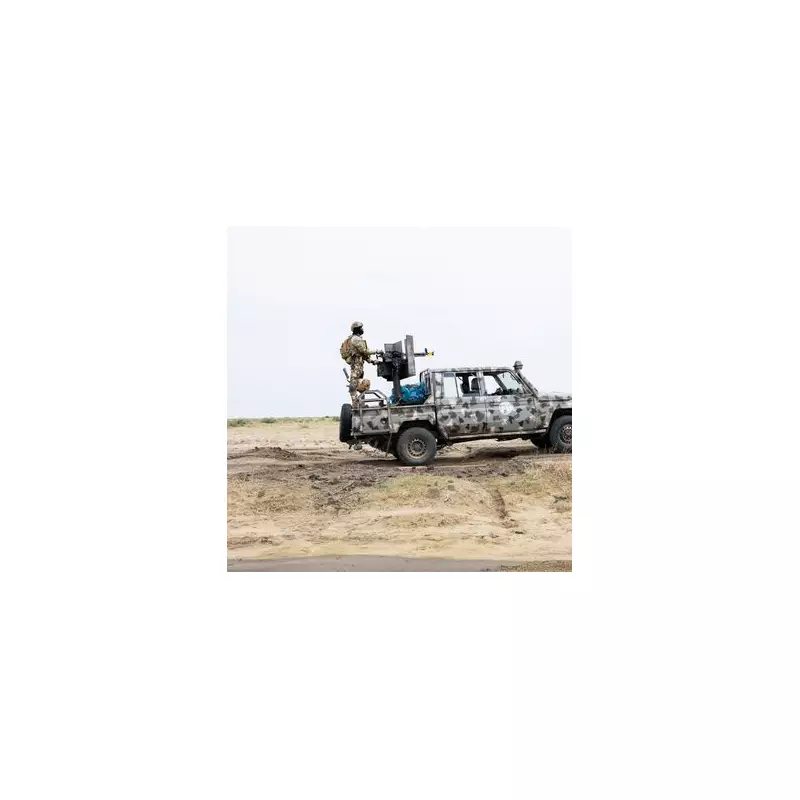
Former US President Donald Trump framed his Christmas Day air-strikes against Islamic State targets in Nigeria as revenge for attacks on Christians, a move analysts suggest is tailored for his core political base. The action, however, overlooks the complex reality that Nigeria's Islamist terror groups victimise Muslims and Christians alike.
The Political Narrative Versus the On-Ground Reality
On December 25, 2025, US forces launched coordinated air-strikes in Nigeria targeting Islamic State affiliates. Trump, who had threatened such action for months, presented the operation as direct retaliation against 'scum' who attack Christians, speaking squarely to his Make America Great Again (MAGA) supporters.
Nigeria's foreign ministry confirmed the strikes were a joint effort with the US, and a presidential adviser stated the two nations were "on the same page in the fight against terrorism." This cooperation comes despite Trump having recently withheld aid from Nigeria over attacks on Christians, a move criticised given the country's desperate need for military support.

A Country Ravaged by Violence Against All Faiths
Nigeria, a nation of over 230 million people, has a population roughly split between Christians, predominantly in the south, and Muslims, mainly in the north. For more than a decade, jihadist groups like Boko Haram and Islamic State West Africa Province (ISWAP) have wrought havoc in the north-east, killing thousands.
Security experts and local reports consistently state that the victims of this violence are both Christian and Muslim. Notably, the recent US strikes were launched in northern regions where the majority of residents are Muslim.
The Daily Mirror previously reported that ISIS in Nigeria was operating a 'job-swap' scheme, importing and exporting jihadists for training, effectively running a work experience programme for aspiring attackers.
Timing, Aid, and the Broader Counter-Terrorism Picture
The timing of the strikes on Christmas Day is viewed by observers as a deliberate symbolic act, reinforcing Trump's narrative of defending Christian communities. This focus, however, sidelines the suffering of Muslim victims and the multifaceted nature of the conflict.
Countries like the UK have been involved in the region for years, sending hundreds of troops to train local forces in counter-terrorism. This underscores a consensus that lasting security cannot be achieved through isolated air-strikes alone, but requires sustained, nuanced engagement addressing the root causes of extremism.
Trump's declaration of war against ISIS—a group he claimed to have defeated years ago—appears less about eradicating a threat that affects all Nigerians and more about catering to his far-right Christian support base. As history shows, terrorism cannot be simply 'bombed out' of a country, and the complex religious dynamics in Nigeria demand a more comprehensive response.