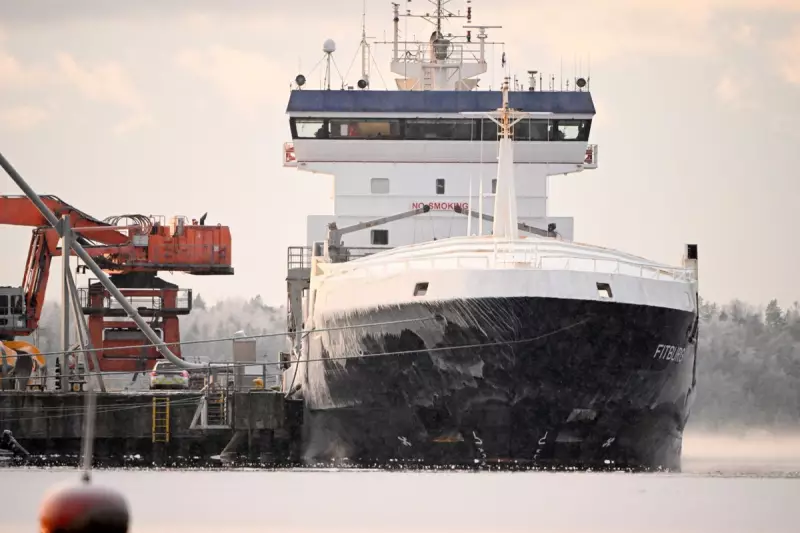
Finnish authorities have made two arrests in connection with significant damage inflicted on a vital undersea telecommunications cable in the Gulf of Finland. The incident, which occurred between the capitals of Finland and Estonia, has triggered a major criminal investigation into what police are treating as an attack on critical infrastructure.
Investigation into Aggravated Damage
The damage to the cable, which is owned by the Finnish telecoms provider Elisa, was first discovered early on Wednesday, 31 December 2025, within Estonia's exclusive economic zone. In response, Helsinki police have launched a formal probe into allegations of aggravated criminal damage, attempted aggravated criminal damage, and aggravated interference with telecommunications.
As part of this ongoing investigation, officials have also placed two other individuals under travel bans. Police have not released the nationalities or further details of those detained or restricted, nor have they clarified their specific connections to the vessel involved.

The Ship and Its Sanctioned Cargo
The vessel at the centre of the inquiry is the Fitburg, a ship flagged in St. Vincent and the Grenadines that was travelling from Russia to Israel. Finnish authorities have detained its 14 crew members, who are nationals of Russia, Georgia, Azerbaijan, and Kazakhstan.
According to Finnish National Police Commissioner Ilkka Koskimäki, the ship was detected dragging its anchor for several hours within Finland's exclusive economic zone. Commissioner Koskimäki stated that investigators are not currently speculating on whether a state-level actor was behind the incident.
Adding a further layer of complexity, Finnish Customs revealed that the ship's cargo included structural steel originating from Russia, which falls under European Union sanctions. "The import of such sanctioned goods into the EU is prohibited under EU sanctions regulations," the agency confirmed, adding that it continues to investigate the applicability of sanctions legislation to this case.
A Pattern of Undersea Infrastructure Threats
This is not an isolated event for the region's subsea infrastructure. The network of cables and pipelines in the busy Baltic shipping lanes is crucial for linking Nordic, Baltic, and central European countries, promoting trade, energy security, and reducing dependence on Russian energy.
In a strikingly similar case, Finnish authorities last year charged the captain and two senior officers of the Eagle S, a Russia-linked vessel that damaged undersea cables between Finland and Estonia on Christmas Day 2024. Those officers denied allegations of aggravated criminal mischief and interference with communications.
The Kremlin has previously denied involvement in such incidents, which threaten power and communications for thousands of Europeans. The Eagle S was identified as part of Russia's so-called 'shadow fleet'—older tankers with obscure ownership used to circumvent Western sanctions related to the war in Ukraine.
For Western security officials, these episodes are viewed as part of a wider pattern of sabotage across Europe, allegedly linked to Moscow following its full-scale invasion of Ukraine in 2022. The latest damage to the Elisa cable underscores the persistent vulnerability of critical undersea assets.