In a striking assessment of Britain's military capabilities, defence analysts are raising urgent concerns about the nation's dangerous over-reliance on American systems and equipment. As Prime Minister Keir Starmer prepares for a significant state visit to China, attention is turning to the fundamental weaknesses in the UK's defence infrastructure that could leave the nation exposed.
The Nuclear Illusion
During his recent Downing Street statement affirming support for Greenland and Denmark's sovereignty, Keir Starmer prominently highlighted Britain's nuclear deterrent as the cornerstone of military strength and independence. However, this rhetorical confidence masks a more troubling reality about the actual state of the nation's defence capabilities.
A revealing anecdote from decades past illustrates this dependency. During a visit by defence correspondents to the Faslane nuclear submarine base during the Polaris to Poseidon upgrade, journalists noticed something peculiar in a side office. Posters displayed missiles adorned with Hertz car hire stickers from the American rental company that provided vehicles for personnel stationed there. When questioned, a naval officer wryly commented that this was appropriate since "nearly all the missile system right now is on loan and hire from the US." The story spread rapidly, causing parliamentary consternation in Westminster.

American Strings Attached
Today, this dependency has only deepened. All three branches of Britain's armed forces rely significantly on American technology and support in various critical areas. Key defence programmes require consistent American goodwill, which defence experts note is often unpredictably available. Without this essential support, Britain's capacity to defend its home territory by sea and air becomes alarmingly limited.
The nation's vulnerability extends beyond military hardware. Analysis reveals that Britain maintains food stocks sufficient for just ten days should complete isolation occur. This precarious position highlights broader strategic weaknesses in national resilience planning.
The F-35 Conundrum
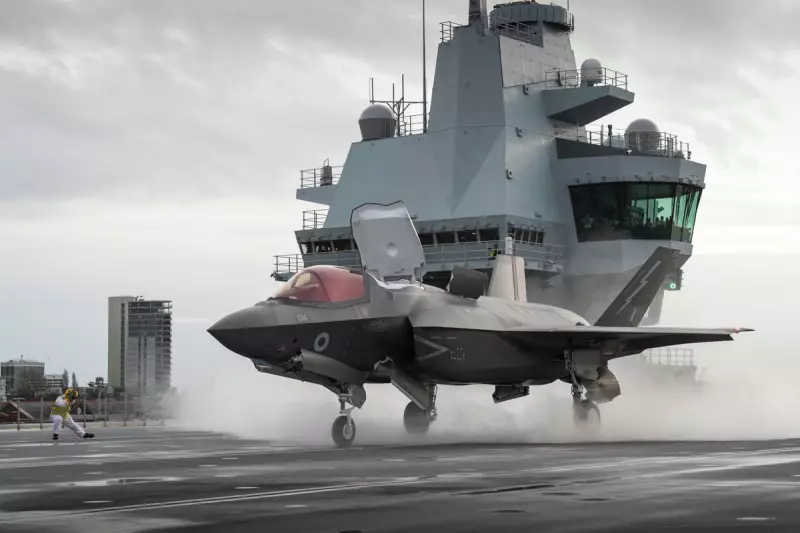
The Royal Air Force and Royal Navy's F-35 Lightning II fighter programme exemplifies the systemic risks of this dependency. Despite Britain's status as a "level one" partner responsible for fourteen percent of the aircraft's manufacture, British forces do not receive the full spectrum of advanced capabilities available to American variants.
More concerning is the centralised control of critical systems. The primary node for software and radar operations resides in the United States. This arrangement created a significant crisis when a Royal Navy F-35 experienced mechanical failure during exercises in the Indian Ocean and diverted to Kerala, India. The aircraft's systems automatically wiped themselves, requiring weeks of work by American software engineers to restore functionality while the jet remained in a potentially hostile environment.
American command structures reportedly maintain a "kill switch" capability over radar and software systems not only for the Lightnings but potentially for RAF Eurofighter Typhoons as well, though Whitehall officials dispute this claim.
Conventional Force Erosion
The deeper strategic problem lies in Britain's diminished conventional deterrence capabilities. While European allies acknowledge Britain, alongside Germany and France, should form the "E3" leadership core within NATO and European defence structures, the UK's military credibility has significantly eroded compared to its continental partners.
Decades of systematic neglect have hollowed out Britain's armed forces, leaving them undermanned and critically underfunded. The British Army currently possesses equipment sufficient for approximately twenty thousand personnel, despite maintaining seventy-two thousand service members. Much of this equipment is obsolete or approaching obsolescence.
Strategic Paralysis
Reliance on the Trident nuclear deterrent system, which Starmer emphasised in his Number Ten address, creates strategic limitations that extend beyond mere dependency. The programme consumes nearly one-third of the UK's defence operational budget, draining resources desperately needed for investment in emerging technologies including advanced communications, artificial intelligence, and autonomous systems.

The recent Defence Review allocated a mere two hundred million pounds for artificial intelligence experimentation, despite the accelerating development of autonomous weapons systems on earth and in space, quantum computing applications, and what defence analysts term "the era of the killer robot."
European Alternatives
Defence experts suggest several potential pathways forward. One significant proposal involves creating a shared nuclear framework with France, potentially including other interested European partners such as the Netherlands, Germany, and Italy. Such collaboration could reduce individual national burdens while enhancing collective security.
The doctrine of nuclear deterrence, now eighty years old, has hardened into what critics describe as strategic dogma. This fixation actively impedes adaptation to emerging defence disciplines and technological revolutions reshaping modern warfare.
Trump's Unintended Legacy
Paradoxically, former US President Donald Trump's unpredictable behaviour and rhetoric regarding America's global commitments may have provided Britain and Europe with an unintended catalyst for reassessment. His volatile approach to international alliances has forced European nations, including Britain, to confront uncomfortable truths about their defence dependencies and strategic vulnerabilities.
This reckoning requires sober, realistic evaluation of Britain's defence posture. Nothing should remain beyond consideration, including reducing over-dependence on American systems and reassessing reliance on the Anglo-American nuclear deterrent framework. The evolving global security landscape demands nothing less than fundamental re-evaluation of how Britain protects its sovereignty and contributes to collective European defence.