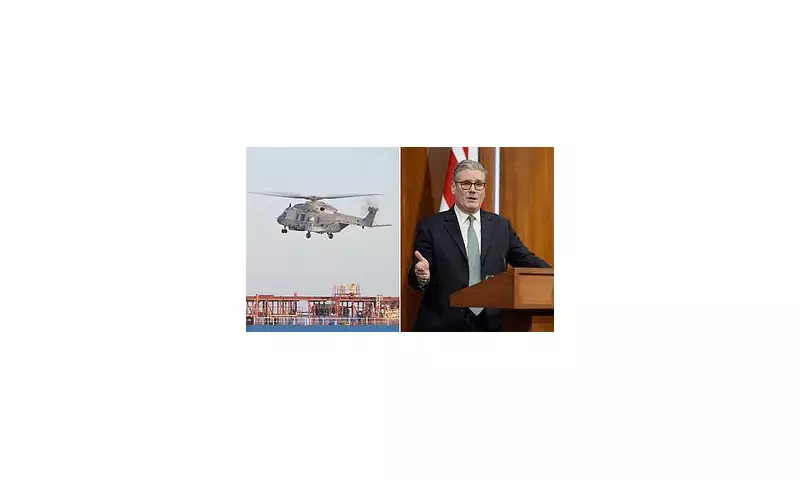
Britain is preparing to dramatically escalate its economic warfare against Russia by seizing additional oil tankers from Moscow's sanctions-busting 'shadow fleet', with profits potentially running into hundreds of millions of pounds being redirected to fund Ukraine's defence against President Putin's invasion.
High-Stakes Maritime Strategy
Senior Government sources have revealed that each intercepted tanker could raise tens of millions of pounds - money that would be directly denied to Moscow's war machine and instead channelled to support Kyiv's military efforts. This represents a significant shift in approach following last Thursday's daring joint UK-French operation in the Mediterranean, where the Grinch tanker travelling from Russia's Arctic port of Murmansk was successfully boarded.
International Cooperation and Legal Framework
The vessel was flying the Comoros flag, but French maritime authorities confirmed that a search had raised serious doubts about the regularity of its registration. Defence Secretary John Healey disclosed that the UK navy had provided crucial 'tracking and monitoring' support, with HMS Dagger monitoring the tanker's movements through the strategically vital Straits of Gibraltar.

The Ministry of Defence has calculated that these seizures are proportionate and fall within internationally agreed sanctions frameworks, drawing parallels with similar actions taken by the United States against Iranian oil shipments. American authorities have previously reported that such operations have deprived Iran's Islamic Revolutionary Guard Corps of more than 5.3 million barrels of petroleum products and $294 million in revenue through court-approved forfeiture orders.
Special Forces on Standby
The Mail on Sunday understands that Britain's special forces are now on standby to target additional vessels from Russia's shadow fleet, with UK sanctions already imposed on 544 vessels identified as part of this clandestine network. A senior government source described the potential impact as 'a game changer', explaining that it would not only deprive Putin of illegal oil revenues funding his war but would 'flip the proceeds of that oil back to Ukraine as they continue to fight back.'
Calculated Risks and Potential Retaliation
However, defence experts acknowledge this approach carries significant risks, with Russia potentially retaliating by seizing British-flagged tankers or escalating its economic and legal warfare against Western interests. Moscow has already explicitly condemned any use of Russian assets to fund Ukraine as 'outright theft' and a 'special kind of casus belli' - a justification for war.
Russia's shadow fleet consists of ageing oil tankers that employ sophisticated evasion techniques, including switching flags, disabling tracking systems and obscuring ownership structures to circumvent Western sanctions. Oil revenue remains a critical component of Russia's economy, making this shadow network vital for bankrolling Putin's military operations.
Broader Strategic Context
This maritime escalation comes as Washington-led peace talks in Abu Dhabi involving delegations from Russia, Ukraine and the United States appear to have stalled, with insiders reporting that while some progress has been made, the fundamental issue of territory remains unresolved. Meanwhile, Russia continues its brutal assault on Ukrainian civilians, with overnight missile attacks described as 'barbaric' striking Kyiv and Kharkiv, Ukraine's second largest city.
Ukraine's Foreign Minister Andrii Sybiha condemned the 'brutal' strikes, stating they had 'hit not only our people, but also the negotiation table.' The Ministry of Defence has declared that 'deterring, disrupting and degrading the Russian shadow fleet is a priority for this government', adding that 'alongside our allies, we are stepping up our response to shadow vessels - and we will continue to do so.'