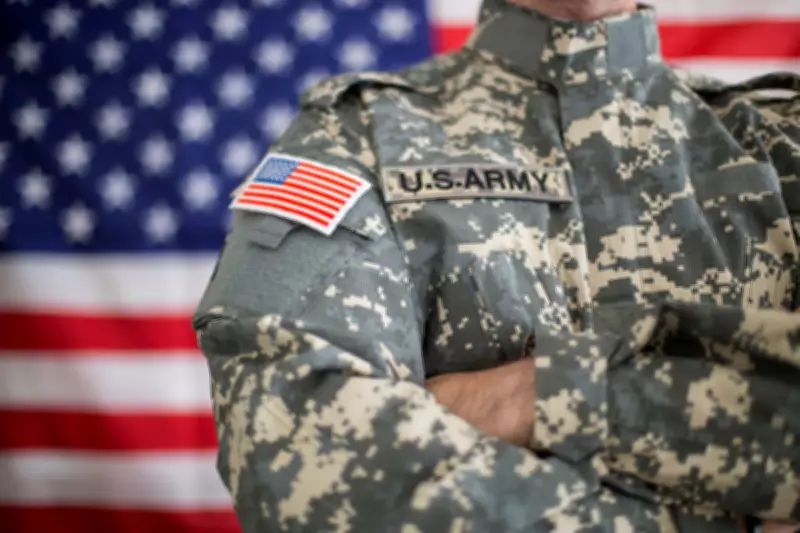
US Army Implements Major Recruitment Policy Overhaul to Address Enlistment Shortfalls
In a significant move to bolster its struggling recruitment efforts, the United States Army has quietly enacted sweeping changes to its enlistment regulations. The most notable adjustment is a substantial increase in the maximum enlistment age, which has been raised by seven years from 35 to 42. This strategic shift is designed to widen the pool of potential recruits after the Army consistently failed to meet its enlistment targets in recent years.
Broadening the Recruitment Pool Amid Persistent Challenges
According to official statements, the new policy applies comprehensively across the Regular Army, the Army National Guard, and the U.S. Army Reserve, with implementation scheduled to begin in April. This regulatory update signals a concerted effort to attract candidates from more diverse backgrounds and life stages, reflecting the Army's urgent need to address recruitment deficiencies that plagued 2022 and 2023. Although there was a modest rebound in numbers during 2024, as reported by the Army Times, the service remains under pressure to sustain and improve enlistment figures.
The previous policy capped enlistment at age 35, though older applicants could occasionally join through special waivers. Under the revised framework, the age limit now aligns more closely with other branches of the military. For instance, the Air Force and Navy already accept recruits over the age of 40, while the Marine Corps maintains a maximum enlistment age of 28 but permits waiver requests for those aged 29 and older.

Adjusting Criminal Conviction Restrictions to Reflect Societal Changes
In a parallel policy shift aimed at expanding eligibility, the Army will no longer require enlistment waivers for individuals with just one conviction for marijuana possession or a single conviction for possession of drug paraphernalia. This change acknowledges the evolving legal landscape across the United States, where dozens of states now permit medical or recreational cannabis use. However, it is important to note that service members remain prohibited from using the drug under federal law.
Those with multiple convictions will still need to obtain an enlistment waiver, ensuring that the Army maintains rigorous standards while adapting to contemporary norms. This adjustment is part of a broader strategy to remove barriers that may have previously disqualified potential recruits, thereby enhancing the Army's appeal to a wider demographic.
Demographic Shifts and Strategic Implications
Army officials have highlighted that recruits are entering the service at older ages compared to previous decades. Data from Madison Bonzo, the Army Recruiting Division's chief of media relations, reveals that the average age of active-duty and reserve recruits in fiscal year 2026 is 22.7. This marks a noticeable increase from the averages of 21.7 in the 2000s and 21.1 in the 2010s, underscoring a gradual demographic shift within the enlistment population.
The deliberate effort to broaden the recruiting pool comes at a critical juncture, as the Army seeks to fortify its ranks amid ongoing global uncertainties. By raising the enlistment age and easing restrictions on certain criminal convictions, the service aims to tap into a more extensive and varied talent base, ultimately strengthening its operational capabilities and readiness.