An American military aircraft used in a deadly strike on a suspected drug-smuggling vessel off the coast of Venezuela last autumn was deliberately painted to resemble a civilian plane, according to sources familiar with the operation. This covert tactic appears to contradict established Pentagon guidelines on the laws of armed conflict.
Covert Tactics and Legal Questions
The aircraft, part of a secretive US surveillance fleet, was also configured to carry munitions within its fuselage instead of on external pylons. This further disguised its military purpose and has prompted serious questions about whether the operation breached standard military protocol. Details of the plane's appearance, first reported by The New York Times, were confirmed by two anonymous sources due to the sensitivity of the matter.
In a statement, Pentagon press secretary Kingsley Wilson said, “the U.S. military utilizes a wide array of standard and nonstandard aircraft depending on mission requirements.” He added that each aircraft undergoes a rigorous process to ensure compliance with domestic and international law, including the law of armed conflict.

This revelation follows a sustained pressure campaign by the Trump administration against Venezuela. The campaign, which involved massing military resources in Latin America and attacking alleged drug-smuggling boats, culminated this month in a dramatic raid that captured Venezuelan President Nicolás Maduro. He and his wife were taken to the United States to face federal drug trafficking charges.
Senate Pushback and 'Perfidy' Concerns
Alarmed by these escalating actions, the US Senate is preparing to vote on a war powers resolution this week. The measure would prohibit further military action in Venezuela without explicit authorisation from Congress. President Donald Trump has reportedly been aggressively lobbying Republican senators to oppose the resolution, which could see a final vote as early as Wednesday.
The administration has justified the boat strikes, which began on September 2 and have killed at least 115 people, by arguing the US is in an “armed conflict” with drug cartels in the region. However, US military manuals explicitly warn against troops pretending to be civilians during combat—a practice legally known as “perfidy.”
The extensive Defense Department manual cites “feigning civilian status and then attacking” as a prime example. Separate Air Force and Navy manuals state such deception is prohibited because it endangers all civilians and violates the bounds of military honour.
Scrutiny Over Deadly Follow-Up Strike
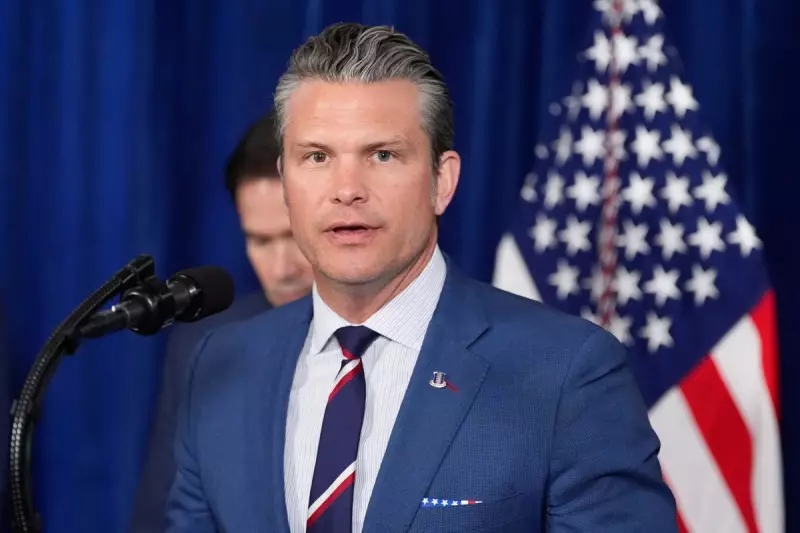
The disguised plane was used in the initial September 2 strike, which sparked a months-long campaign. Defence Secretary Pete Hegseth and other officials have faced intense congressional scrutiny over the operations, particularly the first strike. This is because it involved a controversial follow-up attack that killed two survivors clinging to the wreckage of the initial hit.
Legal experts have suggested this secondary strike may have been unlawful, as targeting shipwrecked personnel is generally considered a violation of the laws of war. Some lawmakers have demanded the Pentagon release the unedited video of the operation, a request Hegseth has refused.
In related developments, senators reviewed the White House's classified legal justification for using military force to oust Maduro. Senator Rand Paul, a Republican critic of foreign interventions, argued the legal rationale should be made public, stating, “it’s a terrible thing that any of this is being kept secret because the arguments aren’t very good.” Democratic Senator Peter Welch expressed deep concerns over the operation's legality and Trump's stated plans to effectively “run” Venezuela in the aftermath.