

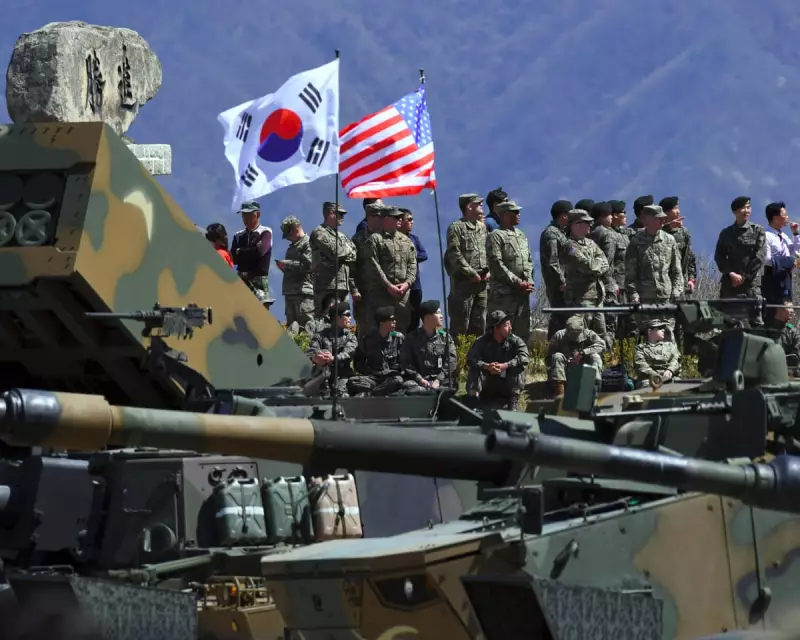
A significant shift in US defence policy has been unveiled, with the Pentagon set to adopt a more limited role in deterring North Korea, while its ally South Korea takes on primary responsibility. This strategic realignment, detailed in a newly released policy document, marks a pivotal moment in the long-standing military partnership between the two nations.
Strategic Rebalancing on the Korean Peninsula
The National Defense Strategy, a guiding document for Pentagon policies released on Friday, explicitly states that South Korea is capable of leading deterrence efforts against North Korea, with the US providing critical but reduced support. This move is described as consistent with American interests in updating the US force posture in the region.
South Korea currently hosts approximately 28,500 US troops as part of a combined defence framework aimed at countering North Korea's military threats. In preparation for an enhanced role, Seoul has increased its defence budget by 7.5% for this year, reflecting its growing capabilities and commitment to regional security.

Broader Implications for US Military Flexibility
The policy shift allows US forces stationed in South Korea to become more flexible, enabling operations beyond the Korean Peninsula. This adjustment responds to a wider range of threats, including potential conflicts involving Taiwan and the need to check China's expanding military influence in the Indo-Pacific.
While South Korea has historically resisted changes to the role of US troops, it has significantly bolstered its defence infrastructure over the past two decades. The nation now boasts 450,000 troops and is working towards assuming wartime command of the combined US-South Korean forces, underscoring its readiness for increased responsibility.
Pentagon's Prioritisation of Homeland Defence
The comprehensive policy document, which is published by each new administration, emphasises that the Pentagon's foremost priority is defending the US homeland. In the Indo-Pacific theatre, the focus is on preventing China from dominating the United States or its allies.
The document articulates a vision for a decent peace that favours American interests while being acceptable to China, though it notably avoids direct mention of Taiwan. This diplomatic phrasing occurs amidst ongoing tensions, as China claims Taiwan as its territory and has not ruled out using force, while Taiwan asserts its right to self-determination.
Regional Dynamics and Future Prospects
This policy evolution signals a recalibration of US military strategy in Asia, potentially raising concerns in Seoul about the long-term implications of reduced direct US involvement. However, it also highlights South Korea's maturation as a defence partner, capable of leading deterrence against North Korean aggression.
The shift reflects broader geopolitical trends, including the US's strategic pivot to counter Chinese ambitions and ensure a balance of power in the region. As South Korea steps up, the alliance enters a new phase of cooperation, with implications for stability across the Asia-Pacific.






