

The mother of the most severely wounded British soldier to survive the Afghanistan conflict has delivered a powerful condemnation of US President Donald Trump, branding his recent comments about allied troops avoiding front-line combat as "the ultimate insult" to those who served and sacrificed.
Mother's Outrage Over Trump's Remarks
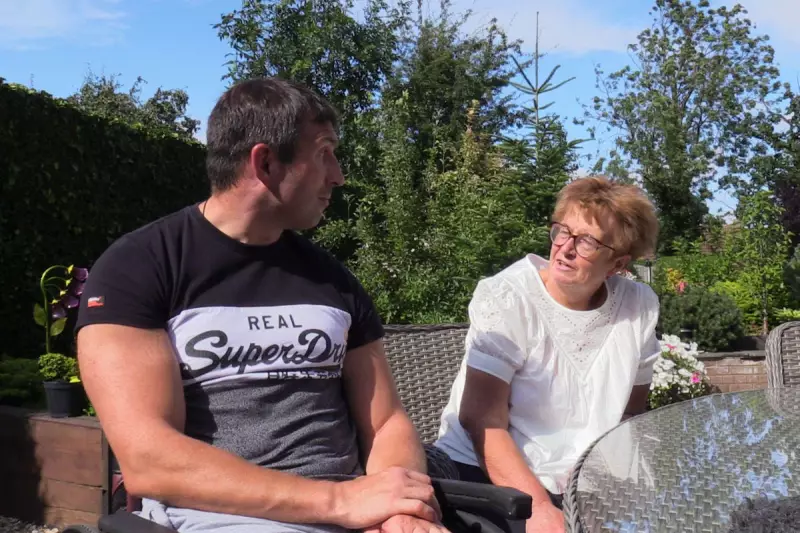
Diane Dernie, whose son Ben Parkinson suffered catastrophic injuries when his Army Land Rover struck a mine near Musa Qala in 2006, spoke exclusively to the Press Association about her profound anger and distress. Her son, a former lance bombardier with 7 Para RHA, lost both legs, sustained a twisted spine, and suffered severe brain damage in the explosion that changed their lives forever.
"I can assure you, the Taliban didn't plant IEDs miles and miles back from the front line," Mrs Dernie stated emphatically, directly countering the implication in Trump's interview that British forces had remained safely distant from the most dangerous combat zones.

Call for Political Leadership
Mrs Dernie has issued a direct challenge to Prime Minister Sir Keir Starmer, urging him to publicly confront the American leader and defend the honour of British armed forces. "He's got to stand up for his own armed forces, and he's got to absolutely refute what Donald Trump said," she insisted.
Her message to the Prime Minister was unequivocal: "Call him out. Make a stand for those who fought for this country and for our flag, because it's just beyond belief." She highlighted the ongoing struggles her son faces nearly two decades after his injury, noting he is "still fighting for his care, still fighting for him to have a decent life" following recent surgery.
Political Fallout and Historical Context
President Trump made his controversial remarks during an interview with Fox News, where he reiterated his longstanding scepticism about NATO's mutual defence commitments. "We've never needed them," he declared, adding specifically about Afghanistan: "They'll say they sent some troops to Afghanistan ... and they did, they stayed a little back, a little off the front lines."
These comments have sparked condemnation across the British political spectrum, with critics pointing to the 457 British military deaths recorded during the Afghanistan campaign. Many have contrasted this sacrifice with President Trump's own avoidance of military service during the Vietnam War era.
The Human Cost of Conflict
Paratrooper Ben Parkinson, from Doncaster, Yorkshire, represents the most extreme example of survival from devastating battlefield injuries sustained during Britain's involvement in Afghanistan. His mother described the daily reality of his condition and recovery, making Trump's comments particularly painful for military families.
"Come and look at us, the life that Ben leads," Mrs Dernie challenged, "To hear this man say: 'Oh, well, you just fannied about behind the front lines'... It's the ultimate insult." Her words underscore the deep emotional impact such political rhetoric has on those living with the permanent consequences of war.
Broader Implications for International Relations
The controversy emerges against the backdrop of ongoing debates about NATO solidarity and historical military cooperation. The alliance's mutual defence clause, Article 5, has only been invoked once - following the September 11, 2001 terrorist attacks on the United States, when NATO allies including Britain rallied to support American forces in response to al-Qaida's atrocities.
This incident highlights the delicate balance between diplomatic relations with a key ally and the need to defend national honour and military sacrifice. As political leaders navigate these tensions, families like the Parkinsons continue to bear the human cost of conflicts long after the fighting has ceased.






