

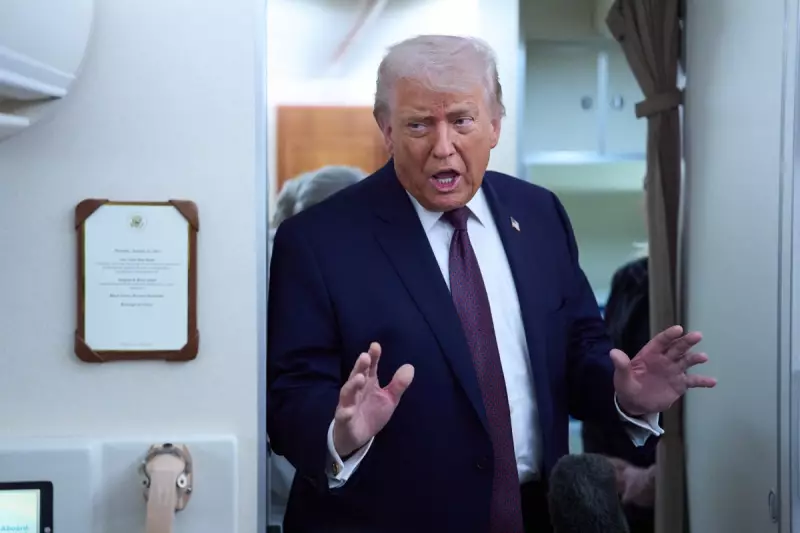
The mother of a British soldier who sustained catastrophic injuries while serving in Afghanistan has delivered a powerful condemnation of former US President Donald Trump's recent remarks about Nato forces, branding his comments as "the ultimate insult" to those who served.
False claims about frontline involvement
In a recent interview with Fox News, Trump reiterated his longstanding scepticism about Nato's commitment to America before making factually incorrect statements about the role of Nato troops during the Afghanistan conflict. The former president asserted that Nato forces "stayed a little back, a little off the front lines" during operations.
These claims have been met with outrage from military families and veterans' organisations, particularly given the substantial sacrifices made by coalition forces. According to statistics from Help for Heroes, approximately 1,186 non-American Nato troops lost their lives during the Afghanistan conflict that began in 2001, alongside more than 2,300 members of the US armed forces.

'Beyond belief' remarks from former president
Diane Dernie, mother of Ben Parkinson who suffered devastating injuries when his Army Land Rover struck a mine near Musa Qala in 2006, expressed her profound dismay at Trump's comments. "I can assure you, the Taliban didn't plant IEDs miles and miles back from the front line," she stated emphatically.
"To say that British troops, Nato forces, were not involved on the front lines – it's just a childish man trying to deflect from his own actions, and it's just beyond belief," Mrs Dernie continued. "I mean, it is so insulting, it's so hard to hear. We'd be very interested to see what our own Prime Minister's response is to this, because this is just disgraceful."
Contrast with previous military recognition
Mrs Dernie highlighted the stark contrast between Trump's remarks and the recognition previously afforded to British forces by senior American military commanders. She recalled how in 2008, General David Petraeus, then head of American forces in Afghanistan, personally met with her son and other wounded soldiers.
"He gave them all a medal, and he commented what an incredible ally the British forces were and what an amazing job they'd done, and the incredibly high price they'd had to pay," she remembered. "For Trump then to come up with this statement is just, it's insulting."
Calls for Prime Minister to respond
Speaking from her home in Doncaster, Mrs Dernie called directly on Prime Minister Keir Starmer to publicly refute Trump's claims. "He's got to refute what's said. He's got to come out," she insisted. "He's got to stand up for his own armed forces, and he's got to absolutely refute what Donald Trump said."
Her appeal carried particular emotional weight as she described her son's ongoing struggles nearly two decades after his injury. "Come and look at us, the life that Ben leads – 19-and-a-half years on, still fighting for his care, still fighting for him to have a decent life, recovering from a recent operation," she said. "To hear this man say, 'Oh, well, you just fannied about behind the front lines'. It's the ultimate insult."
Government indicates diplomatic response
Minister Stephen Kinnock has suggested that Sir Keir Starmer will address the matter directly with the former president. Speaking to LBC, Kinnock highlighted the Prime Minister's previous firm stance on international matters.
"Just look at how he's delivered on that as a leading voice in terms of the Greenland issue and strengthening the European dimension of Nato," Kinnock remarked. "So I think he will, I'm sure, be raising this issue with the president."
The minister further emphasised Starmer's commitment to British armed forces, stating: "He stood up very strongly on the issue of tariffs and said they were completely wrong, particularly at Prime Minister's Questions, where I think he really made that absolutely clear. So we do have a Prime Minister who will stand up for the values and principles I know. He's incredibly proud of our armed forces, and he will make that clear to the president."

The controversy has reignited discussions about the lasting impact of the Afghanistan conflict on British military personnel and their families, while highlighting ongoing tensions within the Nato alliance regarding historical contributions to joint military operations.





