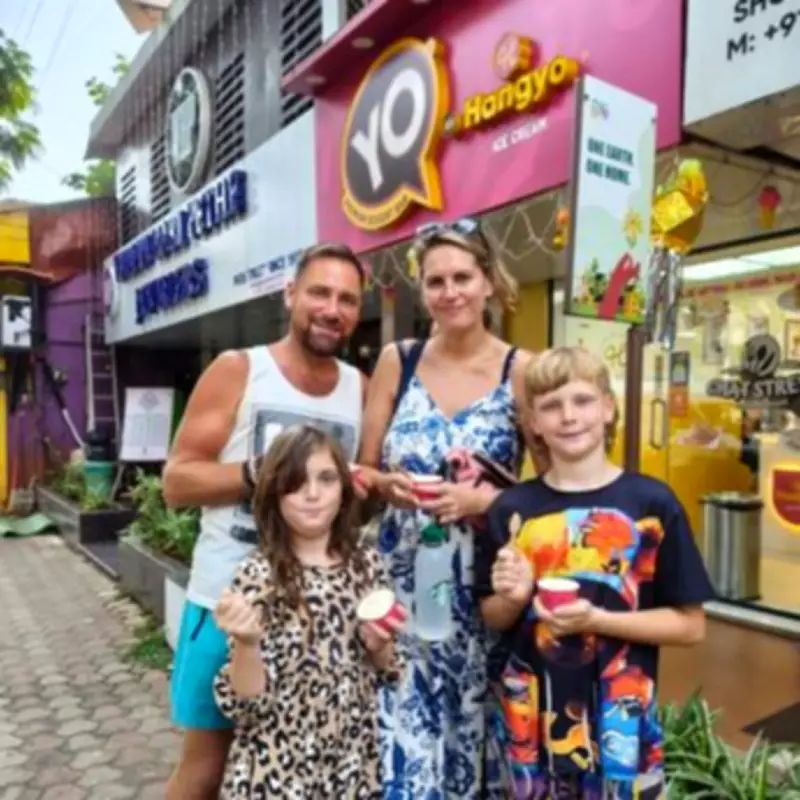
A mother has made the dramatic decision to withdraw her children from what she describes as Britain's "bonkers" school system, opting instead for a life of travel and experiential learning after her son made a heartbreaking admission about his willingness to attend school.
Turning Point: A Son's Distressing Words
Lisa Percival, 37, from Kettering in Northamptonshire, took her children Hunter, 10, and Pandora, eight, out of school last year to embark on a six-month "world schooling" journey. This educational approach replaces traditional classroom learning with immersive travel and real-world experiences. The catalyst for this radical change came when her son Hunter, who suffers from emotionally-based school avoidance (EBSA), stated he would "rather die" than continue attending school.
Emotionally-based school avoidance is a condition where children experience such severe anxiety that it prevents them from attending school, often manifesting in physical symptoms like stomach pain and headaches. Lisa insists she was "forced" to take action in April 2025 after witnessing Hunter's deteriorating mental health, including frequent meltdowns and deep depression.

Fines and Pressure From Authorities
Lisa faced significant pressure from school authorities, who warned that failure to ensure Hunter's attendance could result in fines and potential referrals to social services for neglect. In October 2023, she was fined £60 per child for taking her children on a term-time holiday to Cyprus, which ultimately pushed her to permanently deregister them from the school system.
"This wasn't a kid just saying 'I don't want to go to school because I want to play on my Xbox today'," Lisa explained. "He couldn't get out of bed. The schools were saying, 'if you don't get him in, you could get fined, and if you don't get him in, this could be referred to social services as neglect'."
Discovering World Schooling
After removing her children from school, Lisa discovered a World Schooling Facebook page and decided to embrace this alternative educational path. The family began traveling to various world school hubs—temporary, mobile gatherings designed for worldschooling families—in locations including Portugal, South Goa, and Bulgaria.
Lisa, who works as a landlord, says she is grateful to balance her job with worldschooling, which she believes puts less academic pressure on her children. She has been particularly critical of British schools for issuing fines for term-time absences, which she views as a "tax on family time."
Immersive Learning Experiences
During their travels, the children participated in diverse educational activities. Hunter beamed during a dolphin boat trip in India, while Pandora took part in an aerial skills class. The family's world schooling included a four-week program in Portugal that featured day trips and lessons about artificial intelligence, with Hunter receiving tutoring twice weekly to maintain alignment with the UK curriculum.
"Worldschooling has opened our eyes to new experiences and new ways of living," Lisa said. "What we liked about it was how the rest of the community had the same sort of mindset as us. It was a different way of life—much less academic and less pressure, with more focus on the actual child and how they were socially and emotionally."
Criticism of the British Education System
Lisa identified several issues with traditional schooling, including unmet needs, poor classroom environments, and an outdated curriculum. She described her son being placed in a windowless classroom that was too noisy for him, with no escape from the overwhelming environment.
"The curriculum is also a huge problem," she added. "The kids today are not interested in it. That's the problem with British schools—that's all they care about. They don't really care about the children. Our kids are way ahead, and we push them far too early."
Lisa also criticized the UK's school starting age of four as "ridiculous" and "damaging for their wellbeing." She highlighted the paradox that while schools would refuse permission for extended educational travel, parents can deregister their children and pursue alternative education freely.

Returning Home and Continuing Home Education
After returning to the UK in February 2026 for a reset, Lisa now homeschools her children while they attend daily social groups to maintain friendships. She is keen to distinguish between home schooling (where children remain enrolled and follow the curriculum) and elective home education (where parents take full responsibility outside the school system).
"People in the UK don't like the term home schooling," Lisa noted. "It's important to spread awareness about the difference. A lot of people get confused. Nothing we do is like school at all. We're educating them and not schooling them."
Positive Changes and Future Plans
Lisa has observed significant improvements in her children, particularly Hunter, who now wakes up happily, prepares his own meals, and engages with basic academic work. "He's so much happier now," she said. "I think that's down to us taking the pressure and demands off him, and taking him out of school has really helped."
The family plans to continue visiting world school hubs in the future, and Lisa vows never to return her children to mainstream education. She encourages other parents to research home education options if their children are unhappy at school, while acknowledging that traditional schooling works well for many families.
"I would encourage parents to be open-minded and research home education in their area if school is not working for them," Lisa advised. "School works well for lots of parents, and that's fine, and their choice, but before they demonise home education or home schooling, what I'd say is start researching."
Lisa's journey highlights growing concerns about the suitability of traditional education for some children and the increasing popularity of alternative learning approaches that prioritize emotional wellbeing and experiential knowledge over rigid academic structures.