Albanese's Unprecedented Condemnation of Iran's Supreme Leader
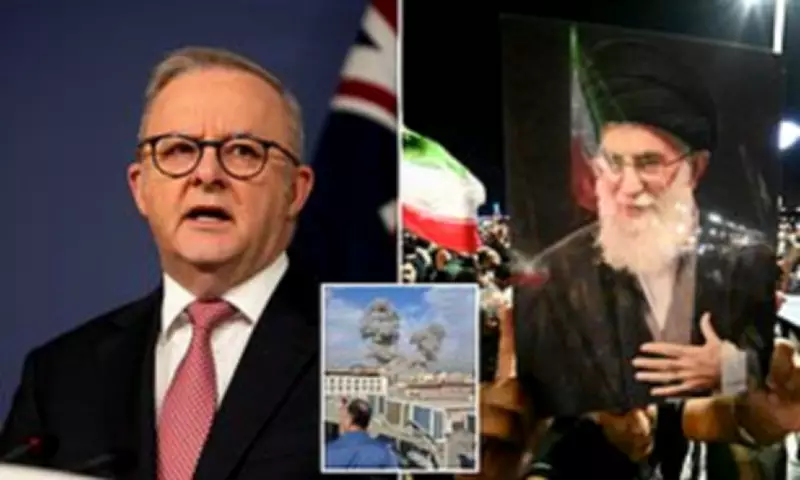
Prime Minister Anthony Albanese has issued a stark declaration that Iran's supreme leader, Ali Khamenei, "will not be mourned" following his death in coordinated US and Israeli airstrikes. In a significant departure from diplomatic convention, Albanese directly accused the hardline cleric of overseeing brutal domestic repression and fostering destabilising aggression internationally.
A Legacy of Violence and Nuclear Ambition
Speaking on Sunday after news of Khamenei's death emerged, Albanese stated, "Ayatollah Khamenei was responsible for the regime's nuclear program, support for armed proxies and its brutal violence against its own people." He emphasised that this legacy "claimed countless lives in Iran, but also internationally" and included orchestrating attacks on Australian soil. The prime minister's pointed remarks represent one of the most forceful foreign policy statements of his tenure, breaking from the typically cautious language leaders adopt upon a foreign head of state's death.
Khamenei, who ruled Iran with an iron grip for decades, presided over the nation's contested nuclear ambitions, backed powerful regional proxy groups, and oversaw sweeping crackdowns on anti-government protests. Human rights organisations have long documented Tehran's violent repression, mass arrests, and executions during periods of civil unrest.

Regional Uncertainty and Australian Priorities
Albanese's comments come amid heightened global uncertainty regarding the Middle Eastern power vacuum left by Khamenei's death and the question of his succession. When questioned about whether Australia should support regime change in Iran following the US-Israel offensive, Albanese deferred, stating it was a "matter for the Iranian people."
He expressed concern about potential escalation, noting, "I understand there are thousands of Australians with loved ones in the Middle East. The days ahead are going to be difficult." The prime minister affirmed that his government's priority remains the safety of Australians in the region, pledging to do all possible to protect citizens and personnel.
Albanese reiterated Australia's support for actions preventing Iran from obtaining nuclear weapons and threatening international peace, while urging the protection of civilians. He advised Australians to monitor the Smartraveller website for updates and repeated warnings against travel to Iran, urging those present to leave as soon as possible.
International Reactions and Military Stance
Foreign Minister Penny Wong clarified Australia's military position, stating the country "did not participate in the strikes and you would not expect us to participate," effectively ruling out troop deployment. Meanwhile, WA Liberal MP and former SAS veteran Andrew Hastie commented on Sky News, describing US President Donald Trump as "an apex opportunist" but acknowledging the strategic message of the operation.
Hastie expressed scepticism about regime change by force, citing his experience in "Forever Wars," but noted the demonstration of US military superiority against Iranian proxies backed by Chinese and Russian technology.
Confirmation of Death and UN Division
Iranian state media confirmed Khamenei's death hours after Trump announced it on social media, reporting his "martyrdom" alongside the deaths of his daughter, son-in-law, and granddaughter in the strikes. During an emergency UN Security Council session, Secretary-General António Guterres condemned the attack, warning of regional destabilisation.
The session revealed deep divisions, with US and Israeli representatives arguing the attack served global interests, while Iranian counterpart Amir Saeid Iravani denounced it as a "war crime" and criticised perceived double standards. The Department of Foreign Affairs and Trade has urged Australian citizens, permanent residents, and their families in Israel and Iran to register with authorities as the situation evolves rapidly.