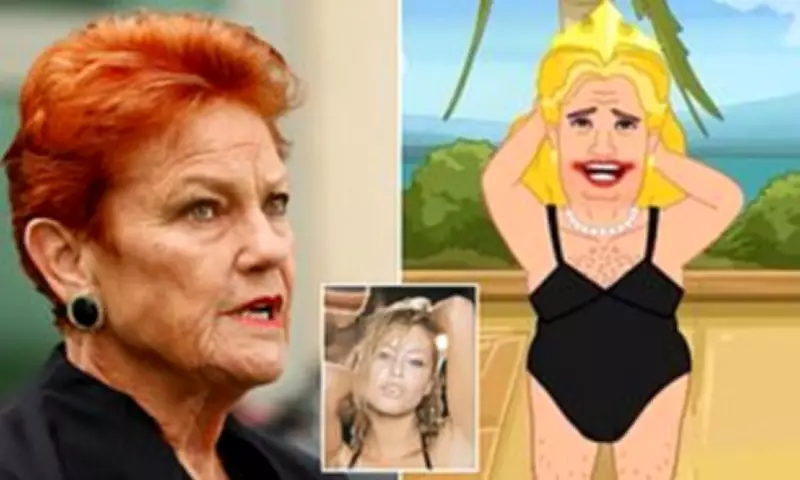
A song commissioned for Pauline Hanson's new film, A Super Progressive Movie, has been removed from Apple Music despite achieving significant commercial success on the platform's charts. The track, a reworked version of Holly Valance's 2002 hit Kiss Kiss, titled Kiss Kiss (XX) My Arse, was released on Australia Day and quickly surged to the number one position on Apple Music's iTunes best-selling songs chart.
Chart-Topping Success and Swift Removal
The song outperformed tracks by major artists like Keli Holiday and Harry Styles to claim the top spot, based entirely on paid downloads rather than streaming figures. However, its reign was brief. Apple Music took the decision to remove the track from its service shortly after it briefly surpassed Olivia Dean's Triple J Hottest 100-winning song, Man I Need, in popularity.
Lyrical Content Sparks Outcry
The removal follows widespread criticism of the song's lyrics, which directly mock progressive politics and LGBTQIA+ identities. The track includes explicit references to trans people, derogatorily labels individuals as 'snowflakes', and satirises so-called 'woke culture'.
Specific lyrics cited include: 'MWAH You will respect my pronouns / Not all ladies have ovaries, some have a penis / They say that I'm a he but I'm a she / Coz I gotta V and not a D.' Further verses continue this theme, with lines asserting 'I'll never be a him, a them or they / Cause I'm real biological woman' and making pointed political references.
Holly Valance's Political Reinvention
The song features Holly Valance, the former Neighbours star and singer now based in the United Kingdom. Valance has undergone a notable public reinvention in recent years, transforming into a vocal supporter of right-wing politics and an endorser of Nigel Farage's Reform UK party.
Pauline Hanson revealed that Valance agreed instantly to write the song for the film, posting on social media: 'When we phoned Holly Valance to write us a song for the movie, she instantly said yes.' Hanson also quipped about the potential reaction from broadcasters, stating: 'Wouldn't the ABC have a heart attack knowing they had to play this track.'
Mixed Reception and Platform Disparity
Despite its download success, the song's performance on streaming platforms was markedly different. It garnered only approximately 50,000 streams on Spotify and failed to appear on Australia's major official streaming charts or break into the country's official music rankings.
The removal from Apple Music sparked debate among some social media users. One Australian commentator questioned: 'Who gave Apple the go ahead to tell us what music we could download?' while another supporter declared, 'I'm so buying it.' Notably, the track remains available for streaming on Spotify at the time of reporting.
Context of Hanson's Film and Political Ascent
The song was created for Hanson's film, which depicts four 'progressives' who find themselves in a 'real-world' scenario led by the One Nation leader after a 'rainbow malfunction'. The film itself has attracted significant controversy ahead of its release, with concerns raised about its potential to offend viewers.
On the IMDB website, the film holds a 4.8 rating, an average derived from polarised user reviews predominantly scoring it either 1/10 or 10/10. This release coincides with a reported surge in support for One Nation among Australian voters, with polling suggesting the party is now level with the Coalition for the first time.
Hanson's Political Ambitions
Bolstered by this rising popularity, Pauline Hanson has openly discussed the possibility of her party forming a government. In an interview with Sky News, she stated: 'If we get the number one vote, and we get majority of the votes, the majority of lower house seats, yes, we can form government.' She added a note of political strategy, suggesting state-level success might precede federal power.
Apple Music was contacted for comment regarding the decision to remove the track but has not provided a public statement at this time. The incident highlights ongoing tensions between platform content moderation, artistic expression, and politically charged material in the digital age.