Bangladesh has been rocked by a second day of violent protests following the death of a prominent youth leader, with mobs targeting and setting fire to the offices of two major national newspapers in the capital, Dhaka.
Newspapers Attacked as Protests Turn Violent
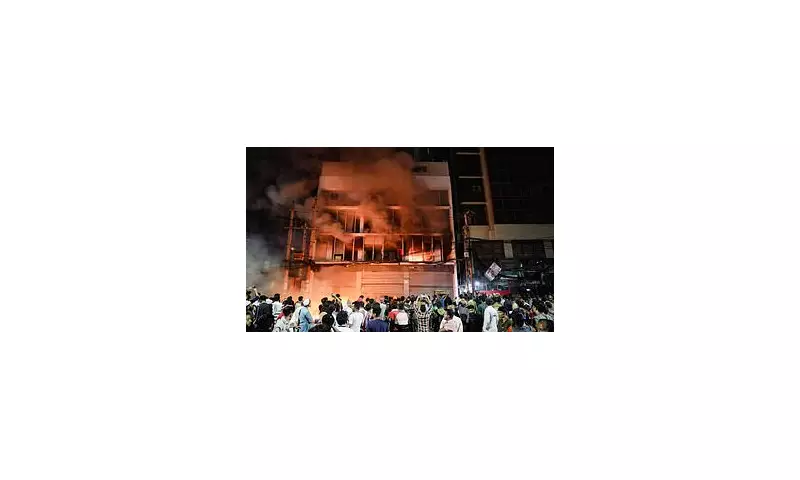
Late on Thursday night, rioters set ablaze the offices of Prothom Alo, the country's leading Bengali-language daily, and the Daily Star, its major English-language counterpart. Staff members were trapped inside the burning buildings as flames and smoke spread rapidly.
Firefighters battled the blazes and managed to rescue the journalists. Reporter Zyma Islam, trapped in the Daily Star newsroom, posted a desperate plea on Facebook, writing "I can't breathe anymore... You are killing me" before help arrived. The fires were brought under control in the early hours of Friday.
Sajjad Sharif, executive editor at Prothom Alo, condemned the assault, calling it "an attack on freedom of the press, expression, dissent and diversity of opinion." Critics of the publications accuse them of favouring neighbouring India, where Bangladesh's ousted Prime Minister, Sheikh Hasina, has taken refuge since fleeing after the 2024 uprising.
Death of a Pro-Democracy Figure Sparks Outrage
The unrest was triggered by the death of 32-year-old student leader Sharif Osman Hadi. A key figure in last year's pro-democracy uprising and a staunch critic of India, Hadi was shot by masked gunmen while leaving a mosque in Dhaka last week. He was flown to Singapore for treatment but succumbed to his injuries on Thursday.
When news of his death spread, crowds poured onto the streets in an outpouring of grief and anger. Protesters are demanding the swift arrest of his killers. "People have gathered here demanding the swift arrest of those who killed Hadi," protester Sajid Al Adeeb told AFP, claiming the assailants were "currently in India" – a claim New Delhi has not commented on.
Hadi's brother-in-law, Amir Hossain, stated the family's sole demand: "We don't need anything except justice. The perpetrators must be punished."
Government and International Response
The interim government, led by Nobel Peace Prize laureate Muhammad Yunus, spoke to the editors of the attacked newspapers and condemned the vandalism. It urged citizens to resist mob violence, blaming "fringe elements" for the chaos and warning that such actions could derail the nation's "historic democratic transition."
The UN's human rights chief, Volker Turk, expressed being "deeply troubled" by Hadi's killing and called for a "prompt, impartial, thorough and transparent" investigation. He cautioned that "retaliation and revenge will only deepen divisions."
Security has been tightened in Dhaka ahead of Hadi's funeral, with strict restrictions on drones around the parliament building. The US embassy issued an alert, urging its citizens to remain vigilant as peaceful gatherings can "turn confrontational and escalate into violence."
Protests were also reported in other major cities including Gazipur, Sylhet, and Chattogram. Bangladeshi police have launched a manhunt for Hadi's killers.