BBC Faces Intense Criticism Over BAFTAs Coverage Decisions
The British Broadcasting Corporation has ignited a significant public backlash following its handling of the BAFTAs ceremony broadcast. The controversy centres on two contrasting editorial decisions: the retention of a racial slur during the live broadcast and the removal of the phrase 'Free Palestine' from an acceptance speech. These actions have drawn widespread condemnation from viewers and raised serious questions about the broadcaster's editorial standards and consistency.
Controversial Broadcast Moments Spark Outrage
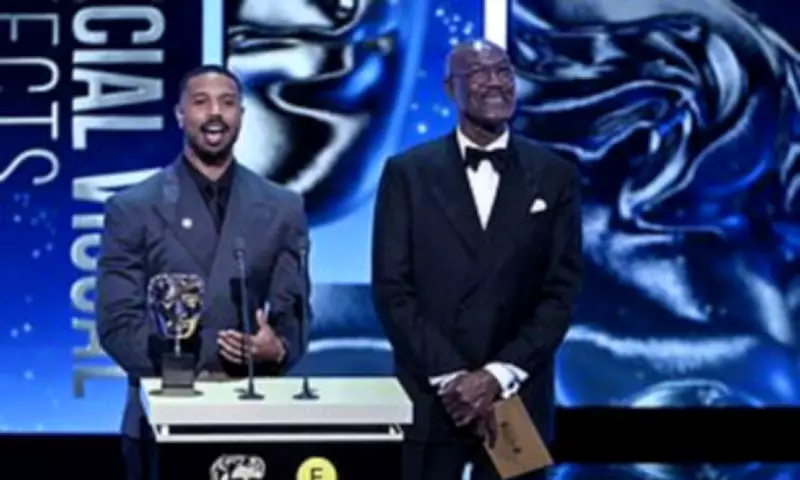
During Sunday night's BAFTAs ceremony at London's Royal Festival Hall, Tourette's activist John Davidson was heard uttering the N-word multiple times during a presentation by black actors Michael B. Jordan and Delroy Lindo. Davidson, who is the subject of the film 'I Swear' about living with Tourette Syndrome, experienced these outbursts as involuntary verbal tics associated with his condition.
Despite the BBC implementing a two-hour time delay for editing purposes, the racial slur was broadcast to millions of viewers and remains accessible on BBC iPlayer. BAFTAs host Alan Cumming was compelled to issue an apology during the broadcast, acknowledging the offensive language while explaining its involuntary nature.

Selective Editing Raises Eyebrows
In stark contrast, the BBC edited out the phrase 'Free Palestine' from filmmaker Akinola Davies Jr.'s acceptance speech after his film 'My Father's Shadow' won the BAFTA for outstanding British debut. Davies Jr. had concluded his speech by dedicating the award to various migrant groups, stating: "For Nigeria, for London, the Congo, Sudan, free Palestine."
This portion was excised from the broadcast, with viewers instead seeing Davies Jr. thanking his family. The BBC defended its decision, stating that all edits were made to fit the three-hour live event into a two-hour broadcast slot, claiming similar adjustments were made to other speeches throughout the evening.
Viewer Reactions and Online Fury
The disparity in editorial decisions has provoked intense criticism across social media platforms. Many viewers expressed bewilderment and anger that the broadcaster could edit out a political statement while allowing a racial slur to air despite the two-hour delay.
One viewer questioned: "So let me get this straight: There is a 2hr delay between the BAFTA event & the BBC airing it. In that time they managed to edit out a woman saying 'Free Palestine' but didn't edit out the man with Tourette's shouting the N word at 2 black people?"
Another commentator expressed devastation for the actors involved while condemning the editorial inconsistency: "I'm devastated that Delroy Lindo & Michael B. Jordan experienced this. What I cannot abide is the BBC/Bafta airing that moment but cutting Akinola Davies saying 'Free Palestine'."
BBC's Response and Additional Context
The BBC has issued multiple apologies regarding the racial slur broadcast. A spokesperson stated: "Some viewers may have heard strong and offensive language during the Bafta Film Awards 2026. This arose from involuntary verbal tics associated with Tourette syndrome, and was not intentional. We apologise for any offence caused by the language heard."
This incident occurs against a backdrop of increased BBC scrutiny regarding politically-charged content. Prior to the BAFTAs, it emerged that the broadcaster would be monitoring speeches more closely following last year's controversy when it streamed Bob Vylan chanting 'death to the IDF' at Glastonbury.
Expert Commentary on Disability Considerations
Ed Palmer, vice chairman of Tourettes Action, suggested the BBC should have considered bleeping out the offensive language during the editing process. Speaking on Times Radio, Palmer acknowledged the complex balance between disability accommodation and preventing offence.
"This is really one of the most acute examples of where something that is a disability can cause quite understandably huge amounts of offence to someone," Palmer stated. "If it's being pre-recorded, then bleeping it out might be a reasonable compromise."
Palmer emphasized the importance of compassion while recognizing the distress caused to both those offended and individuals with Tourette's who involuntarily utter offensive language.

Ceremony Highlights and Film Recognition
Amid the controversy, the BAFTAs ceremony celebrated numerous achievements. 'I Swear,' the film about John Davidson's life with Tourette's, earned Robert Aramayo both best actor and the EE Rising Star awards, while also winning best casting.
In another historic moment, 'Sinners' director Ryan Coogler became the first black winner of the BAFTA for best original screenplay. The film also secured best supporting actress for Wunmi Mosaku and the award for original score.
The BBC maintains that all editorial decisions were made to meet broadcast timing requirements, but the stark contrast between the two handling approaches continues to fuel debate about editorial priorities and consistency in modern broadcasting.