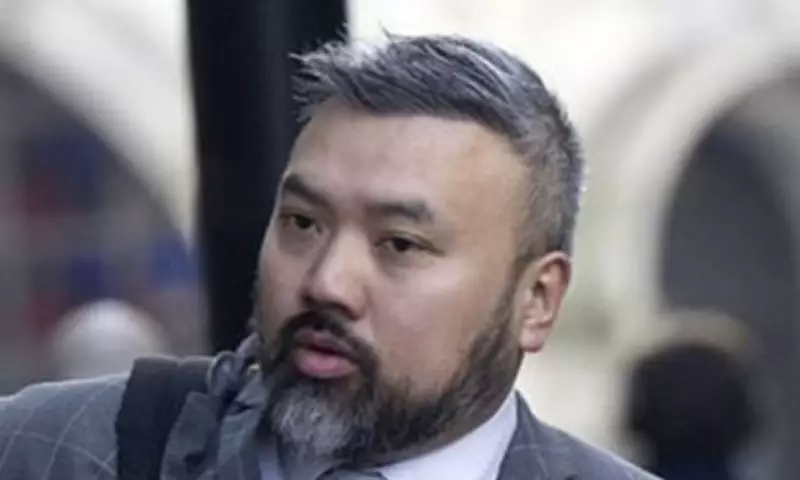
In an extraordinary and unprecedented espionage case, a UK Border Force officer has been accused of acting as a spy for China, carrying out what prosecutors described as 'shadow police operations' and surveillance on pro-democracy activists within Britain. The Old Bailey heard today that Peter Wai, 38, who worked for UK Border Force and volunteered as a special constable for the City of London Police, allegedly behaved as if he were running a Chinese 'state intelligence service' on British soil.
Alleged Collaboration with Hong Kong Authorities
Wai was allegedly tasked with gathering intelligence for Hong Kong authorities by Chung Biu Yuen, 65, also known as Bill Yuen, a retired Hong Kong superintendent who was working as a trade official in London. Prosecutors stated that this case marks the first of its kind, where individuals are accused of acting as if they were in mainland China, 'acting as if they were entitled, in this country, to act as a law enforcement or state intelligence service'.
Abuse of Access and Shadow Operations
The court heard how Wai, a former Scotland Yard officer, abused his access to Home Office systems and the UK police national computer system to conduct 'shadow police operations'. These operations included tracking individuals and breaking into homes. Prosecutor Duncan Atkinson, KC, explained: 'The defendants engaged in shadow policing operations on behalf of the Hong Kong Special Administrative Region and thereby, the People's Republic of China.'

Atkinson elaborated: 'By shadow policing operations, I mean the gathering of information about persons of interest to the Hong Kong authorities, undertaking surveillance on such persons and otherwise acting as if they were entitled, in this country, to act as a law enforcement or state intelligence service, when no such entitlement existed. Whether or not they might have been legitimate if undertaken in Hong Kong or in mainland China, the United Kingdom is not their jurisdiction, and it is for UK authorities to enforce the law.'
Targeting Pro-Democracy Activists
Jurors were informed that the pair received requests to gather intelligence on 'abscondees' after Hong Kong authorities offered £100,000 bounties for information to locate or capture individuals hiding in the UK. These individuals were suspected of links to pro-democracy protests in Hong Kong. The defendants, both dual Chinese and British nationals, are said to have been part of 'determined measures' by the Hong Kong Government and police to 'reach beyond their jurisdiction' to target dissidents of the regime.
Forced Entry and Fake Credentials
In one particularly alarming incident, the pair allegedly forced their way into a woman's house in Pontefract, West Yorkshire. They tried to trick their way into the property by posing as electricians who had come to repair a fuse and poured water under the front door to pretend there was a flood. When UK police intervened and arrested Wai at the property, they found a fake warrant card identifying him as a police superintendent.
Yuen, an employee of the Hong Kong Economic Trade Office in London, allegedly 'tasked Wai and others to undertake various activities to benefit the interests of the Hong Kong Special Administrative Region, and therefore China'. A private security company run by Wai in London was reportedly 'used as the vehicle' for searches on people.
Denials and Ongoing Trial
Both men deny charges of assisting a foreign intelligence service and foreign interference under the National Security Act. They also deny foreign interference by forcing entry into an address in Pontefract. Additionally, Wai denies misconduct in public office by conducting searches of Home Office databases without justification. The trial continues, with prosecutors emphasizing that their actions were 'for the benefit not of UK authorities but for foreign nationals, a foreign police system and the authorities of a foreign state.'