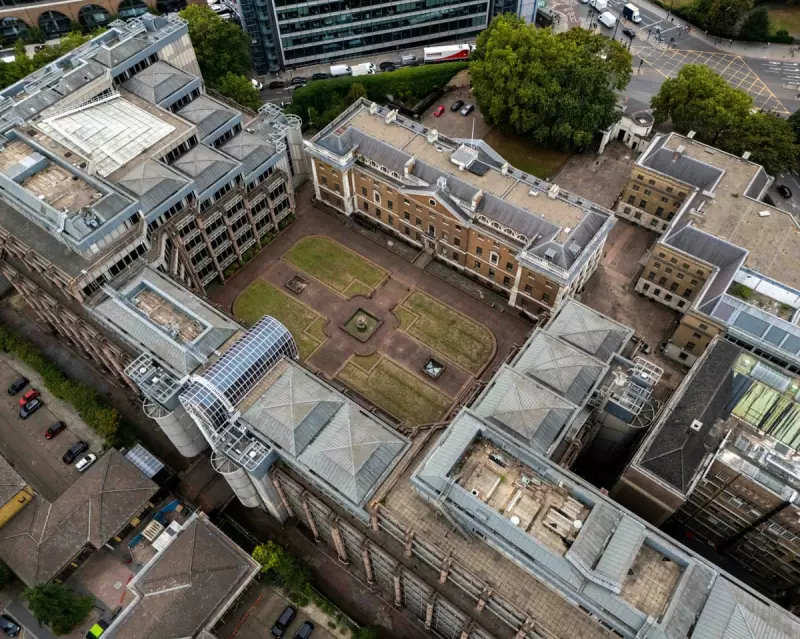
Controversial plans for a sprawling new Chinese diplomatic compound in London are on the verge of being approved, with a key council committee expected to give the project the green light next week.
A Vast Complex in the Heart of London
The proposed development, described as a "super embassy," would see China consolidate its diplomatic operations from multiple sites across the capital into a single, massive complex. The site is located on the edge of the Royal Borough of Kensington and Chelsea, a stone's throw from the Royal Albert Hall.
The application, submitted by China's Foreign Ministry, outlines a plan to demolish existing buildings and construct a large, fortified compound. This would house the embassy itself, consular services, and accommodation for diplomatic staff. The scale and design have raised eyebrows, with the proposed buildings set to be significantly larger than the current structures on the plot.
Local Opposition and Security Considerations
The plans have not been welcomed by all local residents. A campaign group, aptly named "Stop the Chinese Embassy Building," has been vocal in its objections. Their concerns range from the sheer bulk and design of the proposed buildings, which they argue are out of character with the area, to more profound worries about the potential for the site to be used for surveillance or other activities that could threaten national security.
Despite these objections, the planning officers at Kensington and Chelsea Council have recommended the scheme for approval. Their report, which will be presented to the council's planning committee on Tuesday, 20 January 2026, concludes that the benefits of the development outweigh the perceived harms. The officers argue that bringing all diplomatic functions to one location is a logical step and that the architectural design is of high quality.
Security concerns, while acknowledged, are considered a matter for the UK government's Home Office and Foreign Office rather than the local planning authority. It is understood that these government departments have not raised formal objections to the plans through the planning process.
The Path to Final Approval
The planning committee's meeting next week is the crucial hurdle. Given the officers' strong recommendation for approval, it is considered highly likely that the committee will vote in favour. However, this will not be the final step.
Due to the size and diplomatic nature of the project, the application will then be referred to the Mayor of London's office. The Mayor has the power to intervene or allow the local decision to stand. Finally, the ultimate authority rests with the Secretary of State for Levelling Up, Housing and Communities, who could "call in" the application for a final review. This is a rare step typically reserved for projects of major national significance.
If approved, the construction of the new embassy will be a physical manifestation of China's growing global presence, creating a permanent and imposing diplomatic footprint in one of London's most prestigious districts. The decision will be closely watched as a signal of the UK's approach to its complex relationship with China amidst ongoing geopolitical tensions.