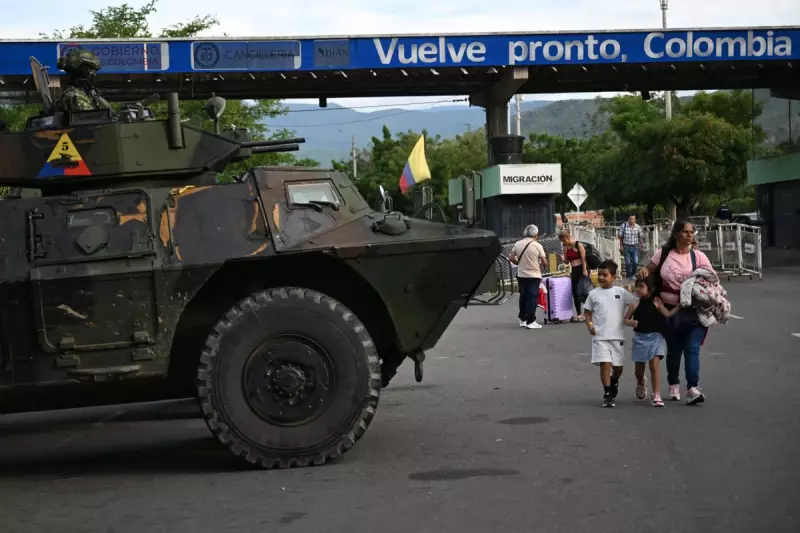
The capture of Venezuelan President Nicolás Maduro by American forces in January 2026 ignited hopes for a democratic transition and economic recovery. However, experts warn that one formidable barrier stands in the way of stabilising Venezuela: its vast, lawless border with Colombia.
A Porous Frontier of Shared Criminal Enterprise
This shadowy security zone has become a sanctuary and trafficking corridor for dangerous armed organisations. Two main groups dominate the border region. On one side are leftist Colombian guerrillas, primarily the Revolutionary Armed Forces of Colombia (FARC) dissidents and the National Liberation Army (ELN), who use Venezuelan territory to regroup, move supplies, and evade military pressure.
On the other side are Venezuela's pro-government armed militias, known as colectivos. These groups, mobilised initially by the late President Hugo Chávez after a failed 2002 coup and consistently armed by Maduro, are deployed to squash dissent and exert violence against civilians.
Over decades, these entities have frequently collaborated, transforming a porous international frontier into a shared operating space. This alliance presents a severe challenge for any new government attempting to consolidate power and impose the rule of law.
Venezuela's Role in Shielding Colombian Rebels
Research by Sally Sharif, a Lecturer in Political Science at the University of British Columbia, highlights Venezuela's critical role in sustaining Colombian insurgents. Following the historic 2016 peace deal, about one-third of disarmed FARC fighters returned to arms. A key reason was the ideological and strategic support from Maduro's government, which shared an anti-imperialist worldview with the Marxist guerrillas.
Disarmed combatants interviewed in Colombian border provinces consistently described Venezuela as a safe haven to recuperate, treat injured fighters, and regroup. Furthermore, the border facilitates a lucrative drug trafficking route. Groups like the FARC and ELN collaborate to move coca paste from Colombia's fields through Venezuela's Lake Maracaibo, from where speedboats ferry cocaine to the United States.
Any attempt to alter the status quo in Venezuela will therefore meet fierce resistance from Colombian armed groups who have benefited for years from this permissive environment.
The Entrenched Threat of Venezuelan Colectivos
The threat is not imported solely from Colombia. Venezuela's homegrown colectivos represent a deeply entrenched destructive force. In the days following Maduro's capture, these militias were visibly patrolling the streets of Caracas on motorbikes, armed with rifles, conducting checkpoints, and demanding access to phones.
This demonstrated that Chávez's ideology retains street-level muscle, even with its top leader detained. Once mobilised, such militias are notoriously difficult to disband, allowing regimes to outsource violence and avoid accountability. Sharif's research indicates almost half of all armed groups return to fighting after disarmament.
With violence surging in Colombia, any crackdown on Venezuelan colectivos risks pushing them across the border, where allied guerrillas can offer shelter until the pressure subsides.
A Sticking Point for Democracy and the Rule of Law
International borders often become sore spots for countries attempting to build peace and consolidate state power, as seen in conflicts like the Democratic Republic of the Congo. The World Bank encountered this in Africa, leading to cross-border demobilisation programmes.
Similarly, the Colombia-Venezuela border has fuelled cycles of violence in Colombia for decades. It is now poised to be the primary sticking point for any future Venezuelan government aiming to reduce drug trafficking, establish democratic governance, and restore the rule of law. Dismantling this entrenched, cross-border criminal ecosystem will be a monumental task essential for Venezuela's rebirth.