EU Diplomats to Meet Board of Peace Director Over Gaza's Future in Brussels
The European Union's top diplomats are scheduled to meet on Monday with the director of the Board of Peace in Brussels, following a controversial and shaky embrace of U.S. President Donald Trump's efforts to secure and rebuild the war-ravaged Gaza Strip.
Key Participants and Agenda
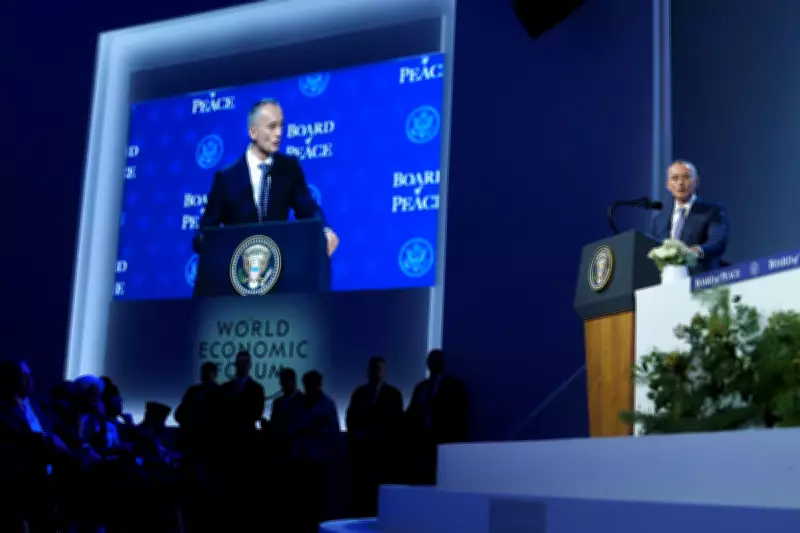
Nikolay Mladenov, a former Bulgarian politician and United Nations diplomat selected by Trump to manage the Board of Peace, will engage with EU foreign policy chief Kaja Kallas and foreign ministers from across the 27-nation bloc. The meeting is expected to address not only Gaza's future but also the ongoing war in Ukraine and fresh sanctions against Russia.
Positioned just across the Mediterranean Sea from the Middle East, the EU maintains deep historical and political links to both Israel and the Palestinians. The bloc currently plays a critical oversight role at the Rafah border crossing and stands as the top donor to the Palestinian Authority, underscoring its significant regional influence.

Internal EU Divisions Over Board Cooperation
The question of whether to collaborate with the Trump-led Board of Peace has created divisions among national capitals from Nicosia to Copenhagen. While the EU generally supports the United Nations' mandate in Gaza, member states are split on engaging with this new initiative.
EU members Hungary and Bulgaria are full members of the board, alongside EU candidate countries Turkey, Kosovo, and Albania. Additionally, twelve other EU nations sent observers to the inaugural meeting in Washington on Thursday: Austria, Croatia, Cyprus, Czech Republic, Finland, Germany, Greece, Italy, Netherlands, Poland, Romania, and Slovakia. The EU flag was prominently displayed at the event alongside representatives from both observer and member nations.
Notable Absences and Institutional Tensions
Several prominent European leaders declined invitations to join the board, including French President Emmanuel Macron and European Commission President Ursula von der Leyen, as did Pope Leo XIV. However, von der Leyen did dispatch European Commissioner for the Mediterranean Dubravka Šuica to the Washington meeting as an observer.
This move sparked criticism from French Foreign Minister Jean-Noël Barrot, who argued that sending Šuica without consulting the European Council—the group comprising the bloc's leaders—violated EU regulations. "The European Commission should never have attended the Board of Peace meeting in Washington," Barrot stated in a social media post. "Beyond the legitimate political questions raised by the 'Board of Peace,' the Commission must scrupulously respect European law and institutional balance in all circumstances."
In response, von der Leyen's spokesperson Paula Pinho clarified on Friday that "it is in the remit of the Commission to accept invitations." She emphasized that while the executive branch is not formally joining the board, it aims to influence reconstruction and peacekeeping efforts in Gaza beyond its role as the primary donor to the Palestinian Authority.
Trump's Ambitious Vision and Practical Challenges
Trump's expanding ambitions for the Board of Peace range from governing and rebuilding Gaza as a futuristic metropolis to challenging the United Nations Security Council's traditional role in conflict resolution. However, these aspirations may be tempered by the harsh realities on the ground in Gaza, where progress toward achieving even the narrower aims of the ceasefire has been limited thus far.
The Brussels meeting therefore represents a crucial juncture for EU diplomacy, balancing strategic interests, institutional integrity, and the urgent humanitarian needs of Gaza's population.