EU Leaders Convene in Belgium to Address Global Pressure
Leaders from across the European Union are meeting on Thursday at the historic Alden Biesen castle in Belgium, as the 27-nation bloc confronts mounting challenges from multiple fronts. The gathering aims to formulate a cohesive response to antagonism from U.S. President Donald Trump, strong-arm economic tactics from China, and hybrid threats from Russia. These pressures have forced a significant rethink of Europe's traditional approaches to diplomacy and international trade.
Divergent Visions for Europe's Future
As leaders prepare to cross the drawbridge into the 16th-century castle, clear fault lines are emerging regarding how the EU should adapt. Belgian Prime Minister Bart De Wever captured the sentiment of many, stating at a preliminary meeting on Wednesday, "We all know we must change course, and we all know the direction. Yet it sometimes feels like we’re standing on the bridge of the ship staring at the horizon without being able to touch the helm." Thursday's discussions are intended to shape concrete proposals for a more comprehensive summit scheduled for late March.
Competing Strategies: Deregulation vs. Protectionism
German Chancellor Friedrich Merz and Italian Prime Minister Giorgia Meloni are leading a faction within the bloc that advocates for sweeping deregulation, revitalizing Europe's relationship with Washington, and pursuing ambitious trade agreements such as the recent deal with Mercosur nations in South America. "We must deregulate every sector," Merz emphasized on Wednesday. This approach contrasts sharply with the position of France, creating a fundamental divide.

A key point of contention is defense spending, specifically whether EU funds should be restricted to purchasing from European arms manufacturers. French President Emmanuel Macron insists on prioritizing EU companies, while Merz and Meloni argue for allowing purchases from both foreign and European firms. Macron has broader called for "European preference" in strategic sectors including cleantech, chemicals, steel, automotive, and defense, warning that without such protections, "Europeans will be swept aside."
Economic Security and Financial Instruments
The summit will also debate new financial mechanisms to shield the bloc in a global trading environment destabilized by Trump's tariff policies and China's restrictions on critical mineral exports. Macron is renewing his push for the EU to have borrowing capabilities, proposing "Eurobonds for the future" as a means to challenge the dominance of the US dollar. Meanwhile, Merz and Meloni are distancing themselves from the comprehensive economic revitalization strategy championed by former European Central Bank head Mario Draghi, which includes deregulation, trade diversification, and massive infrastructure investment.
Von der Leyen's Emphasis on Economic Strength
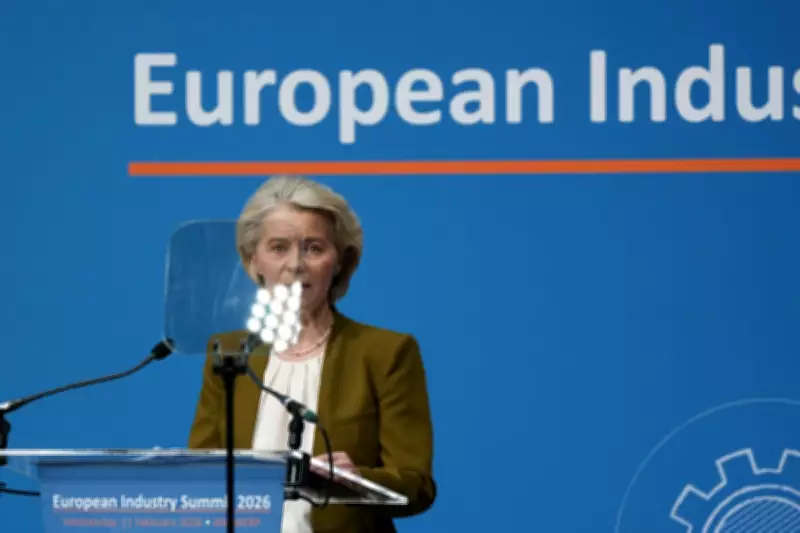
European Commission President Ursula von der Leyen, aligning with Merz's European People's Party, has underscored that economic power is foundational to global influence. In speeches at the European Parliament in Strasbourg and the European Industry Summit in Antwerp, she stated, "Our power on the global stage depends greatly on our strength on the economic front." Germany and Italy are expected to urge leaders to act by reducing EU bureaucracy, strengthening the single market, and ensuring a trade policy based on fair rules.
Public Demand for Stronger EU Leadership
According to the latest Eurobarometer poll, citizens across the bloc are increasingly calling for a more unified, robust, and ambitious EU leadership in the face of military threats, economic pressures, and climate instability. Alberto Alemanno, a professor of EU law at HEC Paris, noted, "There has never been a better time for European leaders, national political leaders, to actually leverage on these European citizens’ demand for greater European action." This public sentiment adds urgency to the summit's deliberations as Europe seeks to navigate an increasingly complex and hostile global landscape.