European Leaders Condemn Trump's Russian Oil Sanctions Waiver
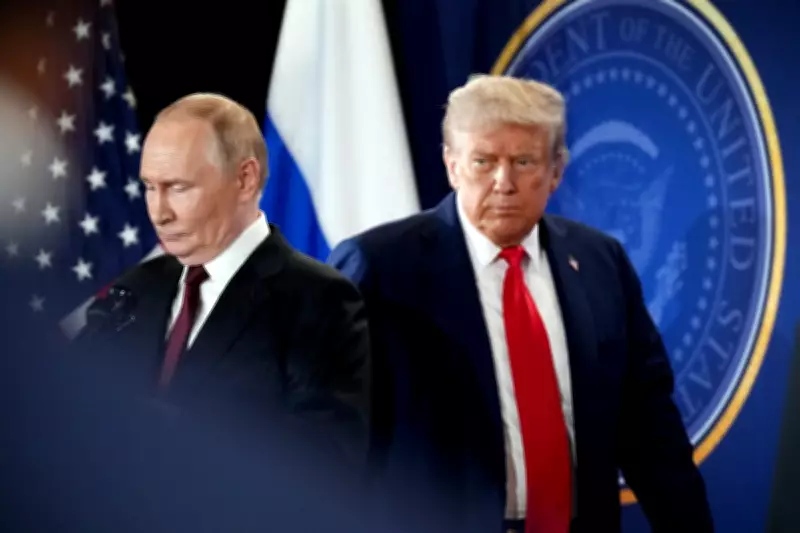
European leaders have issued strong condemnations of Donald Trump's decision to temporarily ease sanctions on the purchase of Russian oil, warning that the move could provide Moscow with billions of dollars to fuel its ongoing war against Ukraine. The controversy erupted after the US president issued a 30-day waiver allowing countries to buy sanctioned Russian oil and petroleum products currently stranded at sea, a measure Trump claims will stabilise global energy markets.
Zelensky Warns of Financial Windfall for Russia
Ukrainian President Volodymyr Zelensky expressed grave concerns about the decision, stating that the waiver could net Moscow as much as $10 billion to support Vladimir Putin's military campaign. "This certainly does not help peace," Zelensky declared during a news conference in Paris, where he was meeting with French President Emmanuel Macron. The Ukrainian leader emphasised that Russia spends energy revenue on weapons that are subsequently used against Ukrainian forces and civilians.
Zelensky also voiced frustration about waning international attention on the Ukraine conflict amid the escalating crisis in the Middle East. "It is understandable that the attention of the world is moving to the Middle East," he acknowledged, but added, "It's not good for us." The Ukrainian president revealed that American negotiators had informed Kyiv that security concerns related to the Middle East situation prevented them from leaving the United States for planned peace talks, effectively stalling diplomatic efforts to end the conflict.
European Council President Expresses Security Concerns
European Council President Antonio Costa described Trump's decision as "very concerning" and warned that it directly impacts European security. "Weakening sanctions increases Russian resources to wage the war of aggression against Ukraine," Costa stated in a social media post. German Chancellor Friedrich Merz echoed these sentiments, criticising the move as the "wrong" decision during a separate news conference.
French President Emmanuel Macron, speaking alongside Zelensky in Paris, argued that the reported shutdown of the Strait of Hormuz "in no way" justified lifting sanctions on Russian oil. The strategic waterway, through which approximately one-fifth of global oil supply passes, has been affected by regional tensions.
British Position Contrasts with American Approach
In a significant divergence from American policy, British Prime Minister Sir Keir Starmer confirmed that the United Kingdom will not follow the US in easing sanctions on Russian oil. Starmer warned that such measures risk helping Putin's "war machine" and urged international allies to maintain pressure on Moscow. Foreign Secretary Yvette Cooper accused Russia and Iran of attempting to "hijack the global economy" through their actions.
Meanwhile, US Treasury Secretary Scott Bessent defended the waiver as a "tailored, short-term" measure that would not provide significant financial benefit to the Russian government. He argued that the move addresses "instability posed by the terrorist Iranian regime" while having limited impact on Moscow's revenue from oil sales.
Regional Violence Continues Amid Diplomatic Tensions
As diplomatic disagreements unfolded, violence continued in Ukraine with Russian shelling killing one person and wounding six in the Dnipropetrovsk region. In the Zaporizhzhia region, four people were injured in another attack, while across the border in Russia's Belgorod region, one resident died in a Ukrainian strike. Explosions were also reported in Kyiv in the early hours, with Ukraine's Air Force warning of potential ballistic missile threats.
The sanctions controversy comes as Russia designated US academic Nina Khrushcheva, great-granddaughter of former Soviet leader Nikita Khrushchev, as a foreign agent for disseminating what Moscow considers false information about Russian policies and opposing the invasion of Ukraine. Khrushcheva, who continues to make research trips to Russia, said she was not surprised by the designation, noting the historical irony given her ancestor's role in transferring Crimea to Ukraine in 1954.