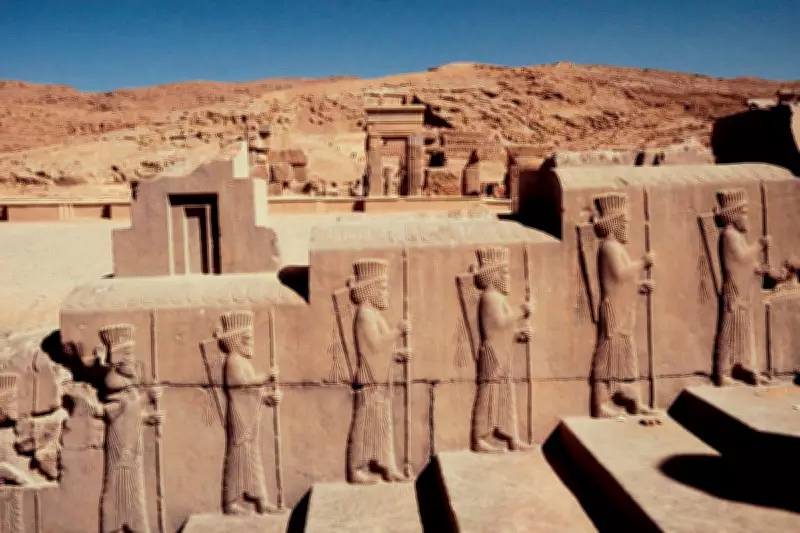
In 1971, at just eleven years old, I accompanied my late father, the renowned poet Ted Hughes, to Iran. He was there to write a play titled Orghast for the Shiraz-Persepolis Festival of Arts, which celebrated the 2500th anniversary of the Persian Empire. This journey occurred eight years before the Shah was deposed and the Ayatollahs assumed control, marking a pivotal moment in Iran's history.
A Theatrical Experience in Ancient Ruins
The play Orghast, directed by Peter Brook, was a unique production staged in two parts. The first half unfolded at dusk amidst the majestic ruins of Persepolis, where ancient stones whispered tales of empires past. Afterward, the audience enjoyed a meal before driving into the vast desert to the tombs at Naqsh-e Rostam for the second act.
Prometheus and the Blazing Oil
In this desert setting, Prometheus was depicted chained to the cliff face near the tomb of Darius I. A dramatic element involved a gigantic bowl of blazing oil suspended on chains, symbolizing the sunrise. This was when the eagle would arrive to devour Prometheus's liver, a punishment from Zeus for giving fire to humanity. As an immortal, his liver regenerated nightly, ensuring the torment repeated each dawn.
Contrasts of Freedom and Oppression
Hearing about the sudden death of Ayatollah Khamenei in an explosion recently transported me back to those memories. Observing the rites of spring in my garden, with a scented edgeworthia in bloom and a seemingly intoxicated bumblebee, highlighted stark contrasts. I recalled a young Iranian woman I met during my visit, dressed in striped knee-high socks and modern attire, eager for Westernization and personal freedoms.
Yet, this memory was shadowed by another: stumbling upon a dead man in the street, punished under the Shah's regime with his hands and ears severed and his tongue slit, reportedly for theft, gossip, and eavesdropping. When the Shah fell in 1979, women were forced back into hijabs, stripping them of the modern clothes and visibility they had briefly enjoyed.
Poetic Reflections on Change
My eleven-year-old self trailed my father through Persepolis and the tomb of Darius, witnessing Prometheus's plight under the blazing oil's light until sunrise over Tehran, Shiraz, and Isfahan. In the Baghe Ferdows, my father spun Orghast from his imagination, like an ancient spider web into which Peter Brook placed actors.
The Persian woman who studied me, seeking clues in my appearance, symbolized a desire for freedom that was soon curtailed. The old man's corpse laid bare our differences, a grim reminder of the era's brutality. I longed to return, but the revolution changed everything, until recent missile strikes blew the Ayatollah into history, their echoes touching even a drunken bumblebee in my garden, reviving these Persian memories.