
Greenland's political leadership has delivered a forceful and unequivocal rejection of former US President Donald Trump's expressed interest in purchasing the vast, semi-autonomous Arctic territory.
A Firm Rejection from Nuuk
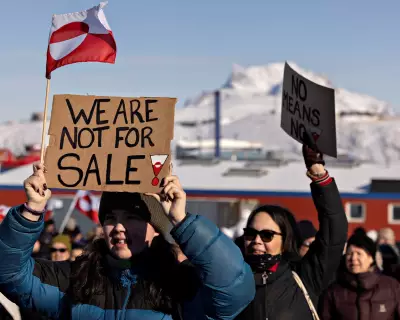
In a strongly-worded collective statement issued on Friday, Prime Minister Jens-Frederik Nielsen and other party leaders from the island dismissed the notion outright. They framed the proposal as an affront to Greenlandic sovereignty and national identity.
The statement left no room for ambiguity, declaring, 'We don't want to be Americans, we don't want to be Danes, we want to be Greenlanders.' It firmly asserted that 'Greenland’s future must be decided by the Greenlandic people.' The leaders called for an end to what they described as the United States' 'contempt for our country.'
Trump's Comments Spark Diplomatic Row
The rebuke follows comments made by Donald Trump on January 9, where he revealed his interest in acquiring Greenland. According to reports from the Associated Press, Trump stated he was looking for a deal to acquire the country 'the easy way.'
He justified the controversial idea with strategic concerns, warning, 'Right now we are going to do something on Greenland, whether they like it or not, because if we don't do it, Russia or China will take over Greenland and we're not gonna' have Russia or China as a neighbour.'
While claiming to be 'a fan' of NATO ally Denmark, which holds sovereignty over Greenland's foreign and defence policy, Trump added a stark caveat. He suggested that if an easy acquisition was not possible, 'we're going to do it the hard way.'
Geopolitical Ramifications and Sovereignty
This incident highlights the escalating geopolitical competition in the Arctic, a region rich in resources and gaining strategic importance due to climate change. Greenland's location makes it a prized asset for global powers.
The response from Nuuk underscores the growing assertiveness of Greenland's home-rule government. While remaining part of the Kingdom of Denmark, Greenland has steadily moved towards greater self-determination. This firm stance against a proposition from a major power like the United States marks a significant moment in its political development.
The episode is likely to strain diplomatic relations and raises questions about the future of US engagement in the Arctic region. It also serves as a potent reminder that local populations and their elected leaders are central actors in determining the fate of their territories, regardless of external power plays.