Iran has unleashed a series of aggressive attacks targeting Israel and its Gulf Arab neighbors, deploying advanced missiles that evaded air defenses and resulted in fatalities near Tel Aviv. This escalation follows the killing of a top Iranian leader in an airstrike, as the Middle East conflict shows no signs of abating, with Israel continuing intense strikes on Lebanon.
Iran's Retaliatory Strikes Across the Region
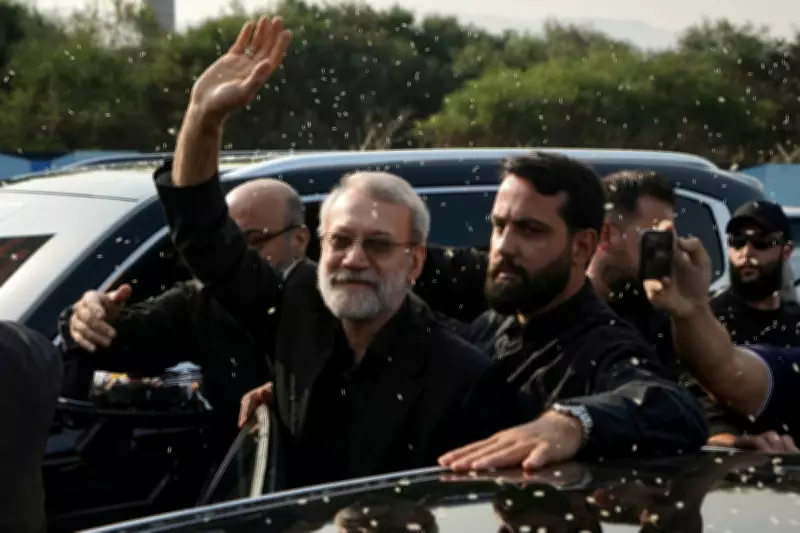
In response to the assassination of Ali Larijani, secretary of Iran’s Supreme National Security Council and a key political figure, the Iranian Revolutionary Guard confirmed launching multiple-warhead missiles at central Israel on Wednesday. These missiles, including the Khorramshahr-4 and Qadr models, are designed to bypass missile defense systems and overwhelm radar tracking, increasing their effectiveness.
Israel reported at least two salvos of incoming fire, with medical services confirming two deaths in Ramat Gan, east of Tel Aviv. Footage captured by The Associated Press showed at least one missile releasing cluster munitions over Israeli territory, highlighting the sophistication of Iran's arsenal.
Gulf States Under Fire
Simultaneously, Iran targeted energy infrastructure and military bases in Gulf countries, including Saudi Arabia's Eastern Province—home to major oil fields—as well as Kuwait, Bahrain, Qatar, and the United Arab Emirates. These strikes are part of a broader strategy to drive up global oil prices and pressure Washington to retreat from the conflict.
Saudi Arabia intercepted a ballistic missile aimed at the Prince Sultan Air Base, which hosts American forces, while Australia's Prime Minister Anthony Albanese reported a projectile caused a minor fire at a base in the UAE near Dubai, with no injuries. Explosions were also heard near Al Minhad Air Base, a transit hub for Western nations in the region.
Israel's Military Actions in Lebanon
Israel maintained pressure on Lebanon with strikes targeting Iran-backed Hezbollah militants, hitting multiple apartment buildings in Beirut and killing at least six people. One building in central Beirut was flattened after an evacuation notice, marking the fourth time it had been targeted. Israel's military claimed the structure was used by Hezbollah to store millions of dollars for financing activities, though no evidence was provided.
According to Lebanese authorities, Israeli strikes have displaced over 1 million people—approximately 20% of the population—and resulted in more than 900 deaths. In Israel, 14 people have been killed by Iranian missile fire, while at least 13 U.S. military members have died since the conflict began.
Nuclear and Economic Implications
The Bushehr nuclear power plant in Iran was struck by a projectile, but the International Atomic Energy Agency reported no injuries or damage. IAEA leader Rafael Grossi urged maximum restraint to prevent a nuclear accident, underscoring the high stakes of the escalating warfare.
Economically, the conflict has driven Brent crude oil prices stubbornly above $100 per barrel in early trading, a surge of over 40% since the war started on February 28. Iran's stranglehold on the Strait of Hormuz—a critical shipping lane for a fifth of the world's oil—has raised fears of a global energy crisis. In response, the U.S. military fired deep penetrator bombs on Iranian missile sites near the strait.
Broader Regional Fallout
The U.S. Embassy in Baghdad came under fire for the second consecutive day, with Iraqi security officials citing pro-Iran militia attacks on American targets since the war's inception. In Iran, the Red Crescent reported more than 1,300 deaths since February 28, highlighting the human toll of the conflict.
Key figures like Gen. Gholam Reza Soleimani, head of the Revolutionary Guard’s Basij militia, were also killed in Israeli strikes, adding to the cycle of retaliation. Larijani, a former parliamentary speaker and senior adviser on nuclear talks, had been sanctioned by the U.S. for coordinating Iran's suppression of protests, illustrating the deep-seated tensions fueling the war.
As the Middle East teeters on the brink of further escalation, with no diplomatic breakthroughs in sight, the international community watches anxiously, grappling with the implications for global security and energy markets.