Iran Launches Attacks on Tanker and Airport as Israel Strikes Beirut
In a significant escalation of regional hostilities, Iran targeted a commercial tanker off the coast of Qatar and struck Kuwait International Airport with a drone early Wednesday. Concurrently, Israeli forces launched attacks in Beirut, resulting in the deaths of at least five individuals. These developments unfold as Tehran, for the first time, acknowledged direct communications from Washington regarding a potential ceasefire, though diplomatic progress remains elusive.
Iran's Unrelenting Assaults on Gulf Neighbours
Iran's aggressive posture in the Gulf region shows no signs of abating. The British military's United Kingdom Maritime Trade Operations centre confirmed that a tanker near Qatar was hit by a projectile, though the crew emerged unharmed. This incident follows an attack on a Kuwaiti oil tanker off Dubai just a day prior, part of a series of over twenty ship assaults attributed to Iran since the conflict intensified.
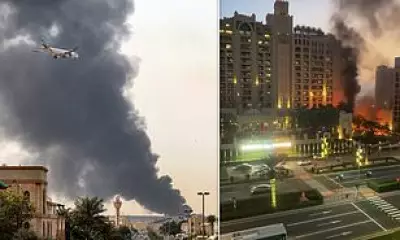
In Kuwait, a drone strike ignited a substantial fire at a fuel tank within Kuwait International Airport, as reported by the state-run KUNA news agency. Emergency crews are actively working to contain the blaze. Additional alerts were sounded in Bahrain due to incoming missiles, which caused a fire at a business facility, while Saudi Arabia successfully intercepted two drones. Israel also experienced air raid sirens, though no immediate damage or casualties were reported.

Israel's Retaliatory Strikes and Regional Fallout
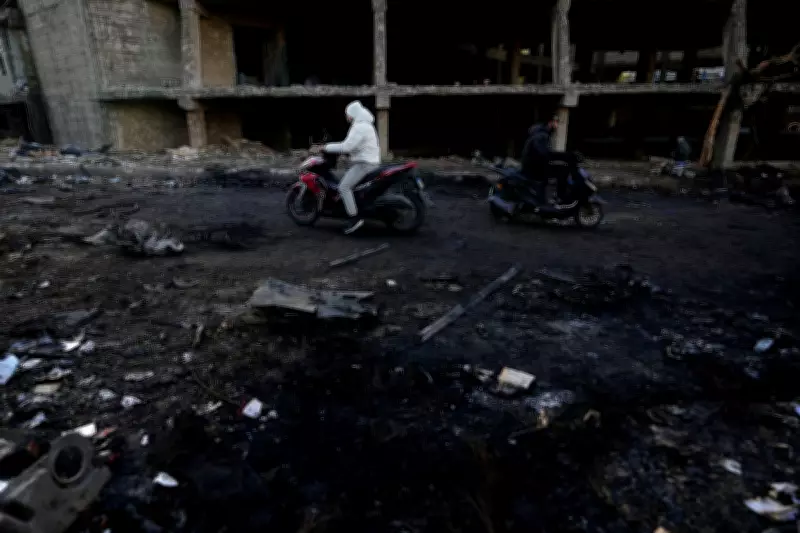
Israel responded with its own military actions, targeting a facility in Iran allegedly involved in fentanyl production for chemical weapons purposes. Iranian authorities admitted the strike on the Tofigh Daru factory but maintained it solely produced hospital medications. In Beirut, an Israeli attack on a neighbourhood resulted in at least five fatalities and twenty-one injuries, exacerbating fears of a prolonged military occupation in Lebanon following Israel's invasion in response to Hezbollah missile launches.
The human cost of the conflict continues to mount, with over 3,000 lives lost across the region. Lebanese authorities report more than 1,200 deaths and one million displacements, while Iran cites over 1,900 fatalities. Israel has recorded nineteen deaths, and the United States has suffered thirteen service member fatalities with 348 wounded since the war's inception.
Ceasefire Negotiations and Strategic Stalemate
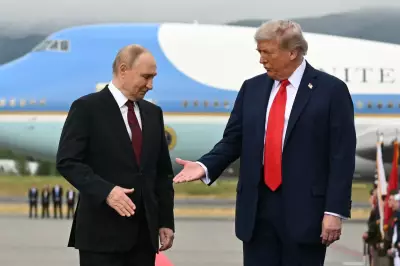
Amid the violence, diplomatic efforts are underway but show little promise. Iranian Foreign Minister Abbas Araghchi confirmed receiving direct messages from U.S. Mideast envoy Steve Witkoff, yet he emphasised that trust levels remain at zero and no direct negotiations are occurring. U.S. President Donald Trump has presented a fifteen-point ceasefire plan, demanding the reopening of the Strait of Hormuz, a critical waterway where Iran has throttled ship traffic, causing oil prices to surge by over 40% to above $104 per barrel.
Iran's five-point response insists on retaining sovereignty over the strait, through which a fifth of global oil transits. Trump has suggested the war could conclude within two weeks, even with Iran controlling the strait, shifting responsibility for its security to reliant nations like France, despite Europe's minimal oil imports from the region. He has warned of broadening offensives, including attacks on Kharg Island and desalination plants, if a ceasefire is not reached promptly.
Economic and Military Implications
The conflict's economic repercussions are severe, with Iran's grip on the Strait of Hormuz and attacks on energy infrastructure driving gas prices to their highest since 2022 and triggering stock market volatility. In preparation for potential assaults, thousands of U.S. Marines and paratroopers have been deployed to the region, though accessing Kharg Island would require navigating the mined Persian Gulf.
As tensions persist, the international community watches closely, with Trump scheduled for a prime-time address to outline further strategies. The ongoing strikes and diplomatic deadlock underscore the fragile state of regional stability, with no immediate resolution in sight.