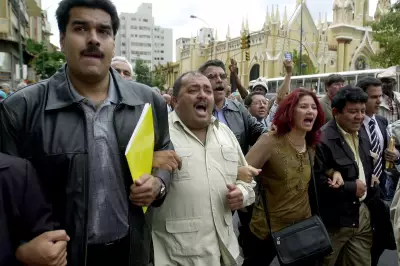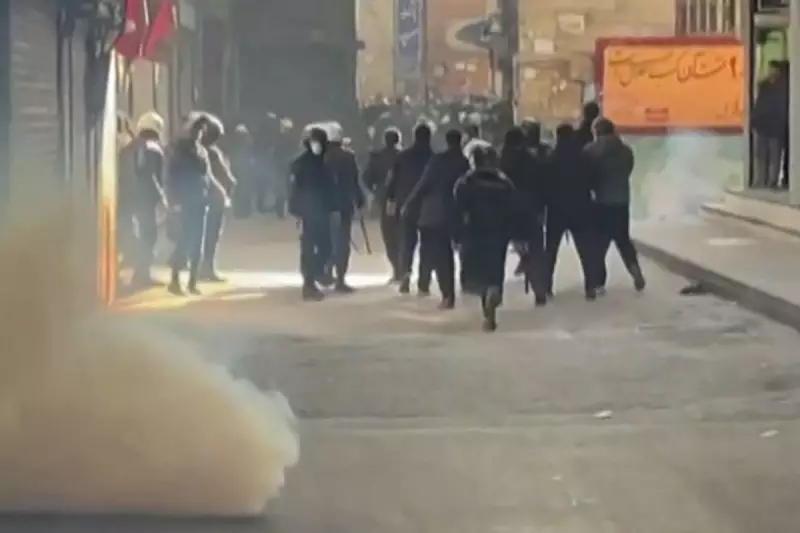
Iran's theocratic regime is grappling with one of the most profound threats to its authority in over four decades, as widespread civil unrest enters a critical third week. The scale and intensity of the demonstrations are drawing stark comparisons to the 1979 revolution that toppled the Shah, signalling a potential seismic shift in the nation's political landscape.
A Nation Pushed to the Brink
The immediate trigger for the current turmoil is a deep-seated economic crisis, exacerbated by stringent international sanctions. Despite Iran's vast natural resources and cultural wealth, government incompetence has decimated the national currency and plunged living standards for all but a privileged few. The elite Islamic Revolutionary Guard Corps remains insulated from the hardship, a fact fuelling widespread public anger.
This economic discontent has fused with long-standing grievances over political repression, creating a protest movement of unprecedented breadth. Unlike the 2022 'Woman, Life, Freedom' uprising, which was sparked by the death of Mahsa Amini, the current unrest appears to mobilise the entire urban population, including many older Iranians not traditionally seen as rebels. Verified footage shows attacks on symbols of the Islamic Republic, including posters of the Supreme Leader and the national flag.
Leadership in Crisis and a Weakened Spell
The regime's response has been characteristically harsh yet revealing of its anxiety. Authorities have imposed a severe block on internet and international telephone access, making the situation unusually opaque for outside observers. In a special television broadcast, the 86-year-old Supreme Leader Ayatollah Ali Khamenei showed no sign of compromise, accusing protesters of being foreign mercenaries and blaming former US President Donald Trump for fomenting trouble.
His uncompromising rhetoric contrasted with the slightly more conciliatory tone of the nominally elected President, Masoud Pezeshkian, who acknowledged potential 'genuine' grievances. However, in Iran's hybrid system, the theocratic arm invariably prevails, a dynamic that may not ensure the regime's survival this time. The security apparatus itself appears strained, with reports suggesting some police and Revolutionary Guard members are uncertain where their loyalties lie.
Regional Vulnerabilities and the Prospect of Change
Iran's international standing has also suffered recent blows, compounding the regime's domestic crisis. Military setbacks for its proxies, including Hamas, Hezbollah, and the Houthis, along with successful Israeli strikes on Iranian nuclear facilities and the assassination of a key figure on Iranian soil, have exposed strategic weaknesses. These events have damaged the government's prestige and made Tehran look vulnerable.
The explicit calls from some quarters for the restoration of the monarchy and the return of Reza Pahlavi, the late Shah's son, underscore the radical nature of the current moment. While the fall of the Islamic Republic would be welcomed in capitals like Washington and Jerusalem, the primary driver remains internal Iranian discontent. The danger of a descent into chaos or civil war is real, with potential global ramifications for oil supplies and regional stability.
As the protests continue, the spell of theocratic rule has undoubtedly weakened. The world now watches to see if this marks the beginning of a counter-revolution that could finally build a new, free Iran, or if the regime will resort to even greater repression to cling to power.