Iran's Top Security Chief Ali Larijani Killed in Israeli Air Strikes
In a significant escalation of Middle Eastern hostilities, Israel has claimed responsibility for the targeted killing of two senior Iranian security officials, dealing what analysts describe as a major blow to the Islamic Republic's leadership structure. The strikes occurred amidst intensifying regional conflict that shows no signs of abating.
Key Figures Eliminated in Precision Strikes
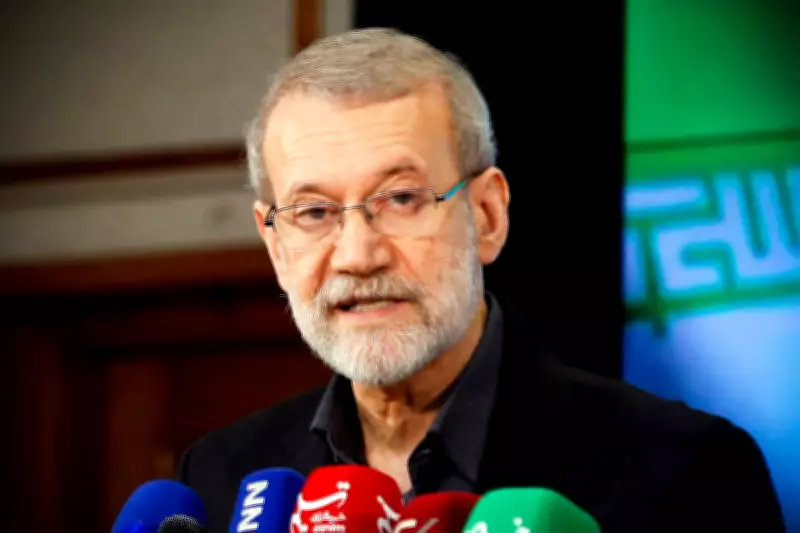
Israeli Defence Minister Israel Katz confirmed that Ali Larijani, secretary of Iran's Supreme National Security Council, and General Gholam Reza Soleimani, head of the Revolutionary Guard's Basij volunteer force, were "eliminated last night" in coordinated operations. Both men occupied pivotal positions within Iran's security apparatus and were instrumental in suppressing nationwide protests earlier this year that challenged the theocracy's 47-year rule.
Mr Larijani, a former parliamentary speaker and senior policy adviser to the late Supreme Leader Ayatollah Ali Khamenei, was considered one of Iran's most powerful figures following Khamenei's death in an air strike on the war's opening day. He played crucial roles in nuclear negotiations with the Trump administration and faced US Treasury sanctions in January for coordinating violent protest suppression.
General Soleimani, unrelated to the earlier-killed Qassem Soleimani, had been sanctioned by both the United States and European Union for his longstanding role in quelling dissent through the Basij organization. Iranian state media and the judiciary's Mizan news agency have confirmed both killings.
Iranian Retaliation and Regional Fallout
Iran responded swiftly to the assassinations, firing salvos of missiles and drones at Gulf Arab neighbours and Israeli positions on Tuesday. The retaliatory strikes have created widespread disruption across the region, with Dubai briefly shutting its airspace for the second consecutive day, creating significant travel chaos at one of the world's busiest transit hubs.
The conflict has extended to multiple fronts:
- In Iraq, two drones were shot down by defence systems at the US Embassy in Baghdad, while a third crashed inside the compound
- An oil facility in Fujairah, United Arab Emirates, was struck, with one person killed in Abu Dhabi by missile debris
- Saudi Arabia reported intercepting multiple drones, while Qatar's capital Doha experienced air defence activity
- Israeli forces launched "wide-scale wave of strikes" across Tehran and intensified attacks on Hezbollah positions in Lebanon
Strategic Waterway Tensions Escalate
Amid growing concerns about a potential global energy crisis, Iranian officials have affirmed their intention to maintain tight control over the Strait of Hormuz, through which approximately one-fifth of global oil shipments pass. The strategic waterway has become a focal point of international anxiety, with about twenty vessels reportedly struck since hostilities began.
Former US President Donald Trump revealed that NATO and most allies have rejected his calls to help secure the strait, despite his demands that several countries deploy warships to ensure safe passage. "We are not getting support despite the fact that almost every country strongly agreed with what we are doing," Trump stated, emphasizing that Iran cannot be allowed to obtain nuclear weapons.
Domestic and International Reactions
Israeli Prime Minister Benjamin Netanyahu framed the targeted killings as part of a broader strategy to weaken Iran's government, stating: "We are undermining this regime to give the Iranian people the opportunity to remove it." However, there have been no significant anti-government protests in Iran since the war began, with many citizens sheltering from ongoing American and Israeli strikes.
European Union foreign policy chief Kaja Kallas emphasized the bloc's desire to avoid direct involvement, telling EU legislators: "This is not Europe's war. We were not consulted." French President Emmanuel Macron indicated France's conditional willingness to help secure the Strait of Hormuz, but only after heavy bombing ceases.
Mounting Humanitarian Toll
The conflict has exacted a severe human cost across the region. The Iranian Red Crescent reports more than 1,300 fatalities in Iran since hostilities began, while Lebanese authorities state that Israeli strikes have displaced approximately one million people—roughly 20% of Lebanon's population—with 912 killed in the renewed Israel-Hezbollah conflict over the past fortnight.
Additional casualties include twelve Israelis killed by Iranian missile fire and at least thirteen US military personnel fatalities. The Lebanese army confirmed three soldier deaths in Israeli strikes, while a Beirut airport airstrike killed one person and wounded nine others.
As regional tensions reach unprecedented levels, with internet outages and tight media restrictions limiting information flow from Iran, the international community watches anxiously for any signs of de-escalation in a conflict that continues to expand across multiple fronts.