Iran Issues Fiery Warning to US Troops Amid Invasion Speculation
Iran has issued a stark warning to the United States, threatening to "set fire" to American troops if President Donald Trump authorizes a ground invasion of the Islamic Republic. The chilling threat comes as thousands of US Marines deploy to the Middle East and reports emerge of Pentagon plans for weeks of ground operations.
Parliamentary Speaker Delivers Blunt Message
Speaker of Iran's parliament, Mohammad Bagher Ghalibaf, delivered the incendiary warning through state media channels on Sunday. "We are waiting for the arrival of American troops on the ground to set them on fire," Ghalibaf declared in a published message broadcast on official Iranian news outlets including IRNA.
The Iranian politician accused the United States of duplicity, stating: "The enemy signals negotiation in public, while in secret it plots a ground attack." He emphasized Tehran's military readiness, adding: "Our firing continues. Our missiles are in place. Our determination and faith have increased."

US Military Movements and Regional Escalation
The warning follows significant US military movements in the region. On Saturday, thousands of US sailors and marines arrived in the Middle East aboard the USS Tripoli warship, according to confirmation from US Central Command. This deployment coincides with reports from the Washington Post that the Pentagon is awaiting President Trump's approval for extended ground operations in Iran.
Regional conflict has intensified dramatically, with waves of airstrikes hitting Tehran and Iranian missile attacks continuing against various targets. In a concerning development, Yemen's Houthi rebel group launched a second attack on Israel within 24 hours, raising fears of further disruption to vital maritime trade routes in the Red Sea corridor.
Economic Consequences and Diplomatic Efforts
The escalating conflict has triggered significant economic repercussions, particularly in global oil markets. Brent crude prices are on track for a record monthly surge of 51 percent in March, according to LSEG data analyzed by the Guardian. This surpasses the previous record set in September 1990 during Saddam Hussein's invasion of Kuwait, which saw a 46 percent price increase.
Diplomatic efforts are underway to address the crisis, with Pakistan hosting talks involving Turkey, Egypt, and Saudi Arabia on Sunday. The discussions focus on proposals to unblock the strategically vital Strait of Hormuz and improve maritime traffic safety, according to sources familiar with the matter who spoke to Reuters.
Regional Attacks and Military Damage
Military confrontations have spread across the Middle East, with Kuwait reporting that 10 army personnel were injured in an attack on a military camp on Sunday. The Kuwaiti army disclosed it had intercepted 14 ballistic missiles and 12 drones over the previous 24 hours.
Significant damage has been reported at a US air base in Saudi Arabia, where a command and control E-3 Sentry aircraft was destroyed and split in two, suspected to have been hit by an Iranian missile. An American official told Reuters on Friday that an Iranian attack on the air base had injured 12 US personnel, two seriously.
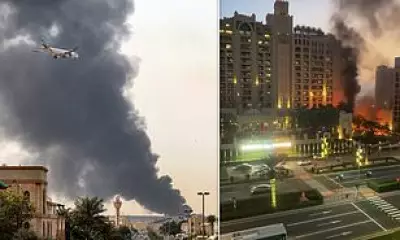
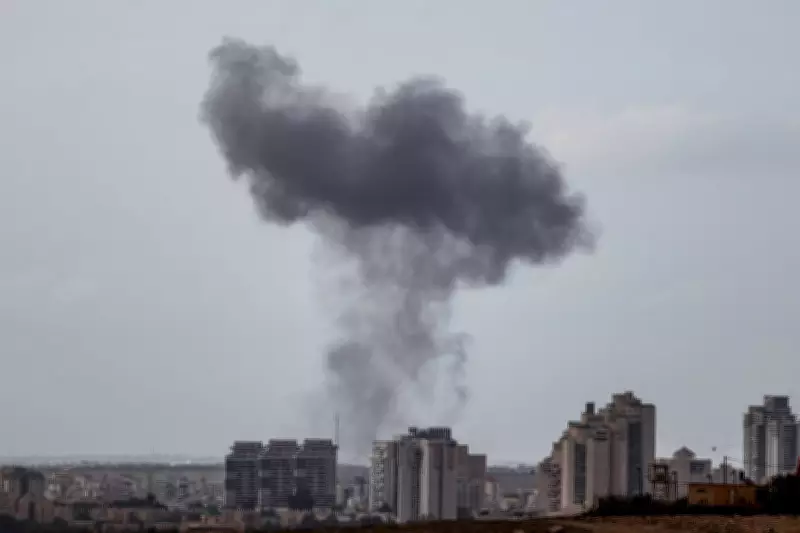
In Israel, the ADAMA chemical plant in southern Israel was hit by Iranian missile debris on Sunday, though no injuries were reported. The plant produces active ingredients and crop protection materials and is part of the Chinese-owned Syngenta Group.
Iran's Defiant Stance and Regional Alliances
Ghalibaf mocked America's diplomatic efforts, dismissing a 15-point US plan as "setting out its wishes and pursuing what it failed to achieve in the war." He warned that Iran would punish America's regional allies, stating Tehran would "punish their regional partners forever."
The Iranian speaker emphasized that Tehran's message was "clear" and that Iran would not surrender or accept "humiliation." Meanwhile, Iran's state media shared a message from Supreme Leader Mojtaba Khamenei thanking the Iraqi people and leadership for their support against what he termed US-Israel "aggression."

The European Union's maritime security body has warned ships to avoid Yemeni territorial waters due to the risk of Houthi attacks on merchant vessels in the Red Sea and Gulf of Aden. This advisory, published on Saturday, reflects growing international concern about the conflict's impact on global shipping amid Iran's blockade of the Strait of Hormuz.