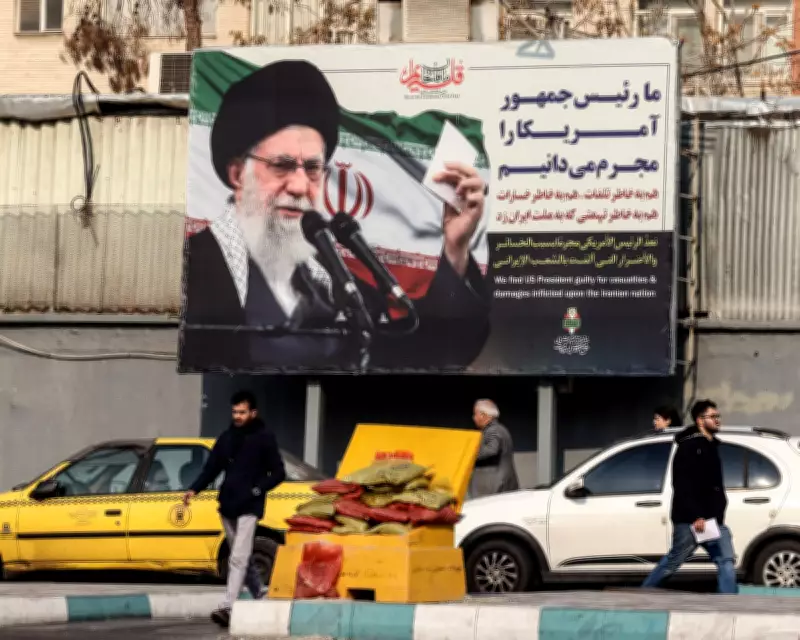
Iran Grapples with Catastrophic Fallout from Violent Protest Crackdown
A profound and painful inquest is currently unfolding within Iran, as politicians, academics, and the security establishment attempt to comprehend the scale of what is being described as a national catastrophe. This follows the violent protests and their even more brutal suppression by state security forces, an event that has left the nation reeling.
Emerging Debate in a Censored Society
The contours of this critical debate are slowly becoming visible within Iran's heavily censored society. Selective newspapers and Telegram channels are gradually opening up to international audiences in the aftermath of the protests. Some estimates suggest the death toll from the crackdown could exceed 30,000, a figure that has stunned many citizens and sparked urgent questions about accountability.
Fissures are now appearing across the political spectrum, within society, and in diplomatic circles. This suggests Iran may be entering a period of greater unpredictability, moving beyond a phase dominated solely by repression from the security establishment.
Growing Demands for Transparency and Change
Calls are mounting from various quarters for an independent external inquiry into the true death toll. There are simultaneous demands to speed up the reopening of the internet to save businesses teetering on the brink of collapse. Furthermore, voices within the country are urging the government to reconsider its rigid stance on foreign policy, which many see as a root cause of economic isolation.
The economic situation remains dire, with deep concern over shock therapy policies and international sanctions driving food inflation close to an unsustainable 200% annually. The national stock market and the Iranian rial are under severe and continuous pressure, exacerbating public hardship.
Voices of Grief and Accusation
Few within Iran deny the severity of the tragedy, even if there is disagreement over its precise causes and scale. The crisis poses a particular political dilemma for reformists, who have held the presidency for the last 18 months and initially described the protests as legitimate expressions of discontent.
Reformist sociologist Mohammad Fazeli captured the national mood, writing on Telegram: "Iran's history will be entangled with this event for decades, buried under the rubble of this catastrophe." He expressed a deep, personal sorrow shared by many, lamenting, "The grief and misery of 'We failed'."
Criticism is now being directed at the security services and their official claim that only 3,000 people were killed. Many commentators attribute the protests to a profound loss of hope and a widening 50-year generation gap between the youthful protesters and Iran's ageing leadership.
Calls for International Scrutiny and Press Freedom
Ahmad Zeidabadi, a reformist journalist and former political prisoner, argued forcefully for external verification: "Only a professional report from the UN's independent jurists can serve as the final arbiter of the contradictory narratives about this national tragedy. Rejecting such a request on the part of the Islamic Republic would be a historic mistake."
Azar Mansouri, head of the Reform Front, promised that the truth would not be buried, while government spokesperson Fatemeh Mohajerani referenced the need for inquiries into specific protest episodes—a notion historically rejected by the security services.
The clampdown on media freedom is also under fire. Vice-President Mohammad Reza Aref has demanded explanations from the culture ministry after the reformist newspaper Ham-Mihan was shut down for covering the protests' bloody outcome. Critics argue Iran is trapped between unwatchable state propaganda and anti-government satellite channels broadcast from abroad.
Economic Isolation and Foreign Policy at the Core
While few senior figures have explicitly called for the key diplomatic concessions demanded by the US on the nuclear issue, the link between foreign policy and economic distress is being highlighted. US-based economist Dr Javad Salehi pointed out the direct connection between Iran's global isolation and its economic backwardness, stating that resolving foreign policy hostilities is the only effective short-term measure to improve the situation.
Former commerce minister Faizullah Arabsorkhi echoed this, stating foreign policy is at the root of stunted economic growth and that even Chinese advisors urge Iran to resolve its problems with America.
A Nation at a Crossroads
The government may attempt to engineer a nationalist revival in the face of external threats, with many Iranians drawing parallels to the 1941 occupation by Russia and the UK. There is also widespread resentment over US sanctions, which are seen as the bedrock of Iran's economic failure.
However, deep disillusionment persists regarding the government's failure to chart a new course after last June's 12-day war. The recent, desperate street calls for the return of the Shah signal that some citizens now believe salvation must come from outside the current system.
In a stark condemnation, jailed political activist Abolfazl Ghadyani, 80, labelled the suppression a crime against humanity, directly implicating Supreme Leader Ali Khamenei and describing his alleged order as revealing "endless hostile vindictiveness." He declared the scale of the crime unprecedented in a century.
From the perspective of the security services, such criticism only affirms the need to maintain internet suppression. Yet, in a sign of internal tension, government members have pointedly blamed the security services for the ongoing internet shutdown, highlighting the profound divisions at the heart of the Iranian state as it confronts this unprecedented crisis.