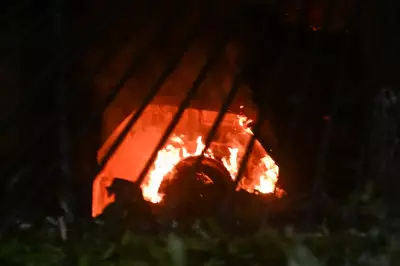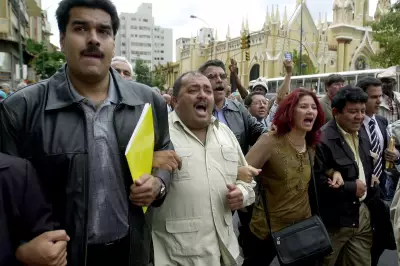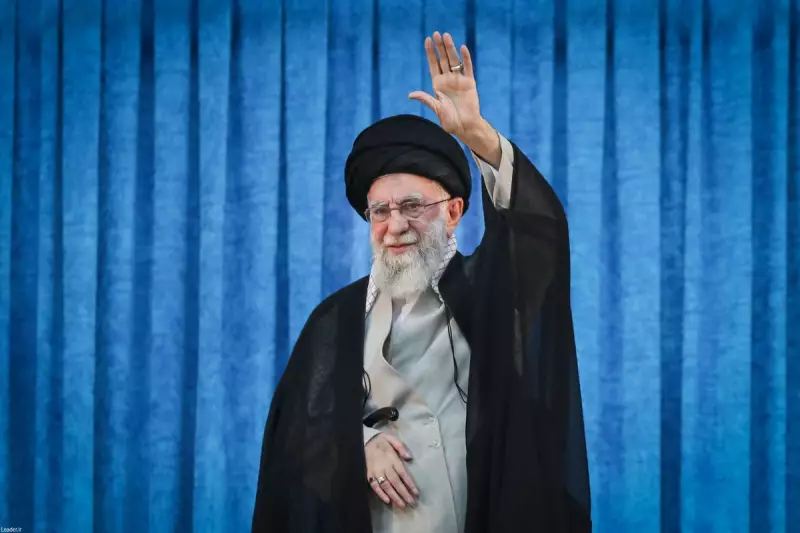
Iran's supreme leader, Ayatollah Ali Khamenei, is confronting the most significant threat to his rule in over three decades, as nationwide protests demanding regime change place his government in "survival mode". The unrest, which has seen millions take to the streets and buildings set ablaze in Tehran, prompted US President Donald Trump to suggest on Thursday that Khamenei might be planning to flee, possibly to Russia, claiming the country was on the "verge of collapsing".
In his first public address since the protests began, Khamenei struck a defiant tone, labelling President Trump "arrogant" and vowing the Islamic Republic would not back down. "The Islamic Republic will not tolerate mercenaries working for foreign powers," he stated. This comes as protesters have been heard chanting "death to Khamenei", spurred by calls from the son of the deposed Shah, Reza Pahlavi.
The Making of a Supreme Leader
Khamenei's ascent to the pinnacle of power in 1989 was met with deep scepticism. Succeeding the charismatic father of the Islamic Revolution, Ayatollah Ruhollah Khomeini, Khamenei was a relatively low-ranking cleric lacking his predecessor's religious stature and fiery presence. Yet, he has ruled three times longer than Khomeini and has indelibly shaped the modern Iranian state.
He systematically entrenched the rule of the Shiite clerics, or "mullahs", positioning himself as the nation's unquestionable authority. Crucially, Khamenei built the Islamic Revolutionary Guard Corps (IRGC) into a dominant military, political, and economic force. He granted it control over Iran's ballistic missile programme and its economy, while its Quds Force cultivated the "Axis of Resistance"—a network of proxies from Yemen to Lebanon that projected Iranian influence across the Middle East.
Decades of Crushing Dissent
Khamenei's grip on power has been repeatedly tested and brutally enforced. His first major challenge came from a domestic reform movement seeking to empower elected officials. Khamenei rallied the clerical establishment to stymie their efforts, using unelected bodies to block reforms and bar candidates.
The Revolutionary Guard and security agencies have since crushed successive waves of protest:
- The 2009 Green Movement over alleged election fraud.
- Economic protests in 2017 and 2019 under the weight of sanctions.
- Nationwide unrest in 2022 following the death of Mahsa Amini.
Crackdowns have seen hundreds killed and hundreds more arrested, with widespread reports of torture and rape in prisons. These events consistently revealed profound public resentment towards clerical rule, corruption, and economic hardship.
A Regional Power in Rapid Decline
When Khamenei took power, Iran was isolated and battered from its war with Iraq. Over decades, he transformed it into a assertive regional power. The 2003 US ousting of Saddam Hussein was a major boost, bringing Iranian-allied factions to power in Iraq and solidifying the Axis of Resistance.
However, the past two years have brought a dramatic reversal. The fallout from Hamas's October 2023 attack on Israel has seen Israel cripple Hamas and sideline Hezbollah. A critical blow landed in December 2024 when Sunni rebels toppled Iran's key ally, Bashar al-Assad, in Syria. In June 2025, the US bombed three Iranian nuclear facilities in support of an Israeli campaign.
As the latest and most intense protests push Khamenei's regime to the brink, the Axis of Resistance is at its lowest ebb ever, and the supreme leader faces a crisis that threatens to eclipse all previous challenges to his 37-year rule.