Netanyahu Commands Expansion of Israeli Military Operations in Lebanon
Israeli Prime Minister Benjamin Netanyahu has issued a direct order to widen Israel's invasion of Lebanon, asserting that the Iranian-backed militant group Hezbollah retains the capacity to launch rocket attacks against Israeli territory. This escalation follows Israel's initial deployment of troops into southern Lebanon, aimed at dismantling Hezbollah's infrastructure, which the group initiated by firing missiles at Israel in retaliation for the killing of Ayatollah Ali Khamenei.
Security Buffer Zone and Military Objectives
During a visit to northern Israel, Netanyahu announced that he instructed the military to further expand the existing security buffer zone. He emphasized Israel's determination to fundamentally alter the security situation in the north, claiming that thousands of Hezbollah terrorists have been eliminated and a significant threat from 150,000 missiles and rockets intended to target Israeli cities has been neutralized. However, he acknowledged that Hezbollah still possesses a residual capability to fire rockets.
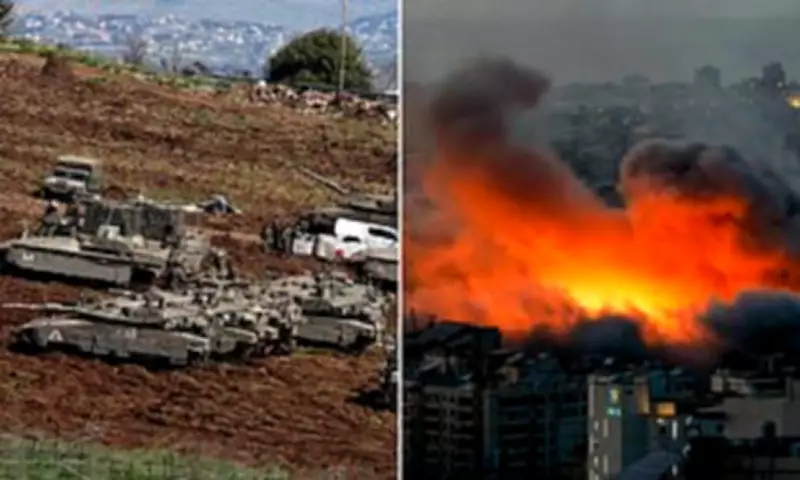
Israel's operations, described as limited and targeted ground actions, have focused on key Hezbollah strongholds to protect Israeli border communities. The Israeli premier boasted that Israel has established three security zones deep in enemy territory and created visible cracks in what he termed the terror regime in Tehran. Netanyahu stated that Iran, Hezbollah, and Hamas are battered enemies fighting for their existence, with Israel taking the initiative by acting, attacking, and operating deep within their territories.

Historical Context and Regional Impact
Hezbollah, an Iranian proxy with substantial political influence in Lebanon, has been a long-time adversary of Israel. The two sides engaged in a 13-month conflict that concluded in November 2024. Hezbollah was originally formed in response to Israel's occupation of Lebanon during the 1980s. In recent weeks, Israel has intensified strikes on Hezbollah's stronghold in Dahieh, a Shia heartland in southern Beirut, significantly weakening the group.
The Lebanese government has expressed fury over Hezbollah's decision to fire rockets at Israel, accusing the group of dragging the country into war. In response, the government ordered Hezbollah to disarm and issued arrest warrants for members involved in weapons smuggling. Despite this, Israel has demanded stronger action and escalated its military strikes.
Humanitarian Consequences and International Concerns
Lebanese President Joseph Aoun has condemned Israeli strikes as a prelude to a ground invasion and a policy of collective punishment against civilians. According to the Lebanese health ministry, the conflict has resulted in over 1,100 fatalities and more than 3,500 injuries in Lebanon, with more than one million people displaced. In Israel, missiles from Iran and Lebanon have killed 19 people, as reported by the Israeli ambulance service.
International powers, including the UK, France, Germany, Italy, and Canada, have warned that a significant Israeli ground invasion would have devastating humanitarian consequences and must be averted. Israeli military chief Lt Gen Eyal Zamir stated that targeted ground operations and strikes against Hezbollah have advanced and will be prolonged, while Defence Minister Israel Katz claimed that Israeli forces destroyed crossings over the Litani river, allegedly used by Hezbollah for reinforcement transport.
Broader Regional Threats and Global Implications
Simultaneously, Israel faces threats from the Houthi rebel group in Yemen, which has warned of choking off a second major oil shipping route, the Bab al-Mandeb Strait. Known as the Gate of Tears in Arabic, this waterway connects the Red Sea with the Gulf of Aden and serves as an alternative to the Strait of Hormuz, which Iran has effectively shut down. If both routes are compromised, global supply chains, energy markets, and shipping costs could be severely impacted.

Approximately ten percent of global seaborne trade passes through the Red Sea, including a fifth of the world's container traffic, car shipments, and ten percent of crude oil. The Houthis, who have held Yemen's capital Sanaa since 2014, recently fired missiles at Israel and vowed further attacks. During the Israel-Hamas war, Houthi attacks on merchant vessels caused chaos in the Red Sea, with over 100 ships targeted between 2023 and 2025, resulting in two sinkings and four sailor deaths.