Israeli Military Confirms Tank Fire Struck UN Lebanon Base
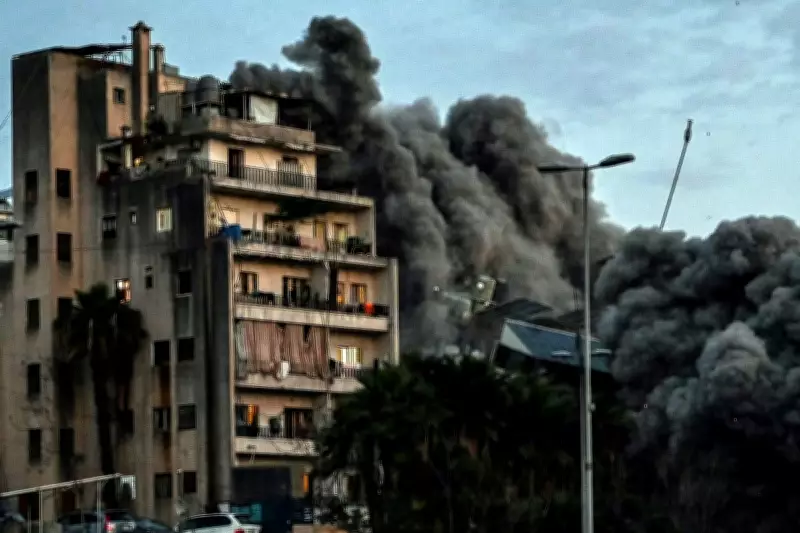
Israel's military has formally acknowledged that its tank fire struck a United Nations position in southern Lebanon on March 6, resulting in injuries to Ghanaian peacekeepers. This admission underscores the intensifying risks confronting international forces as Israeli military operations escalate across the region.
UN Inquiry Points to Israeli Responsibility
The Israeli military's statement on Wednesday followed preliminary findings from an internal United Nations investigation, which had already indicated Israel's responsibility for the attack. A Western military source disclosed these details to Reuters on Tuesday, confirming the direction of the inquiry.
The UN peacekeeping mission, known as UNIFIL, operates in southern Lebanon to monitor hostilities along the volatile border with Israel. This area remains a persistent flashpoint for clashes between Israeli forces and Iran-backed Hezbollah fighters.
Escalating Tensions and Operational RisksWhile UNIFIL has frequently found itself caught between both sides in recent years, the prospect of a broader Israeli ground operation suggests that risks could become substantially greater in the coming weeks. The mission is currently slated to conclude at the end of 2026.
Military Statement and Investigation Findings
In a statement provided to Reuters, Israel's military confirmed its troops were behind the incident but asserted they had responded to anti-tank missile fire from Hezbollah, which had moderately wounded two Israeli soldiers.
"A comprehensive investigation concluded in recent days determined that the fire that hit the UNIFIL personnel was mistakenly carried out by the IDF troops that misidentified the UNIFIL troops as the source of the anti-tank fire moments earlier," the statement read.
The military added: "The IDF regrets the incident and has conveyed its apologies through the appropriate channels to Ghana and the United Nations. The findings of the investigations have been disseminated within the IDF to prevent recurrence of similar incidents."
Detailed Analysis of the Attack
According to the Western military source, preliminary conclusions led by UNIFIL's Force Commander Reserve with support from explosive ordnance disposal specialists indicated that three strikes at the al-Qawzah base were direct hits from the main gun of an Israeli battle tank.
The attacks utilized 120-mm M339 HE-MP-T shells, munitions manufactured by Israel Military Industries (IMI). The source emphasized that "Israeli involvement in the attack against UNIFIL is undeniable, given that these munitions are manufactured by Israel Military Industries."
The shots were fired within a five-minute window, indicating repeated fire rather than a single stray round. The source noted that the base's location and coordinates were well known to all parties operating in the area, raising serious concerns about the safety of UN personnel.
UNIFIL Response and International Law Concerns
The findings of UNIFIL's probe had not been previously reported. UNIFIL had stated on March 6 that Ghanaian peacekeepers were wounded amid heavy firing and called the incident "unacceptable," but did not initially assign responsibility.
UNIFIL spokesperson Kandice Ardiel stated: "That investigation is not yet complete. Once it is finalized, it will be shared with the parties, per usual practice. Nonetheless, we reiterate the obligation of all actors to ensure the safety and security of peacekeepers and avoid harm to civilians. Any deliberate attack on peacekeepers is a grave violation of international humanitarian law and a violation of resolution 1701."
Broader Context of Regional Conflict
Lebanon was drawn into the broader Middle East conflict when Hezbollah fired rockets at Israel, igniting a new Israeli offensive against the group. The Israeli military occupies five posts within Lebanon and, despite a ceasefire last year, has frequently carried out airstrikes in the country's south targeting what it describes as Iran-backed militant groups.
UN Security Council Resolution 1701 explicitly states that no armed forces should operate in southern Lebanon except UN peacekeepers and the Lebanese military. Israel has repeatedly accused Hezbollah of attempting to rearm and the Lebanese armed forces of failing to disarm the group.
Additional Security IncidentsHighlighting ongoing concerns surrounding UN peacekeepers, UNIFIL reported on Sunday that another group of peacekeepers were likely fired upon earlier that day on three separate occasions in southern Lebanon, "likely by non-state armed groups." No peacekeepers were injured in those incidents.
The Ghanaian army confirmed that three of its soldiers were wounded in the March 6 attack. The Western source concluded: "This escalation, far from being isolated, is part of a worrying dynamic, severely testing UNIFIL's ability to carry out its peacekeeping mission."
The Lebanese prime minister's office did not immediately respond to requests for comment regarding the incident.