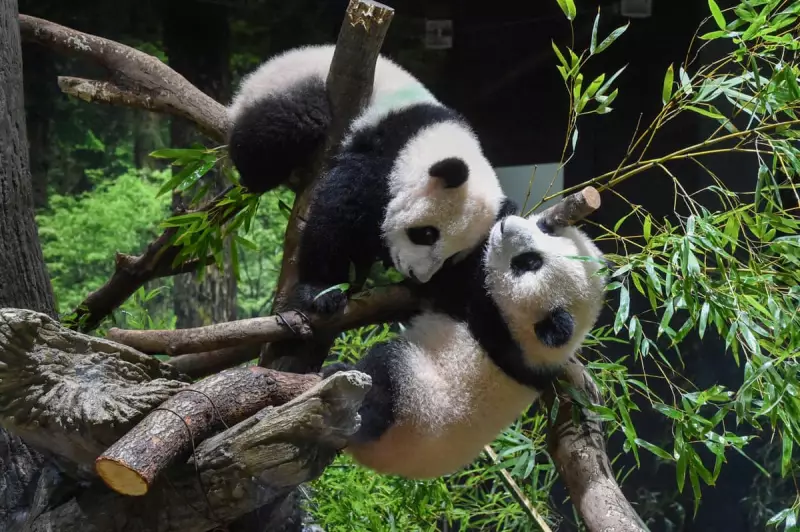
The panda house at Tokyo's renowned Ueno Zoological Gardens remains closed to the public for several more hours, yet a steady stream of visitors has already begun to gather outside. They pause to take photographs in front of vibrant murals depicting the zoo's most cherished inhabitants. Just a short distance away, the gift shop is experiencing a significant surge in sales, with themed souvenirs ranging from plush toys and stationery to commemorative T-shirts and biscuits flying off the shelves.
A Farewell to Furry Ambassadors
These visitors have come to bid a poignant farewell to twin giant pandas Xiao Xiao and Lei Lei. Early next week, the beloved siblings, born at the zoo in 2021 but officially on loan from China, will be transported from Tokyo's Narita airport back to their homeland. Upon arrival, they will enter a mandatory quarantine period before being reunited with their sister, Xiang Xiang, at a dedicated conservation and research centre in Sichuan province.
Their departure represents more than just an emotional loss for countless Japanese animal lovers; it is a stark symbol of the rapidly deteriorating diplomatic relations between China and Japan. For the first time since 1972—the year Tokyo and Beijing normalised diplomatic ties in the aftermath of the Second World War—Japan will find itself without a single giant panda on its soil.

The Historical Legacy of Panda Loans
Over the past five decades, China has loaned more than 30 of these endangered animals to zoos across Japan. Each panda has captured the hearts of the public, with their eventual returns often causing widespread dismay. This unique panda diplomacy programme has weathered numerous political storms, including shifts in Chinese leadership, the election of hawkish Japanese politicians, and even an ongoing territorial dispute over the uninhabited Senkaku Islands, known as the Diaoyu in China.
However, the current diplomatic chill, primarily fuelled by tensions surrounding Taiwan, has proven insurmountable for this furry form of statecraft. Japan's conservative Prime Minister, Sanae Takaichi, has steadfastly refused to retract comments made in November suggesting she could deploy Japan's Self-Defence Forces should China attempt an invasion of Taiwan, which she described as an "existential threat" to Japan.
China reacted furiously, accusing Takaichi of gross interference in its internal affairs. The fallout has been substantial: Chinese tourism to Japan has plummeted following official travel advisories, and numerous cultural exchange programmes have been cancelled or postponed. Now, these geopolitical strains have decisively entered the animal kingdom.
No Plans for Replacement Pandas
Despite formal requests from the Tokyo metropolitan government for new pandas, Chinese authorities have indicated there are no current plans to send replacements to Ueno Zoo. A recent report in the state-controlled Beijing Daily quoted a Chinese expert warning, "If tensions between Japan and China persist, China may refrain from new loans, and pandas may no longer be seen in Japan."
Members of the public who secured highly coveted tickets through an oversubscribed online lottery expressed deep frustration that the zoo's long-standing panda era appears to be over. "It's such a shame this is the last time I'll be able to see them," said one woman who travelled from Saitama prefecture. "It feels like we're being picked on by the Chinese government."
Pandas as Political Barometers
Experts argue that a swift thaw in relations leading to a resumption of panda diplomacy seems improbable while Beijing and Tokyo remain locked in a bitter dispute over Taiwan's status. Professor Rumi Aoyama, an expert in Japan-China relations at Waseda University in Tokyo, explained, "Giant pandas function mainly as symbols of Sino-Japanese friendship rather than as drivers of bilateral relations. Their presence here doesn't in itself advance ties, and nor does their return to China undermine them. Instead, they serve as indicators of the broader state of relations between the two countries."

This symbolic role offers little consolation to Japan's devoted panda enthusiasts. The historical significance is profound: over 7.6 million people visited Ueno Zoo when the first loaned pandas, Kang Kang and Lan Lan, arrived fifty years ago. The emotional attachment runs deep within the zoo itself; keepers were visibly distraught when Ling Ling, a male panda resident since 1992, passed away in April 2008.
Election Politics Complicate Reconciliation
The prospects for renewing panda loans—governed by the Washington Convention on the trade in endangered species—have dimmed further following Prime Minister Takaichi's call for a snap general election next month. Her firm stance on Taiwan, contributing to high approval ratings, makes a diplomatic concession unlikely in the pre-election period.
"I don't expect [Takaichi] to take any action before the election," Professor Aoyama noted. "China has raised the bar by demanding a retraction of her statement, a condition Japan is unlikely to accept. As a result, there is little room for Japan to make any moves ahead of the election."
Final Goodbyes and Public Sentiment
Emotions are set to run high as the final batch of lottery winners visits Ueno Zoo this Sunday for a last glimpse of Xiao Xiao and Lei Lei. Since the announcement of their departure last month, visitor numbers have surged dramatically, with some patrons waiting up to six hours for a brief viewing. In mid-December, the zoo implemented strict controls, limiting daily access to 4,800 people by reservation only, with a lottery system managing overwhelming demand during the pandas' final twelve days in Japan.
Among this week's lottery winners was a woman from Kobe who first fell in love with pandas at a local zoo. "I know the diplomatic situation is sensitive, but it's frustrating that pandas have become mixed up in it," she lamented. When asked if she would accept the Chinese foreign ministry's invitation to visit the twins in Sichuan, her response was unequivocal: "Absolutely not."
Meanwhile, visitors without tickets queued to take photographs with life-sized panda models. Banners featuring images of Xiao Xiao contentedly chewing bamboo carried a simple, heartfelt message: "Thank you, Xiao Xiao." This poignant scene underscores the end of a significant chapter in cultural exchange, where the fate of beloved animals has become inextricably linked to the complex and often fraught relationship between two global powers.