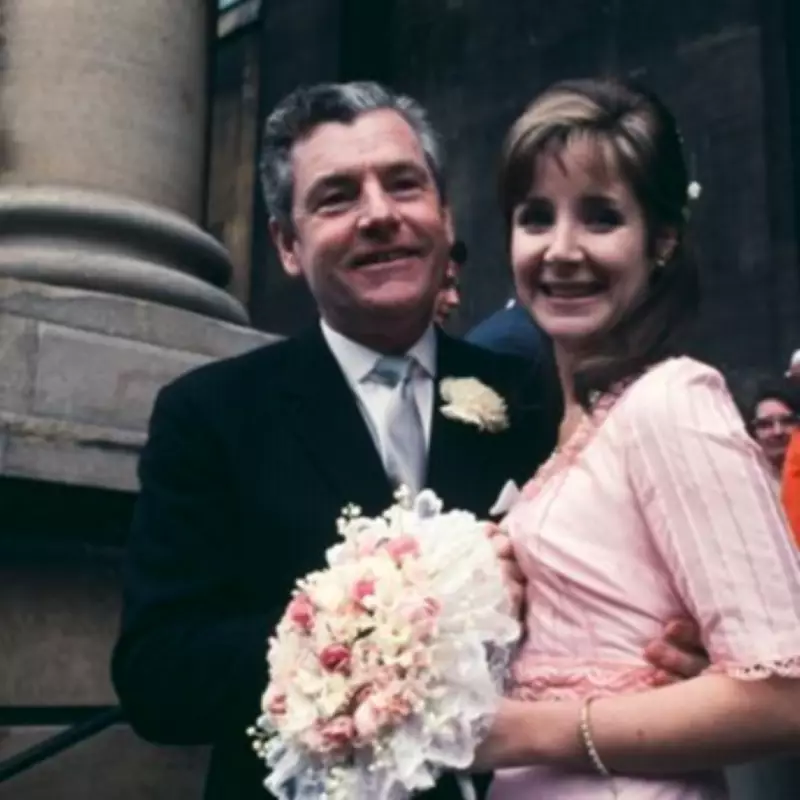
Kenneth More's Private Struggle with Parkinson's Revealed in New Biography
A new biography has lifted the lid on the extraordinary life of Kenneth More, the British film star best known for his role in Reach for the Sky, revealing that his bravest hour was a personal battle with a devastating illness. Published to mark 70 years since the film's release, the book details how More, famed for his on-screen portrayals of resilience, faced Parkinson's disease with quiet courage.
The Making of a Movie Legend
Kenneth More became a household name after starring as Douglas Bader in the 1956 biopic Reach for the Sky, which chronicled the life of the legless RAF hero. The film was a massive success, winning a BAFTA for Best British Film and cementing More's status as one of Britain's biggest stars. Author Nathan Morley, in his book Kenneth More - The Making of a Movie Legend, notes that More's depiction of Bader was lauded as one of the great screen portrayals in British cinema, helping to cultivate his image as the dependable chap with a stiff upper lip.
Morley explains that More studied Bader closely before filming, even having his legs cased in aluminium to accurately convey the pilot's walking style. Prior to production, the two enjoyed a round of golf, which Bader won. The movie's release made More a star, but behind the scenes, his life was filled with drama both on and off screen.

From War Hero to Film Icon
Before his acting career took off, Kenneth More had a fascinating background. Born into a comfortable life in Buckinghamshire in 1914, he was descended from Sir Thomas More and attended boarding school. After leaving school with no clear ambition, he worked in engineering and at Sainsbury's, and even tried fur trapping in Canada. A quirk of fate led him to The Windmill Theatre in London, where he started shifting scenery and eventually found his calling in acting.
Morley highlights that More was also a genuine war hero, serving in DEMS (Defence Equipped Merchant Ships) during World War II. He witnessed brutal action across the Mediterranean, Pacific, and Atlantic, and lived through the Liverpool Blitz. Despite this, More often played down his wartime experiences, focusing instead on his acting career. After the war, he returned to theatre, was spotted by Noel Coward, and landed his breakthrough role in the 1953 comedy Genevieve.
A Life of Fame and Personal Turmoil
Kenneth More adored the trappings of fame, owning a Rolls Royce, sports car, a home in Monte Carlo, and employing a butler. His mantra was to try to do as much as you can in the time that you have, and he relished the social side of life, including parties and late-night gatherings. However, his personal life was marked by turmoil. He had multiple marriages and affairs, including a scandalous relationship with co-star Angela Douglas, who was 21 to his 46 when they began an affair in the 1960s.
Morley describes More as having an energetic love life and being a bit of a flirt, with an eye for the ladies. Despite this, his career faced challenges in the 1960s as new actors like Albert Finney emerged. He found a late boost with roles in television series such as The Forsyte Saga and Father Brown, but his health began to decline.
The Devastating Diagnosis
After a friend noticed his walk had become funny, Kenneth More underwent a health check that revealed a devastating diagnosis of Parkinson's disease. By 1980, his health was disintegrating, and he was being cared for by his wife Angela Douglas. He gently disappeared from public view, writing that while friends associated him with the song When You're Smiling, it wasn't always easy to live up to it.
Morley reflects that More's battle with Parkinson's proved his greatest act of bravery, contrasting with his celluloid battles in the air. Kenneth More died in July 1982 at the age of 67, leaving behind a legacy as a nice chap who defined an era of British cinema.
The biography paints a comprehensive picture of a man who was not only a movie legend but also a war hero and a individual facing personal adversity with resilience. It underscores how his private fight with illness added a profound layer to his public image, making his story one of both triumph and tragedy.