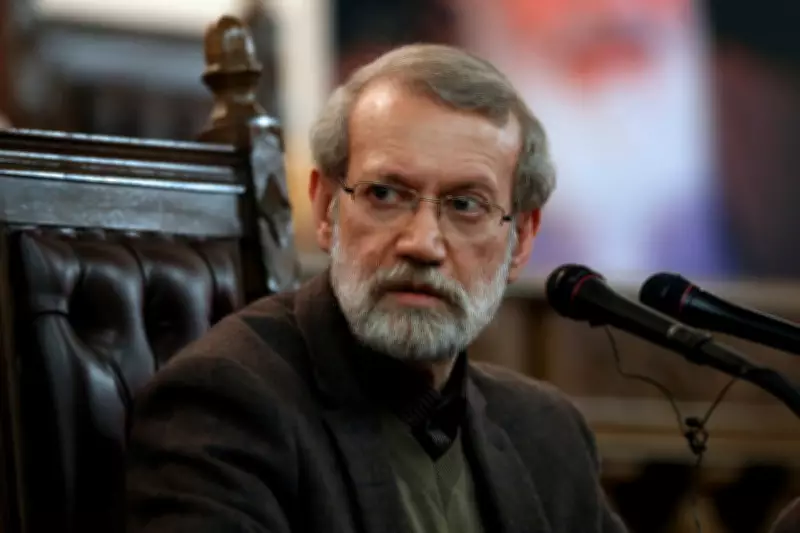
Ali Larijani's 2006 Interview Exposes Iran's Deep-Seated Suspicion of the West
In a revealing 2006 interview with the Guardian, Ali Larijani, Iran's former parliament speaker and security chief, articulated a firm conviction that western powers were determined to dismantle Iran's revolutionary regime. This belief, now tragically vindicated by his death in a reported Israeli airstrike, underscores the enduring tensions that have shaped Iran's foreign policy for decades.
A Grim Warning from the Past
During the interview, conducted in Tehran with journalists Simon Tisdall, Ewen MacAskill, and Robert Tait, Larijani served as secretary of the supreme national security council. He was deeply involved in tense negotiations over Iran's nuclear programme, a dispute that he viewed as existential for the regime. When questioned about the sincerity of western concerns regarding uranium enrichment, Larijani became animated, stating, "Sir, I think you know the answer to that question." He added, "If it was not the nuclear matter, they would have come up with something else … the pressure they are putting us under is reason enough for us to be suspicious."
This moment offered a rare glimpse into the mindset of a man often perceived as inscrutable, especially as he communicated through an interpreter. Two decades later, his words appear eerily prophetic, not only in predicting western hostility but also in discussing potential regional consequences, such as soaring oil prices and the closure of the Strait of Hormuz in the event of conflict.

Larijani's Political Journey and Internal Struggles
Ali Larijani's career was marked by loyalty to the Islamic Republic, yet it was not without internal conflicts. As a former Revolutionary Guards commander, he held key positions, including national security supremo under President Mahmoud Ahmadinejad. However, he often clashed with Ahmadinejad's provocative rhetoric on nuclear issues, viewing it as a hindrance to reaching a diplomatic accord with the west. Larijani attempted to resign multiple times before his departure in 2007, seen as a sign that Supreme Leader Ayatollah Ali Khamenei favoured Ahmadinejad's approach.
Despite this, Larijani remained a prominent figure within the establishment, later becoming speaker of the Majles, Iran's parliament. He continued to operate within Khamenei's orbit, though his more pragmatic views sometimes diverged from the leader's policies. For instance, he was believed to have opposed Khamenei's support for Bashar al-Assad during the Syrian civil war, despite Iran's alliance with Assad.
Personal and Political Challenges
Larijani faced personal hurdles that impacted his political aspirations. He twice sought the presidency, but his candidacy was rejected by the guardian council, a clerical vetting body. Analysts speculated that this rejection might have been due to his daughter residing in the United States and nephews living in the United Kingdom and Canada. These western connections were highlighted by opposition activists during Iran's recent protest movements, as Larijani's role in suppressing protests reportedly elevated his status within the regime.
According to internal reports, Khamenei tasked Larijani with crushing protests, a role he executed with ruthless efficiency. This assignment reinforced his position as a committed regime loyalist, even as questions lingered about his potential for moderation. Some reports suggested he opposed plans to replace Khamenei with his son, Mojtaba, preferring a more moderate candidate to ease tensions with Iranians discontented under theocratic rule.
Legacy of a Complex Figure
Ali Larijani's death has silenced these speculations, but his long-held premonition about western intentions remains a poignant part of his legacy. His 2006 interview serves as a stark reminder of the deep-seated suspicions that have fueled Iran's geopolitical stance. As a key player in Iran's security apparatus, Larijani navigated a complex landscape of internal politics and external pressures, leaving behind a narrative that continues to resonate in the ongoing conflicts of the region.

His story illustrates the intricate dynamics of Iranian leadership, where loyalty, pragmatism, and suspicion intertwine. While his death marks the end of an era, the issues he grappled with—from nuclear diplomacy to regime survival—persist, highlighting the enduring challenges facing Iran in a hostile international environment.