Lebanon Breaks Taboo with Proposal for Direct Israel Talks
In a historic move, Lebanon's government has proposed the first direct talks with Israel in decades, breaking a long-standing political taboo. This unprecedented offer comes as airstrikes continue to rock Beirut and Israeli troops advance against Hezbollah positions. However, Lebanese officials insist that any negotiations must be preceded by an end to the fighting—a condition that may already be too late to fulfill given the rapidly escalating conflict.
Hezbollah's Role and Regional Implications
Hezbollah's decision to enter the wider Iran-Israel conflict by launching rocket attacks has triggered devastating Israeli bombardment across southern Lebanon and Beirut's southern suburbs. This military escalation has resulted in approximately 850 Lebanese fatalities and displaced over one million people from their homes. The Iran-backed militant group views this war as an existential struggle, while Israel threatens a broader ground invasion that could include territorial seizure and destruction of Lebanon's civilian infrastructure.
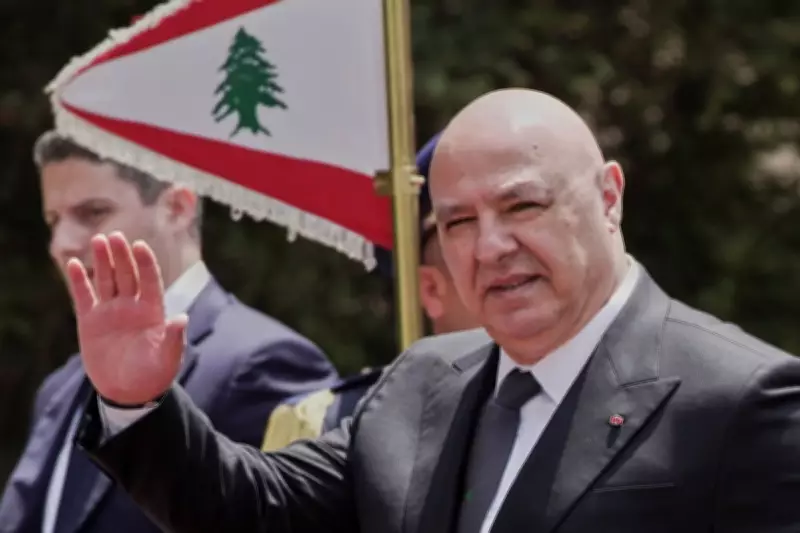
Last week, Lebanese President Joseph Aoun formally offered to hold direct negotiations with Israel—the first such proposal since the 1982 Israeli invasion during Lebanon's civil war. Aoun simultaneously requested increased funding for Lebanese troops and reaffirmed his commitment to disarm Hezbollah, a longstanding demand from both Israel and the United States.
Conditions and Complications for Negotiations
According to three Lebanese diplomatic and government officials who spoke anonymously, Lebanon insists that fighting must cease before any talks with Israel can commence. Israeli officials have not responded to requests for comment regarding the negotiation offer. Israeli Foreign Minister Gideon Saar, during a visit to an Iranian missile strike site, explicitly denied that any talks were being planned.
The 1989 Taif Agreement that ended Lebanon's civil war mandated the disarmament of all armed groups, but Hezbollah alone retained its weapons, citing the need to protect Lebanon from Israel, which occupied southern Lebanon until 2000. Successive Lebanese governments, including those dominated by Hezbollah's political rivals, avoided direct confrontation with the group, which was widely perceived as more powerful than Lebanon's official armed forces.
Shifting Dynamics and Government Actions
This calculus began changing in 2024 when Israel eliminated most of Hezbollah's top leadership and severely damaged its military capabilities. This created potential opportunities for Lebanese authorities to exert greater control. President Aoun, a former army commander, and Prime Minister Nawaf Salam, both taking office in early 2025, pledged to disarm Hezbollah—a position with substantial support among Lebanon's war-weary population.
In the months preceding the current conflict, the Lebanese government deployed troops across southern regions and claimed to have dismantled over 500 Hezbollah warehouses and military positions. However, authorities avoided direct confrontation with the group. When Hezbollah launched missiles at Israel following U.S.-Israeli strikes against Iran, the Lebanese government condemned the militant group, outlawed its activities, and arrested several members for illegal weapons possession.
Hezbollah's Defiance and International Response
Hezbollah remains defiant, continuing to launch missiles and drones into northern Israel while portraying itself as Lebanon's only viable defense. The group accuses Israel of violating a 2024 U.S.-brokered ceasefire agreement through continued airstrikes that frequently kill civilians and refusal to withdraw from strategic border positions. Hezbollah also likely feels compelled to support Iran, its primary sponsor, during this critical period.
Israeli Defense Minister Israel Katz recently warned that Lebanon's government "will pay an increasing price in infrastructure damage and territorial loss until the commitment to disarm Hezbollah is fulfilled." Hezbollah officials have denounced the offer of direct talks with Israel, with senior political bureau member Mahmoud Qamati calling it "a concession and a big mistake" that would constitute "stabbing the resistance in the back."
Washington's Disengagement and Regional Consequences
During previous conflicts, Lebanon typically turned to the United States, which holds leverage over Israel and provides significant military aid to Lebanon. However, Washington appears preoccupied with the wider regional war and its global economic implications. Randa Slim, director of the Middle East Program at the Stimson Center, noted that "there is no senior official in the White House focusing on Lebanon."
Ed Gabriel, president of the American Task Force on Lebanon, observed that "Hezbollah's actions have now set back for the time being any resolution of this war and created a lack of confidence by U.S. officials that the Lebanese armed forces can control and disarm Hezbollah."
Humanitarian Crisis and Military Advancements
Israeli troops continue advancing deeper into southern Lebanon ahead of an anticipated broader ground invasion. The Israeli military has destroyed bridges and key roads while issuing evacuation warnings for areas extending dozens of miles north of the border. Meanwhile, Lebanon's government, grappling with a severe years-long financial crisis, struggles to provide shelter and aid for nearly one million displaced people.
Authorities are urgently calling on the international community to pressure Israel to spare critical infrastructure, including Beirut's airport and seaport. As President Aoun continues diplomatic efforts from the hilltop presidential palace, drones circle overhead, airstrikes echo in the distance, and plumes of smoke rise from southern regions—creating a stark backdrop to Lebanon's historic but potentially belated peace initiative.