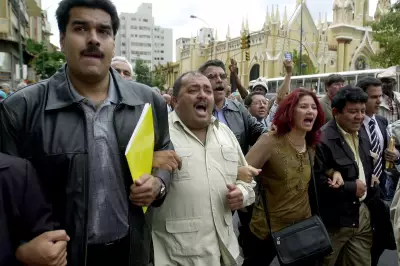
The dramatic capture of Venezuelan President Nicolas Maduro by the United States has sent shockwaves far beyond Caracas, threatening to upend long-standing international norms and potentially triggering a new era of power grabs by autocrats worldwide. The operation, which saw Maduro and his wife taken alive on Saturday 3 January 2026, has placed the Trump administration's foreign policy under intense scrutiny, with its legacy hanging on the volatile aftermath.
The High-Stakes Gamble in Caracas
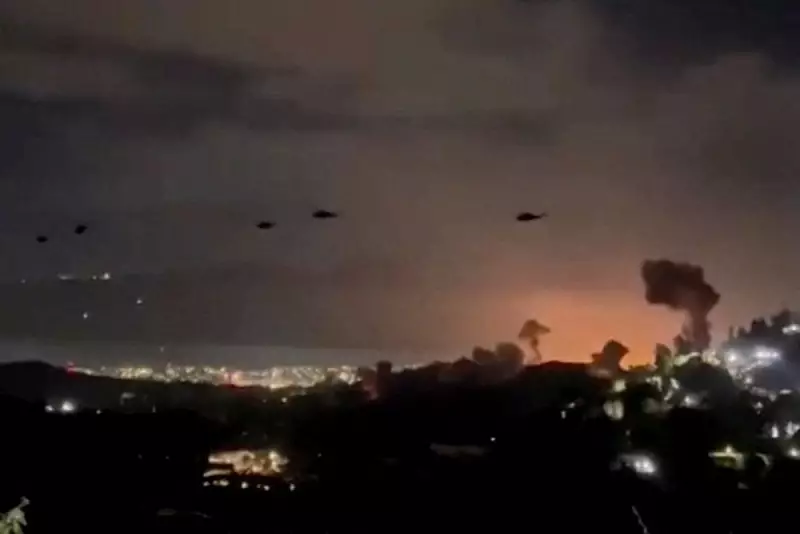
Initial reports confirm a series of explosions rocked Venezuela's capital as part of the mission, which targeted only military installations. The clean execution, however, is just the opening act. The true test for Donald Trump's presidency will be the sequel. Success hinges on a daunting checklist: installing a stable new government in Caracas, preserving state institutions, holding credible elections, containing a backlash from Maduro loyalists, and avoiding the descent into gang-led chaos seen in nations like Haiti.
If this tall order is met, Trump could claim a victory for his reinforced 'Monroe Doctrine', asserting US dominance in the Western Hemisphere. It would serve as a stark warning to other nations, like Greenland and Panama—both subjects of Trump's interest—against allowing Chinese influence to grow in what Washington views as its security zone. Failure, however, leading to Venezuelan chaos, would leave the President politically vulnerable, inviting comparisons to the Iraq war debacle and jeopardising Republican prospects in the upcoming mid-term elections.
A Dangerous Global Precedent
Beyond Venezuela's borders, the flagrant and seemingly illegal application of US power is set to have profound ramifications. The most significant may be a global erosion of restraint. The action effectively signals that might makes right, inviting other nations to justify unilateral interventions under the banner of their own national security.
Russia could point to it to deflect criticism of its actions in Ukraine and Crimea. Israel might cite it as further justification for its campaigns in Gaza. While a Chinese move on Taiwan would be on a different scale, the underlying principle of forceful intervention is now muddied. Across Africa, nations may feel emboldened to pursue regime change in uncooperative neighbours. International arrangements based on law, ethics, and sovereignty have been critically undermined.
Cuba: The Imminent Regional Fallout
The ripple effects are likely to be felt most immediately and acutely in Cuba. Venezuela has been a crucial economic lifeline for Havana, especially for fuel supplies, since the collapse of Soviet support—support never fully restored by Russia. The Obama-era rapprochement, which normalised relations in 2016 and spurred investment hopes, was abruptly reversed by Trump in his first term, halting projects and crippling Cuba's fragile economy.
By 2020, the consequences were stark: paralysed public transport replaced by horse-drawn carts, rampant rationing, and Soviet-style queues. Although Mexico recently stepped in to replace some blocked Venezuelan oil, US pressure on Mexico to cease this support is mounting. With the Maduro regime removed, Cuba's primary patron is gone, potentially forcing a transformative crisis. Analysts suggest that a more benevolent outcome for regional security might have been achieved by fostering peaceful change in Cuba first, rather than a forceful ouster in Venezuela. That path, however, is not Trump's way, leaving the region and the world to grapple with the destabilising consequences of a new, volatile precedent.