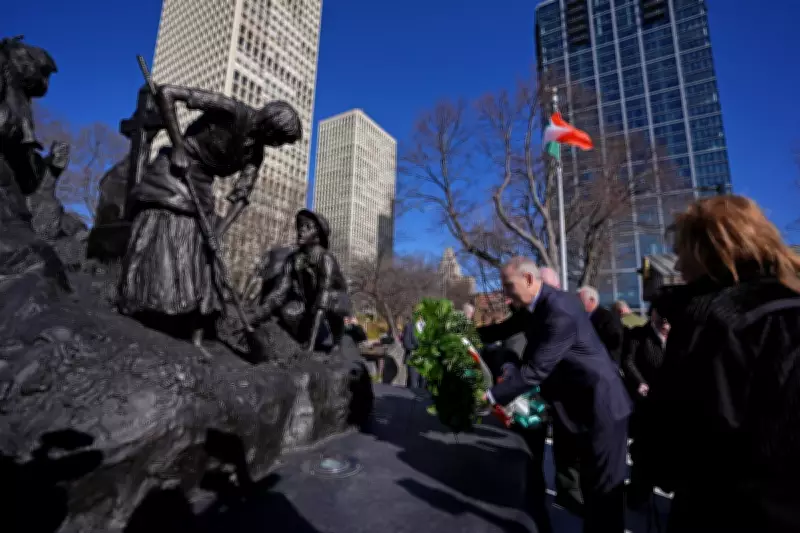
Taoiseach Micheal Martin Honors Famine Victims at Philadelphia Memorial
Irish premier Micheal Martin has paused during his visit to the United States to solemnly remember the millions of his countrymen who perished or were forced to emigrate during Ireland's devastating famine period. On the first day of his trip, the Taoiseach laid a wreath at the Irish Memorial in Philadelphia, standing alongside his wife, Mary, in a poignant act of remembrance.
A Living Monument to Tragedy and Resilience
The Taoiseach was guided through the memorial by Bob Gessler, president of the board of governors, who explained that sculptor Glenna Goodacre visited Ireland multiple times to gather inspiration for the faces and features of the characters she carved. These figures tell powerful stories from the famine era, capturing both the despair and determination of those affected.
During the Great Famine from 1845 to 1852, an estimated one million people died in Ireland, with a further two million emigrating, many seeking refuge in the United States. This mass exodus and loss left an indelible mark on Irish history and diaspora communities worldwide.
Educational Legacy for Future Generations
Mr Gessler emphasized that the memorial serves as a living testament that resonates with many immigrant communities in the United States today. "We try to represent our heritage and what happened," he stated. "We believe the memorial is a living thing that enables us to teach younger generations the stories of what happened, the stories of our people and our faith."
He added that the memorial's significance extends beyond its 23-year existence, representing a 35-year journey to realization. "It's important for us that you are here recognizing it," Gessler told the Taoiseach, highlighting the importance of official acknowledgment.
Artistic Representation of Human Experience
In response, Mr Martin commended the memorial for powerfully conveying the humanity of the period and the complex emotions of those who journeyed far from home. He noted that while historical accounts provide facts and figures, truly comprehending the scale of suffering remains challenging.
"No matter how often people read about the famine, and the numbers who died and emigrated, it is very, very difficult to comprehend," the Taoiseach observed. "But a work of art can tell that story of the extraordinary journey, the hardships, and the struggles they went through, moving through to a sense of hope."
Mr Martin praised the memorial as "a wonderful work that captures traumatic journey, but that out of that trauma came generations of optimism toward the foundation of this nation." His words underscored how the memorial not only commemorates tragedy but also celebrates the resilience and contributions of Irish immigrants to American society.
The visit highlights ongoing efforts to preserve historical memory and educate future generations about one of Ireland's most defining historical events, while strengthening transatlantic connections through shared history and cultural heritage.