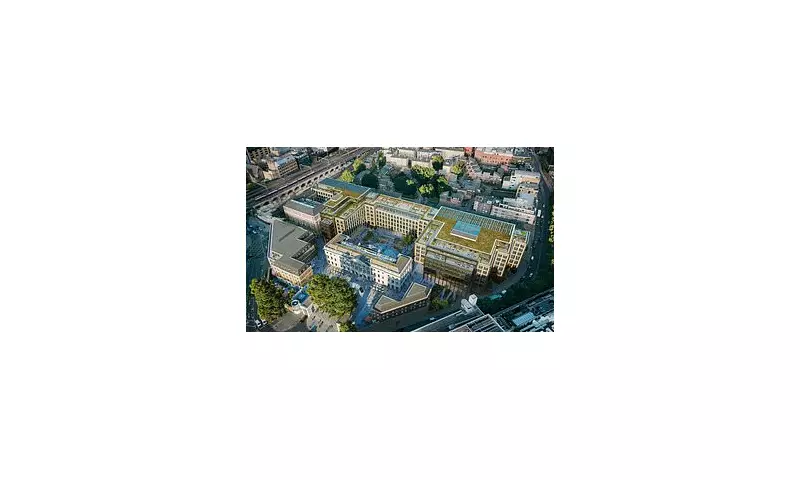
Plans for a vast new Chinese embassy in London have sparked a fierce parliamentary revolt, with MPs across the political spectrum raising alarm over potential espionage risks and national security threats. The proposed development on the former Royal Mint site, adjacent to the Tower of London, faced unanimous criticism from backbenchers during an urgent question in the House of Commons.
Security Fears Over Proximity to Critical Infrastructure
The core of the controversy lies in the site's location next to a major pipeline of communication cables. These cables are said to be vital for the City of London's financial operations, handling billions of pounds in foreign earnings. Newly disclosed architectural plans have revealed the inclusion of peculiar rooms situated suspiciously close to this critical infrastructure.
Leading the charge was Alicia Kearns, the Conservative MP for Rutland and shadow security minister. She argued forcefully that the positioning "would give the Chinese Communist Party a launchpad for economic warfare against our nation." Her concerns reflect a broader suspicion that Beijing's unusually fervent pursuit of this specific site indicates an intention to transform the diplomatic compound into a hub for surveillance and suppression.
A Government in Retreat: The 'Quasi-Judicial' Stonewall
Facing this backlash, the government's response was widely derided as evasive and inadequate. With Labour leader Sir Keir Starmer poised for a visit to China, Downing Street opted to field Matthew Pennycook, the minister for planning, to answer the urgent question. Critics suggested this was a deliberate move to avoid a minister with deeper security knowledge who might "drop a diplomatic brick."
Mr Pennycook adopted a strictly "quasi-judicial" stance, insisting repeatedly that he could not comment on the specifics of the live planning application or on security matters. His mantra, "all material considerations will be taken into account," was reportedly uttered 23 times during the session, alongside frequent refusals to provide a "running commentary."
This performance frustrated MPs and the Speaker alike. Sir Lindsay Hoyle pointedly questioned why Mr Pennycook had been chosen to respond if he had nothing substantive to say. The absurdity was compounded by the presence of Security Minister Dan Jarvis on the front bench, who sat in silence, unable to contribute to the debate.
Cross-Party Condemnation and Diplomatic Tensions
The opposition to the embassy was notably cross-party. Not a single backbench MP spoke in support of the proposal. Labour MPs, including seasoned figures like Sarah Champion and Alex Sobel, joined newer members such as Uma Kumaran and Lillian Jones in criticising the plans. Even typically loyal backbenchers voiced their disapproval, marking a significant moment of dissent within Sir Keir Starmer's ranks.
The debate concluded with a sense of farce when Liberal Democrat MP Ian Roome offered his one-word advice to the government: "common sense." As laughter erupted, he appeared confused, unaware that his suggestion contained two words. Mr Pennycook's robotic reply was, predictably, that all material considerations would be taken into account.
The episode leaves the proposed Chinese mega-embassy mired in controversy, with significant parliamentary pressure now building on the government to reject the current plans on national security grounds. The strength of feeling suggests this issue will resurface, potentially straining diplomatic relations with Beijing as the planning decision looms.