Israeli Prime Minister Benjamin Netanyahu Travels to Washington for High-Stakes Iran Discussions
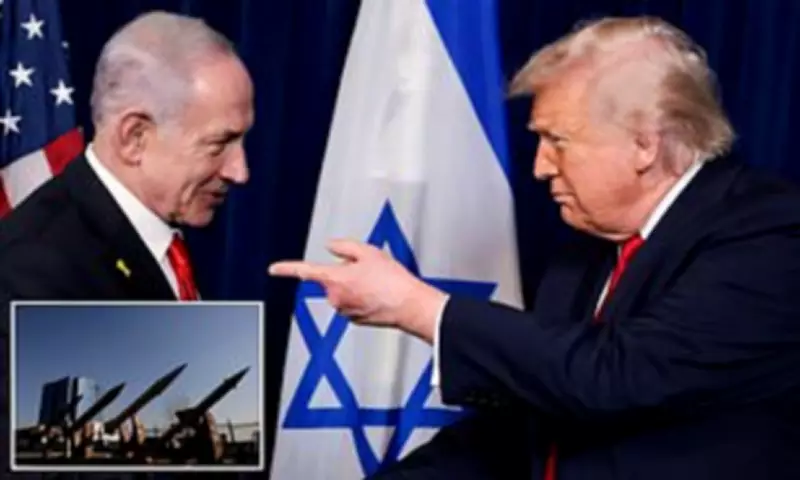
Israeli Prime Minister Benjamin Netanyahu is en route to Washington D.C. for critical talks with President Donald Trump, with Iran's expanding missile arsenal and nuclear ambitions dominating the agenda. Netanyahu flagged Tehran's advancing capabilities as an imminent danger before departing Israel, setting the stage for what promises to be a pivotal diplomatic encounter.
Focus on Iran's Missile Program and Regional Threats
'We will talk about Gaza, the region, but first and foremost about Iran,' Netanyahu stated, according to official sources. 'I will present to Trump principles for negotiations with Iran – which are important for those who want peace and security in the Middle East.' The Prime Minister plans to highlight what he terms the 'restoration' of Iran's ballistic missile program, a move that Middle East analysts interpret as part of a concerted persuasion campaign to galvanize action against Tehran.
This diplomatic push coincides with significant military movements. A fleet of 112 C-17 aircraft, large versatile military transport planes used by the U.S. Air Force and allies for troop, cargo, and humanitarian deployments, is reportedly headed to the Middle East. Additionally, a NATO airbase in Germany has been requisitioned for round-the-clock flights as operational tempo intensifies.

Iran's Diplomatic Posture and Internal Crackdown
Prior to Netanyahu's visit announcement, Iranian Foreign Ministry spokesman Esmail Baqaie asserted in a Tehran news conference that the United States should act independently regarding Iran, without relying on Israeli input. 'Israel has proven to be a destructive party and is trying to undermine every channel of negotiation to resolve the crises in the region through diplomatic means,' he declared.
Baqaie emphasized Iran's focus on reaching an agreement with the U.S. to lift sanctions. Meanwhile, Iranian authorities continue to tighten their grip domestically following a deadly crackdown on nationwide protests earlier this year, which saw families gathering at coroner's offices to search for relatives among rows of body bags. The regime has branded the protests as riots instigated by Israel and the U.S., with Supreme Leader Khamenei recently urging national 'resolve' against foreign pressure.
Nuclear Negotiations and Regional Tensions
The Trump-Netanyahu meeting, scheduled for Wednesday with U.S. Ambassador to Israel Mike Huckabee reportedly joining the Prime Minister's flight, occurs against a backdrop of ongoing nuclear diplomacy. Trump noted that the U.S. had 'very good' talks with Tehran on Friday via Omani mediation, warning of 'very steep' consequences if no deal is reached. However, there was no indication that the protests were discussed during those talks.
At the Oman negotiations, the U.S. and Iran agreed to discuss Tehran's nuclear program, though Washington and Israel also aim to address ballistic missiles and support for regional militant groups. Iran insists its nuclear activities are for civilian purposes, a claim disputed by Western powers and Israel. On Sunday, Foreign Minister Abbas Araghchi suggested Iran could consider 'a series of confidence-building measures concerning the nuclear program' in exchange for sanctions relief, while insisting on Iran's right to continue uranium enrichment.
Simultaneously, Ali Larijani, secretary of Iran's top security body, is set to visit Oman on Tuesday for meetings with Omani authorities, underscoring the complex diplomatic maneuvering. With the U.S. showing no signs of prioritizing the protest crackdown in negotiations, and high-resolution imagery from June 2025 suggesting potential military targeting of Iran's Fordow nuclear facility, the stage is set for a tense and consequential dialogue in Washington.