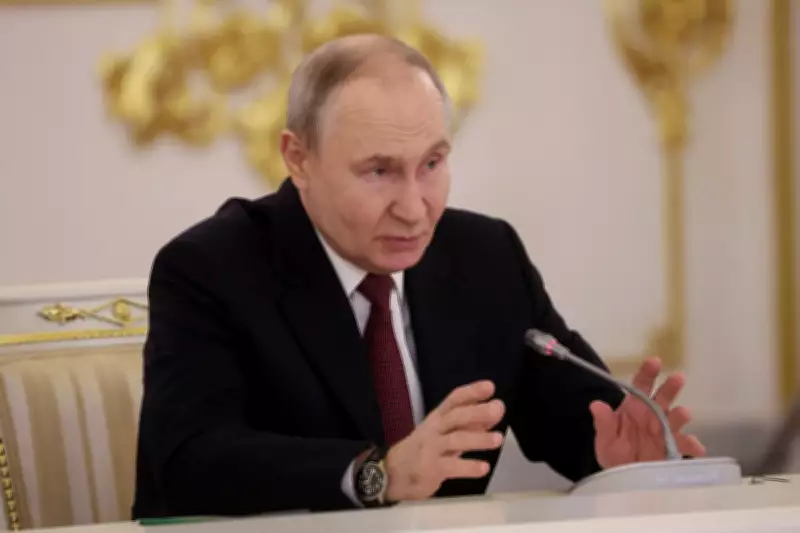
In a significant diplomatic development, Russian President Vladimir Putin has reportedly consented to a temporary cessation of hostilities targeting the Ukrainian capital of Kyiv. This agreement follows a direct personal appeal from former United States President Donald Trump, who cited the region's severe and dangerous cold weather conditions as a primary humanitarian concern.
A Personal Diplomatic Request
Former President Trump revealed the details of this arrangement during a recent Cabinet meeting, stating, "I personally asked President Putin not to fire into Kyiv and various towns for a week, and he agreed to do that." He attributed the request to the "extraordinary cold" currently affecting the area, framing it as a necessary humanitarian pause.
Trump further elaborated on the interaction, noting, "It was very nice. A lot of people said, 'Don't waste the call, you're not going to get that.' And he did it." This statement underscores the unexpected nature of the concession from the Russian leadership amidst the ongoing and brutal conflict.
The Staggering Human Cost of War
This diplomatic manoeuvre occurs against the backdrop of devastating casualty figures from the prolonged Ukraine-Russia war. According to analysis from the Center for Strategic and International Studies, the conflict has resulted in approximately 1.2 million Russian casualties and between 500,000 and 600,000 Ukrainian casualties. These sobering statistics encompass both troops killed and wounded, painting a grim picture of the war's human toll.
Russian Military Strains and Personnel Shortages
The immense scale of losses is reportedly forcing the Russian military into unprecedented measures to maintain its operational capacity. Military experts indicate that Russia is being compelled to fill critical gaps in its army by redeploying personnel from its navy and nuclear forces. This strategy highlights the severe strain the conflict has placed on Moscow's conventional military resources and manpower.
The news follows a deadly incident where carriages were set ablaze after a Russian drone attack targeted a Ukrainian passenger train, a stark reminder of the ongoing violence despite this temporary arrangement for Kyiv. The broader conflict continues with intense fighting reported across other fronts, and the announced ceasefire appears limited in both geographic scope and duration.
Analysts are closely monitoring whether this week-long pause, initiated through unconventional diplomatic channels, might lead to further de-escalation or represents merely a brief humanitarian interlude. The situation remains fluid, with the fundamental dynamics of the war unchanged.