Diplomatic Papers Expose Prince Andrew's Damaging Trade Role
Leaked diplomatic documents have revealed that British ambassadors warned the government more than two decades ago about Prince Andrew's damaging behavior as a roving trade ambassador, with concerns that his conduct was harming both the country's interests and the reputation of the Royal Family.
Early Warnings Ignored
According to papers leaked to The Mail on Sunday, Andrew Mountbatten-Windsor, who was recommended for the role by his friend Peter Mandelson, caused deep concern among officials within weeks of starting work. Patrick Nixon, then ambassador to the United Arab Emirates, expressed particular alarm about the then Duke of York's visit to the region in November 2001.
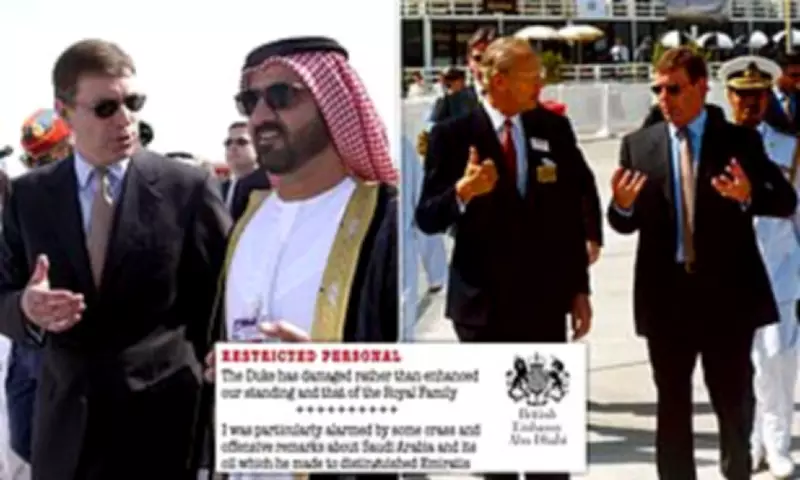
'I was particularly alarmed by some crass and offensive remarks about Saudi Arabia and its oil which he made to distinguished Emiratis,' Nixon reported of Andrew's behavior during that initial visit.

Protocol Breaches and Diplomatic Damage
It was Andrew's behavior at a reception during a return visit the following year that prompted Nixon to formally complain to the government. In a letter dated October 15, 2002, marked RESTRICTED - PERSONAL, Nixon told Sir Stephen Brown, the UK Trade and Industry chief executive, that by rudely disregarding dignitaries including an Emirati royal, 'the Duke has damaged rather than enhanced our standing and that of the Royal Family.'
The embassy reception on October 9, 2002, attended by 400 guests, was held to celebrate British engineering firm Halcrow's 50 years of trading in the Gulf. One guest, Shaikh Saif, nephew of the ruler of Fujairah on UAE's east coast, traveled for four hours to meet Andrew, only to be snubbed after waiting another hour at the reception.
'I was obliged to telephone the director of the Ruler's Court to apologize,' said Simon Collis, then Consul-General in Dubai, who noted that despite diplomatic efforts to smooth over the incident, the damage was clear.
Ignoring Carefully Laid Plans
Diplomats had arranged a specific protocol for Andrew's appearance at the Halcrow event, agreeing that:
- The Duke should enter the majlis area directly on arrival
- He should greet assembled dignitaries
- He would be presented with a commemorative copy of Halcrow's book
- He would remain in the majlis during a four-minute speech
- The entire process would take no more than ten minutes
Instead, Andrew deliberately instructed his driver to drop him at the public entrance to the garden and plunged into the crowd of guests, brushing off repeated diplomatic entreaties to attend the majlis area where senior Emirati dignitaries were waiting.
Business Concerns and Royal Tensions
After the event, Halcrow chairman Tony Allum complained to the Consul-General about the Duke's behavior, 'more in sorrow than anger,' noting that Andrew had behaved similarly at an event with Halcrow in the UK earlier that year.
Collis, who later became UK ambassador to Saudi Arabia, concluded that inviting Andrew to another reception would be 'counterproductive in terms of relations with Sheikhs and other senior Emiratis' unless they could be confident he would stick to an agreed program for ten minutes.
On receiving Nixon's letter detailing Andrew's offensive behavior, Sir Stephen Brown raised the matter with the Foreign Office, writing to Michael Jay, head of the diplomatic service: 'I find it inexplicable that someone whose own life is governed by royal protocol does not appear to appreciate the harm he is doing.'
Delayed Consequences and Epstein Links
Despite these early warnings reaching the highest levels of the diplomatic service, it would be nearly ten years before Andrew was forced to quit as UK trade envoy over his links to convicted paedophile Jeffrey Epstein. During this time, he is said to have passed potentially confidential and sensitive documents to Epstein.
From the outset, Prince Charles had expressed concerns about his younger brother's suitability for the role, but Queen Elizabeth overruled him with backing from former trade secretary Mandelson, who, like Andrew, is now under investigation over allegations of misconduct in public office.

Mandelson had initially defended Andrew's appointment, stating: 'As a former trade secretary I know of the great importance of trade missions. With a royal association they can achieve a reach into overseas foreign markets which is of immense value to the economy of the country.'
The leaked documents reveal a pattern of behavior that diplomats recognized as damaging from the earliest days of Andrew's appointment, raising questions about why action wasn't taken sooner to address concerns that were clearly documented and communicated to senior government officials.