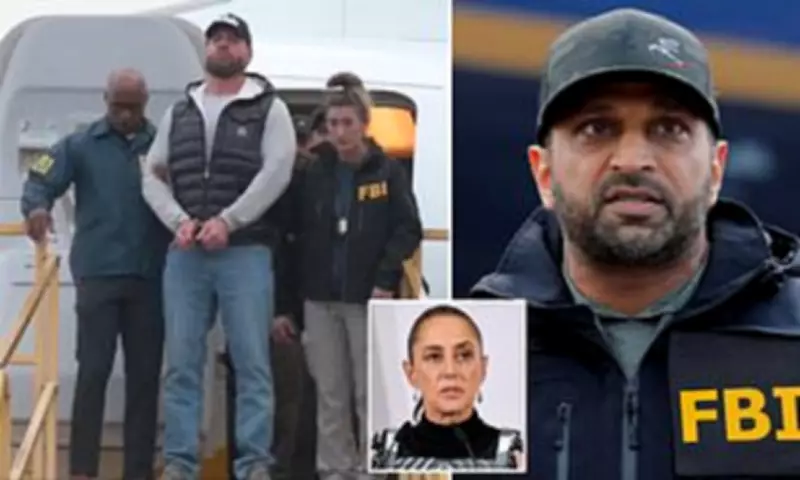
The dramatic capture of Ryan Wedding, a former Olympic snowboarder turned alleged international drug kingpin, remains enveloped in conflicting narratives, exposing significant diplomatic sensitivities between the United States and Mexico. Authorities from both nations have presented starkly different versions of events regarding how the high-profile fugitive was finally taken into custody.
From Olympic Athlete to Most-Wanted Fugitive
Ryan Wedding, who once represented Canada at the 2002 Winter Olympics in Salt Lake City, underwent a staggering transformation into one of the FBI's ten most-wanted individuals. The 44-year-old stands accused of masterminding a sophisticated billion-dollar drug-smuggling network and orchestrating multiple murders, leading some law enforcement commentators to label him a modern-day iteration of the infamous Pablo Escobar. For approximately a decade, Wedding was believed to be evading justice while living under the protection of Mexico's notorious Sinaloa Cartel.
His lengthy period on the run concluded last week when he was returned to the United States by the FBI to confront seventeen serious felony charges, including murder. During his initial court appearance, Wedding entered a plea of not guilty to all allegations.
Contradictory Official Accounts Emerge
The circumstances surrounding his arrest have become a point of international contention. On the day of the capture, FBI Director Kash Patel took to social media to publicly commend the bureau's Hostage Rescue Team. Patel asserted that the unit, which recently captured Venezuelan President Nicolás Maduro, "executed with precision, discipline, and total professionalism alongside our Mexican partners to bring Ryan James Wedding back to face justice."
This portrayal was directly contradicted by Mexican officials. Mexico's Security Minister, Omar García Harfuch, suggested that Wedding had voluntarily turned himself in. This version was seemingly supported by the US Ambassador to Mexico, Ron Johnson, who released a statement referencing the fugitive's "voluntary surrender."
Legal and Diplomatic Sensitivities
The conflicting stories touch upon deep-seated legal and diplomatic principles. As reported by the Wall Street Journal, Mexican law explicitly prohibits foreign agents from participating in physical law-enforcement operations, detentions, or raids on its soil. The country's ruling political party is understood to be particularly sensitive to any perception of foreign interference in its sovereign affairs.
This sensitivity was highlighted by reports from south of the border claiming the Mexican government privately complained to US officials for allowing a narrative of a cross-border operation to spread. One report alleged Wedding surrendered at the US Embassy in the early hours after weeks of negotiation with the FBI.
Disputed Narratives and Political Fallout
Wedding's own legal representative, Anthony Colombo, further complicated the picture outside the courtroom, stating unequivocally, "He was arrested, he didn’t surrender." This assertion directly challenged the Mexican and ambassadorial accounts of a voluntary handover.
Mexican President Claudia Sheinbaum later attempted to clarify the situation, contradicting both Patel and Colombo. She insisted there was no US operational involvement in the events leading to Wedding's apprehension. "I’m not going to get into a debate with the FBI director, nor do I want there to be a conflict," Sheinbaum stated, adding that US authorities had informed their Mexican counterparts it was a case of voluntary surrender.
The Wall Street Journal's Detailed Account
Adding another layer to the saga, the Wall Street Journal published a detailed account citing officials from both nations. This report suggested Mexican security forces had been closing in on Wedding, leaving him with dwindling options. According to this version, the FBI's Hostage Rescue Team became involved, and during intense negotiations, agents reminded Wedding that his associates had been captured and millions in assets seized. He was subsequently handcuffed by FBI agents.
The Journal noted that the FBI's role was intended to remain confidential, a plan undone by Director Patel's public social media post. Colombo, Wedding's lawyer, commented on the diplomatic implications, noting, "If the U.S. government is unilaterally going into a sovereign country and apprehending somebody, you can understand the concern that sovereign entity might have."
The arrest occurs during a period of heightened tension between the US and Mexico, following the capture of Maduro and threats by former President Donald Trump to launch strikes against Mexican cartels. The conflicting stories surrounding Ryan Wedding's capture underscore the complex and often fragile nature of cross-border law enforcement cooperation.