A London-based Saudi dissident and satirist has been awarded more than £3 million in damages by the UK High Court, in a landmark judgment that found the Gulf state responsible for targeting him with sophisticated spyware and orchestrating a physical assault in the heart of the capital. Ghanem al-Masarir, a prominent critic of the Saudi government, now faces the challenge of enforcing the ruling against a regime that has consistently avoided legal accountability for alleged human rights abuses.
A Landmark Legal Victory Against State-Sponsored Harassment
In a significant ruling delivered by Mr Justice Pushpinder Saini, the court determined that agents of the Saudi government infected al-Masarir's phone with the notorious Pegasus spyware and, while surveillance was ongoing, physically attacked him outside Harrods in central London in 2018. The judgment represents a rare instance where a foreign government has been held legally responsible for actions taken against a critic on British soil.
The bulk of the damages, approximately £2.5 million, was awarded for loss of earnings. The judge noted that al-Masarir previously enjoyed a "thriving and lucrative" career creating content critical of the Saudi regime. However, the sustained campaign against him has left the 45-year-old activist suffering from severe depression, rendering him unable to work and fundamentally altering his life.
Enforcement Challenges and International Implications
Despite the clear ruling, significant questions remain about whether the Saudi government will comply with the order to pay. The kingdom has long refused to participate in the case after initially attempting to have it dismissed on grounds of state immunity. In an interview, al-Masarir stated he hopes for prompt payment but is prepared to take enforcement action against Saudi assets abroad if necessary.
"I hope they will comply and pay the debt as soon as possible," al-Masarir told the Guardian. "If they don't pay it, we won't have any other alternative but to take enforcement action to recover the money from Saudi assets abroad, it doesn't have to be the UK."
The dissident described the judgment as an "amazing thing", particularly given revelations that Prince Mohammed bin Salman had attempted to pressure then Foreign Secretary David Cameron to intervene in the case. "They think they can hide behind state immunity and force the UK to interfere in the legal system," al-Masarir said. "That happily didn't work and justice has been served."
Broader Pattern of Targeting Dissidents
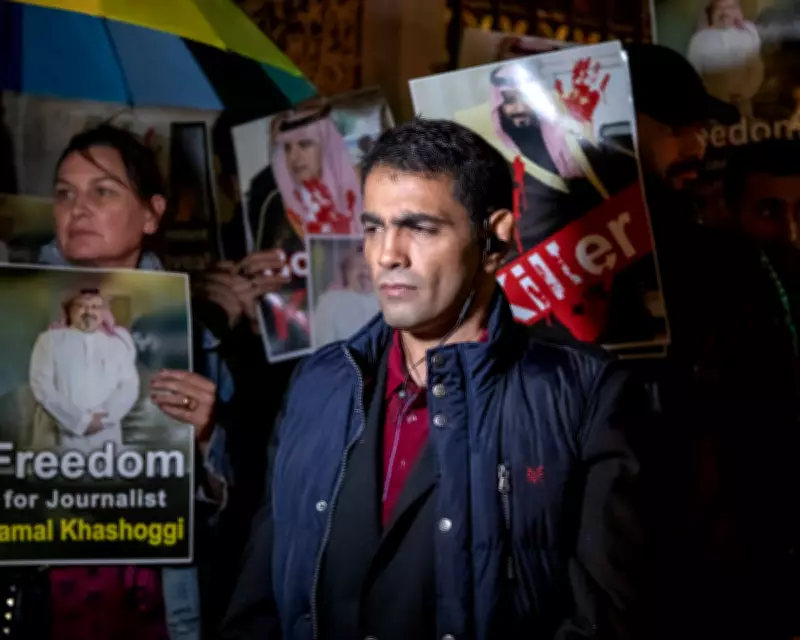
The case fits into a wider pattern of Saudi Arabia targeting critics both domestically and internationally. Research from the University of Toronto's Citizen Lab confirmed in 2018 that al-Masarir's phone had been infected with Pegasus spyware, alongside other Saudi critics including Canadian-based dissident Omar Abdulaziz, who was friends with the murdered journalist Jamal Khashoggi.
Al-Masarir explicitly referenced Khashoggi's 2018 killing when discussing his own experience. "We all know what happened to Jamal Khashoggi, how far they are willing to go," he said. "In my case, how they were willing to send their agent to attack me in the streets of London and to hack my phones, even though it's an independent and sovereign country."
Life-Altering Consequences and Personal Impact
The court heard devastating testimony about the personal consequences al-Masarir has endured since being targeted. He rarely leaves his home, cannot perform basic daily activities, and has not returned to the location of the attack in seven years due to the trauma. "I suffered a lot and what they have done to me has ruined my life," he explained. "I'm not the same person I was 10 years ago, I am a different person, I can't do my work."
Despite Saudi Arabia's much-publicised social reforms, including hosting international comedy festivals, al-Masarir remains deeply sceptical. He pointedly noted the hypocrisy of the kingdom presenting itself as opening up while simultaneously silencing critics like himself. His satirical shows, which had accumulated nearly 350 million views on YouTube, have effectively been halted by the campaign against him.
"It's a win for them because they silenced me and I'm not able to do my work any more," al-Masarir acknowledged, highlighting the chilling effect such state actions can have on free expression even in democratic countries like the United Kingdom.