Israeli Settler Units Within Military Accused of Vigilante Actions in West Bank
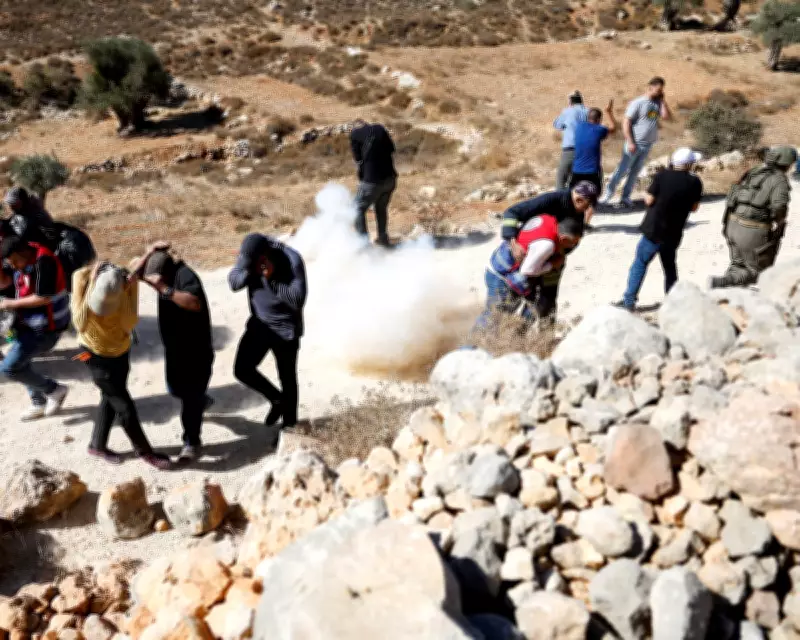
Palestinian farmers in Burqa, near Ramallah, have been seen covering their heads from stun grenades as Israeli troops deny them access to harvest olives, a scene captured in photographs that underscore the ongoing tensions. This incident is part of a broader pattern where settler-only IDF units, known as hagmar or regional defence units, are functioning as vigilante militias, according to reports from Israeli reservists, activists, and the United Nations.
Formation and Escalation of Hagmar Units
Established across the West Bank from October 2023, hagmar units were created as conscripts and the standing army prepared to deploy to Gaza. These units handed weapons and authority to thousands of settlers, forming military groups within their own communities with minimal oversight. Funded by the state, they operate in parallel to regular battalions, leading to what has been described as armed militias acting with impunity.
Yaakov, a reservist who served in the occupied West Bank in 2024, stated that hagmar units are given a free hand on the ground, with senior command often looking the other way during incidents. He reported daily violence, including vandalism of homes, destruction of trees and agricultural produce, theft of livestock, and intimidation, with hagmar members sometimes joining attacks on Palestinians.
Violence and Displacement Statistics
Since October 2023, settler attacks have completely displaced 29 Palestinian communities, averaging more than one per month, according to UN data. In contrast, only four communities were displaced in 2022 and the first nine months of 2023. The UN has warned that the growing phenomenon of settler-soldiers is blurring the line between state and settler violence, with perpetrators often enjoying impunity.
In more extreme cases, hagmar forces have been implicated in killings, such as the death of an elderly Palestinian man and running over another with an all-terrain vehicle. Nadav Weiman of Breaking the Silence noted that these soldier-settlers are driven by a violent ideology and wield the authority of regular IDF soldiers to enact it.
Irregular Practices and Chain of Command Issues
A second reservist, Moshe, highlighted the irregular dress code of hagmar units, which adds to their vigilante feel. Members sometimes wear civilian clothes or partial uniforms, making it difficult to distinguish between soldiers and civilians. This confusion is exacerbated by the proliferation of weapons in the West Bank, with about 120,000 firearms distributed to Israeli citizens in the first year of the war, as stated by security minister Itamar Ben-Gvir.
Incidents like that of Elyashiv Nahum, who changed into uniform after confronting activists in civilian attire, illustrate the blurred lines. Even serving soldiers struggle to identify the chain of command due to these practices, with hagmar members often having effective authority over regular reservists on the ground.
Structural Changes and Long-term Implications
Yehuda Shaul of the Ofek thinktank emphasized that post-October 2023, the military and settlers have become unified, with no pretence of a buffer. This structural change has led to increased complicity and violence, as settlers are now integrated into the IDF, carrying out campaigns with state backing. Hagmar recruits include individuals with criminal records for violence, further escalating tensions.
The Israeli military has acknowledged a few incidents where hagmar reservists acted below expected standards, stating that some have been removed from duty or faced criminal investigations. However, rights group Yesh Din reported that since October 2023, only three violent offences and three property offences have led to indictments, despite over 1,000 Palestinian deaths in the same period.
Impact on Palestinian Communities
The presence of hagmar units has intensified friction in the West Bank, with settlers often initiating confrontations. Yaakov noted that Palestinians are typically unarmed and unable to fight back, leading to one-sided violence. The lack of arrests of Israelis, compared to frequent detentions of Palestinians, highlights a disparity in enforcement.
As hagmar units continue to operate, the situation raises concerns about long-term stability and human rights in the region, with calls for greater accountability and clarity in military operations.