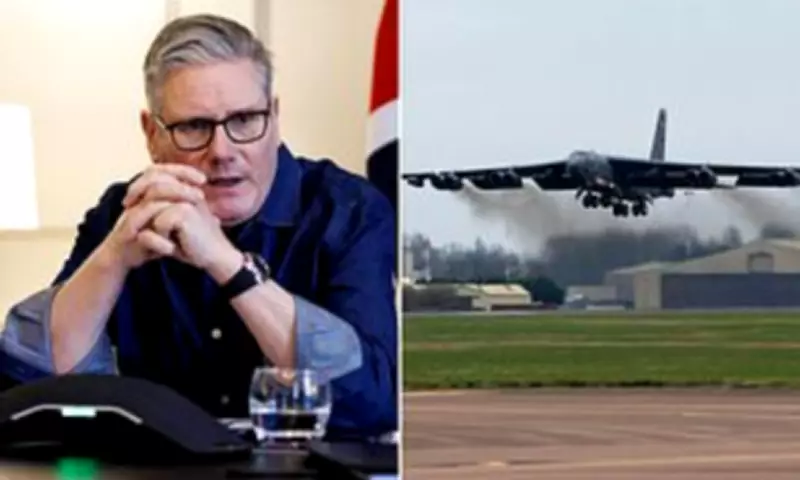
US and Israeli Leaders Condemn Starmer's Iran Stance
Prime Minister Sir Keir Starmer faced sharp criticism from senior figures in the United States and Israel yesterday over his initial refusal to endorse air strikes against Iran. The backlash highlighted growing tensions over the UK's foreign policy direction under the new Labour government.
International Backlash Over UK Position
Republican US Senator Lindsey Graham branded the UK's position as 'pathetic', while Israeli Diaspora Minister Amichai Chikli declared that Britain had become a 'nation in decline' due to the Prime Minister's early inaction. These comments came as Defence Secretary John Healey repeatedly declined to confirm whether the UK considered the military action legal, despite public support from allies including Canada and Australia.
Diplomatic Outreach Amid Criticism
As strikes continued across the Middle East, Sir Keir conducted a series of diplomatic calls with regional leaders including the King of Bahrain, Sultan of Oman, Crown Prince of Kuwait, King of Jordan, and President of Cyprus. During these conversations, he expressed 'solidarity' in response to what he termed 'dangerous Iranian escalation'.

However, opposition MPs quickly seized on what they perceived as indecisiveness. Conservative leader Kemi Badenoch accused the government of failing to govern properly, while Shadow Foreign Secretary Dame Priti Patel described Labour's position as 'feeble' and accused ministers of 'sitting on the fence'.
Legal Basis Questions and International Support
The controversy intensified when Defence Secretary Healey was questioned six times by BBC presenter Laura Kuenssberg about whether the UK supported the strikes or believed they were legal. Healey maintained that 'Britain played no part in the strikes on Iran' while emphasizing shared goals with allies to prevent Iran from obtaining nuclear weapons.
He added: 'It is for the US to set out the legal basis of the action that it took.' This stance contrasted sharply with statements from other Western leaders. Canadian Prime Minister Mark Carney explicitly supported 'the US action' to prevent nuclear proliferation, while Australian Prime Minister Anthony Albanese used similar language, and Ukrainian President Volodymyr Zelensky also backed the strikes.
International Law Considerations
The UK's cautious approach reportedly stemmed from legal advice provided by Attorney General Lord Hermer, who emphasized the primacy of international law. This legal opinion influenced Sir Keir's decision to reportedly warn former US President Donald Trump that the UK would not permit the use of British military facilities—including the joint UK-US base on Diego Garcia or RAF Fairford in Gloucestershire—for any pre-emptive military action against Iran.
Broader Diplomatic Context
In a joint statement with France and Germany, the UK condemned Iran's retaliation while urging Tehran to return to negotiations, but notably refrained from openly endorsing the strikes. This nuanced position has drawn criticism from those who believe the UK should take a firmer stance alongside its closest allies.
Senator Graham expanded his criticism, stating: 'To our European allies: you have gone pathetically soft and lost your zeal for confronting evil apparently unless it's on your front porch.' He lamented what he perceived as Western democracies losing their 'passion for justice'.
Minister Chikli expressed his disappointment more personally: 'I am deeply saddened to see this great nation in decline. I hope soon we will see the old British lion awaken and fight first and foremost for the British Isles, and immediately thereafter against the forces of darkness that seek to bring devastation upon the entire West.'
Political Fallout and Future Implications
The episode has sparked significant political debate within the UK, with former security chiefs criticizing what they term 'government by international lawyers'. The government's position represents a delicate balancing act between maintaining international legal principles and demonstrating solidarity with key allies during a period of heightened regional tension.

As the situation continues to develop, the Starmer administration faces mounting pressure to clarify its foreign policy approach while navigating complex international relationships and domestic political expectations.